
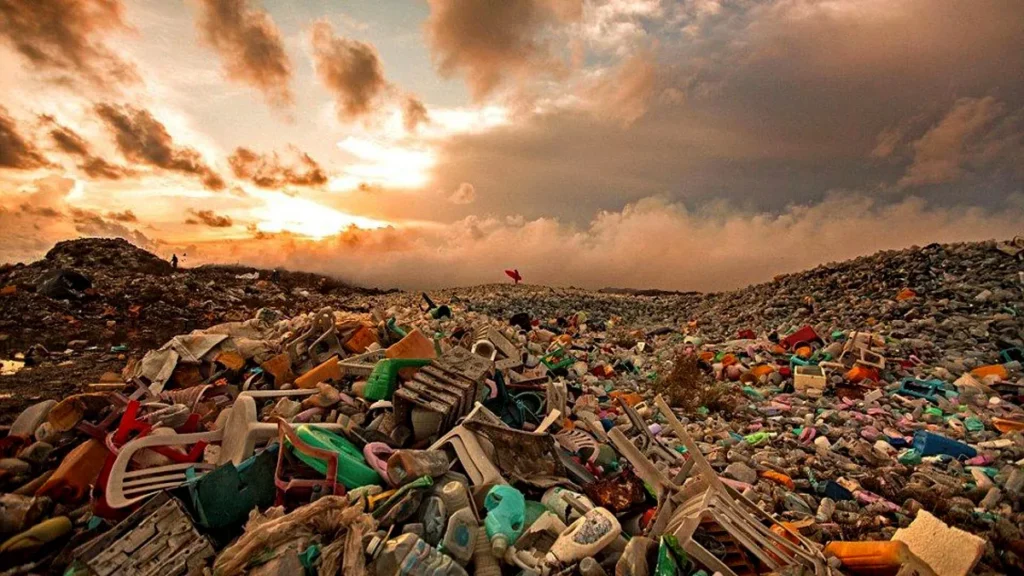
In a landmark enforcement action, Indonesia’s environment ministry issues three-month ultimatums, signaling a new era of accountability for the island’s tourism industry.
BADUNG, Bali — In a decisive move that marks a significant escalation in Bali’s war on waste, the Indonesian Ministry of Environment has sanctioned 150 hotels, restaurants, and cafes across the island. The establishments face administrative penalties for failing to comply with a core legal mandate: managing their own garbage independently.
The sanctions, announced by Environment Minister Hanif Faisol Nurofiq on Friday, grant the businesses a three-month deadline —placing the final deadline in early May 2026— to establish compliant, on-site waste processing systems. Failure to comply within this grace period will trigger severe consequences, including the potential suspension of their environmental permits and criminal prosecution.
“We have coordinated with the National Police and the Attorney General’s Office to not hesitate in taking violators to the legal realm for disobeying waste management regulations,” Minister Hanif stated firmly.
“We fully support law enforcement efforts. We will not hesitate to operationalize minor criminal offenses for all parties who do not carry out good waste governance.”
A Direct Response to a Presidential Mandate
The sweeping enforcement action is a direct, operational follow-up to President Prabowo Subianto’s sharp criticism of Bali’s trash management during a major national coordination meeting earlier this week. The President’s public admonishment has galvanized a cross-ministry response, culminating in Friday’s high-profile beach clean-up at Kedonganan—involving police, military, students, and even inmates from Kerobokan Prison—and now, these targeted sanctions.
The message from Jakarta is unambiguous: the era of Bali’s tourism sector externalizing its waste problem onto overloaded public landfills and, ultimately, its beaches and rivers, is officially over.
The Stakes for Bali’s Business Community
For the sanctioned businesses and the wider hospitality industry, this is a watershed moment. The law in question, Law No. 18 of 2008, is not new, but its large-scale, public enforcement is. The ministry is moving beyond warnings to tangible, time-bound penalties.
The requirement is not merely to separate trash, but to invest in the systems —such as in-vessel composting, formal partnerships with licensed recycling facilities (TPS3R), or anaerobic digesters— that treat waste at or near its source.
This shift presents both a significant operational challenge and a profound opportunity. The cost of inaction is now quantifiable: business disruption, legal jeopardy, and severe reputational damage in a market where environmental consciousness is increasingly a guest expectation.
A Note for Bali’s Global Stakeholders
For expatriate business owners, international investors, and global partners in Bali’s hospitality sector, this development is a critical market signal. It underscores that environmental compliance is no longer a peripheral “green” initiative but a central, non-negotiable pillar of business legality and social license to operate on the island.
The coming three months will be a period of intense scrutiny and adaptation. Proactive establishments will treat this as a catalyst for innovation, transforming waste from a costly liability into a managed part of their operations. Those who delay risk becoming examples in a newly assertive enforcement regime.
Bali’s paradise is under a microscope, and its keepers are now being held directly accountable. The clean-up has moved from the beach to the boardroom, and the island’s future depends on which businesses choose to lead the change.