
NEW YORK — In an era where beauty treatments have become as routine as a haircut and cosmetic enhancements are increasingly marketed as quick, low-risk procedures, the sudden death of a senior beauty industry executive has sent shockwaves through a world built on the promise of self-improvement.
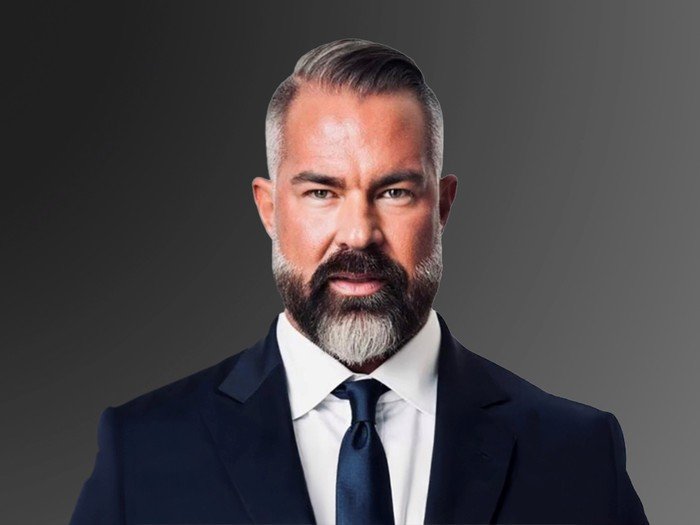
Kendal Ascher, a longtime executive at Estée Lauder Companies, died at the age of 56 after suffering what medical investigators described as an acute pulmonary embolism linked to a foreign substance. According to reports from the United States, Ascher had recently undergone a cosmetic filler procedure before his death.
The circumstances surrounding the case have reignited a conversation that extends far beyond one individual tragedy. It touches on a question confronting millions of people worldwide, from Beverly Hills and London to Bali and Bangkok:
How safe are cosmetic fillers, really?
The Business of Looking Better
For decades, cosmetic enhancement was largely associated with celebrities, socialites, and the wealthy.
Today, it has become mainstream.
Dermal fillers, Botox injections, skin-tightening treatments, and non-surgical facial contouring are now among the fastest-growing sectors in the global beauty industry. Clinics advertise lunch-break procedures. Social media influencers openly document their treatments. A growing culture of aesthetic optimization has transformed cosmetic medicine from luxury into lifestyle.
According to industry estimates, millions of filler procedures are performed globally every year.
Most are completed without serious complications.
That reality is important.
The overwhelming majority of patients walk out of clinics satisfied, experiencing little more than temporary swelling or bruising.
Yet rare complications do occur, and when they happen, the consequences can be devastating.
A Tragedy No One Saw Coming


Reports indicate that Ascher collapsed at home after complaining of dizziness.
His husband later described the sequence of events as shockingly fast.
One moment, the couple were beginning an ordinary day. Moments later, Ascher had lost consciousness.
Within seconds, he was gone.
Medical examiners later concluded that his death involved an acute pulmonary embolism associated with a foreign material.
Although investigations and legal proceedings may ultimately reveal additional details, the case has highlighted one of the least understood realities of cosmetic medicine: even procedures perceived as routine carry risk.
In medicine, there is no such thing as a completely risk-free intervention.
Not surgery.
Not anesthesia.
Not injectables.
Not even treatments marketed as minimally invasive.
The Illusion of Safety
Part of the challenge lies in perception.
Unlike major surgery, cosmetic fillers are often performed in luxurious clinics, wellness centers, or aesthetic practices designed to feel comfortable and reassuring. Patients may spend more time discussing desired results than potential complications.
The environment itself can create an impression that these procedures are fundamentally harmless.
Medical experts have long warned that such assumptions can be misleading.
Complications linked to fillers can include infection, vascular blockage, tissue damage, blindness, stroke, and, in extremely rare circumstances, life-threatening embolic events.
The probability may be low.
The consequences can be extraordinarily high.
That distinction is often lost in the marketing.

Why This Matters Beyond America
The discussion has particular relevance across Asia, where cosmetic medicine has become a booming industry.
Bali, for example, has evolved into more than a tourism destination. It has increasingly become a wellness and aesthetic hub attracting expatriates, digital nomads, and international visitors seeking everything from anti-aging treatments to advanced cosmetic procedures.
The growth has created opportunities, but it has also attracted operators working in legal gray areas.
Just this month, Indonesian authorities shut down an allegedly illegal beauty clinic in Bali after investigators found foreign medical personnel operating without proper licenses and permits.
The closure underscored a broader concern shared by health regulators worldwide: demand for aesthetic procedures is growing faster than public understanding of the risks involved.
For patients, the lesson is not to fear cosmetic treatments.
It is to approach them with the same diligence one would apply to any medical decision.
The Human Side of the Story
Lost amid the headlines is the life of the man at the center of the tragedy.
Ascher spent more than a quarter-century in the beauty industry, helping build some of the world’s most recognizable luxury brands.
His career included leadership roles with La Mer, Jo Malone London, Darphin, Bobbi Brown Cosmetics, and other major names in prestige beauty.
Colleagues described him as accomplished, respected, and deeply committed to his work.
Yet his story resonates not because of his professional achievements.
It resonates because it reflects something profoundly human.
The desire to feel confident.
The pursuit of self-improvement.
The belief that modern technology can help us become better versions of ourselves.
These motivations are neither unusual nor superficial. They are part of a global culture that increasingly values youthfulness, vitality, and appearance.
But the pursuit of perfection has always carried a paradox.
The closer society moves toward making beauty procedures ordinary, the easier it becomes to forget that they remain medical interventions.

A Reminder for the Modern Age
The death of Kendal Ascher does not prove that cosmetic fillers are inherently dangerous.
Nor does it diminish the positive experiences of millions who undergo aesthetic treatments every year.
What it does provide is a reminder.
A reminder that every medical procedure involves risk.
A reminder that credentials, regulation, and patient education matter.
And a reminder that behind every treatment, however routine it may seem, there is a human life.
For an industry built on confidence and transformation, those lessons may be among the most important of all.
Because in the pursuit of beauty, the ultimate goal should never be perfection.
It should be well-being.