
































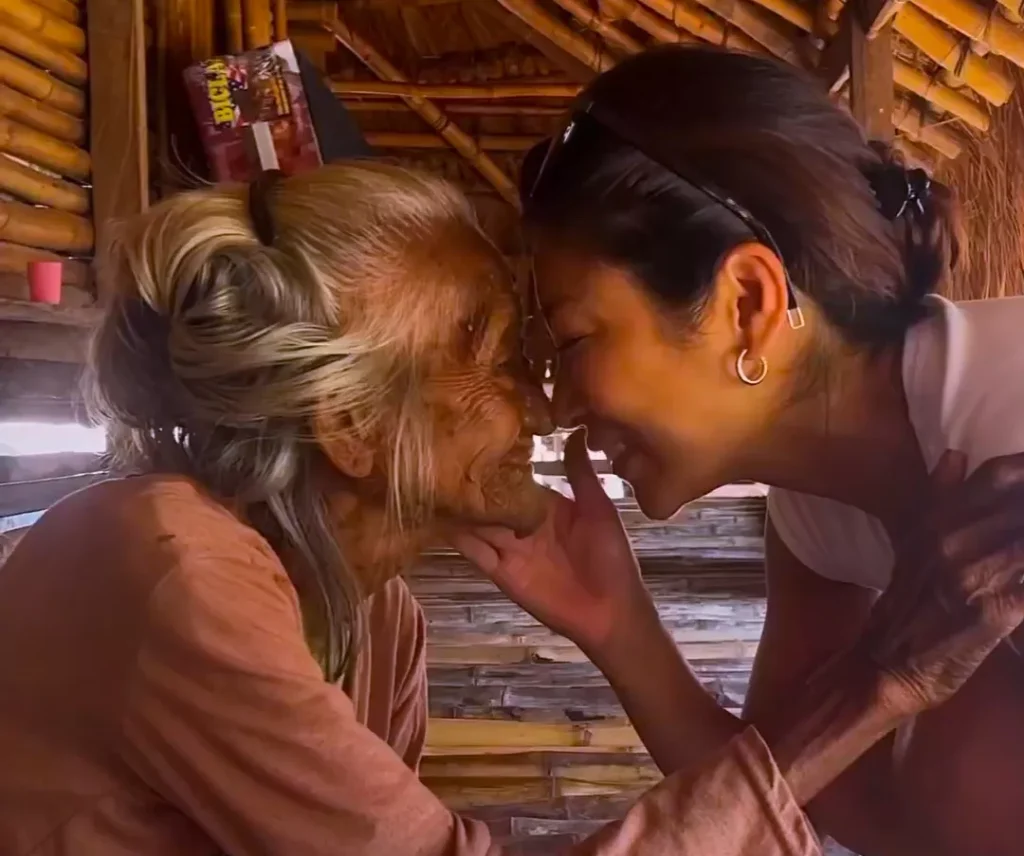
HEYBALI.NEWS – In an age of hurried handshakes and quick hellos, a profoundly different greeting thrives on Sabu Island in East Nusa Tenggara (NTT). Here, the Suku Sabu people practice Henge’do, a tradition where two people press their noses together, eyes open and hands resting on each other’s shoulders. Far from a mere custom, it is a non-verbal language of its own, embodying values of kinship, respect, and communal harmony that offer a poignant contrast to modern, transactional interactions.
More than just a touch, Henge’do is a full-sensory acknowledgment of another person. Performed with mouths closed, it is an intimate exchange of breath—seen as the essence of life—and a sustained meeting of the eyes.
This act, believed to be inspired by the way red ants touch antennae to communicate, is a powerful symbol of friendship and mutual recognition. To refuse a Henge’do is considered a sign of arrogance, a rejection of the foundational Sabu values of brotherhood.
“The Henge’do tradition is a non-verbal communication that symbolizes closeness and harmony in familial relationships,” explains cultural observers. It is practiced daily and is central to major family gatherings and customary festivals.
Crucially, it transcends all boundaries: gender, ethnicity, religion, social status, or age. Both locals and visitors can be greeted this way, with the understanding that the gesture is rooted purely in platonic respect, devoid of any sexual connotation. When meeting an elder, it becomes a specific act of reverence.
A Bali Connection: Echoes of Shared Values
While geographically distant, the philosophy underpinning Henge’do resonates deeply with the core Balinese principle of Tat Twam Asi—the Sanskrit phrase meaning “I am you, you are me,” or “thou art that.” This concept emphasizes seeing oneself in others, fostering empathy, and recognizing the interconnectedness of all life.
For global readers, expatriates, and long-term travelers in Bali who have experienced the island’s emphasis on community (banjar) and spiritual connection, Henge’do presents a fascinating regional variation on a similar theme. Where Bali offers the gentle sembah greeting with palms pressed together, Sabu offers the breath-shared henge’do. Both are physical manifestations of respect and a mindful pause to truly see the person in front of you.
In a world where greetings can feel automatic, the intentionality of Henge’do is a powerful reminder of the human need for genuine connection. It underscores that in the diverse archipelago of Indonesia, profound wisdom often resides in the simplest, most intimate acts of hello.
#heybalinews