

BADUNG, Bali — For years, investing in Bali followed a familiar formula: buy land, build villas, and let tourism drive returns.
That formula still works—in the right locations, with the right execution. But as the market matures and competition intensifies, investors are starting to look elsewhere.
Quietly, another opportunity is emerging—one that has less to do with real estate and more to do with how the island moves.
Electric mobility.
Bali is at the early stage of a transition that, if sustained, could reshape not just transportation, but the island’s broader investment landscape.
A Shift Already Underway
The case for electric vehicles (EVs) in Bali is not built on a single trend, but on several forces beginning to align.
Policy direction is clear.
The provincial government has made EV adoption a strategic priority, with targets to significantly increase electric vehicle usage by the end of the decade. Incentives, pilot programs, and early infrastructure rollout are already in motion.
Cost dynamics are shifting.
Electric motorcycles, in particular, are becoming increasingly competitive on a cost-per-kilometer basis. For high-usage segments—such as delivery riders and rental fleets—the savings over time are meaningful.
Traveler expectations are evolving.
A growing segment of visitors—especially from Australia and Europe—are becoming more conscious of sustainability. While not yet the majority, demand for greener options in transport and accommodation is gradually increasing.
Individually, these trends are manageable. Together, they point toward a structural shift in how mobility in Bali may evolve over the next decade.
The Real Opportunity: Infrastructure, Not Just Vehicles
Despite the momentum, Bali’s EV ecosystem remains underdeveloped.
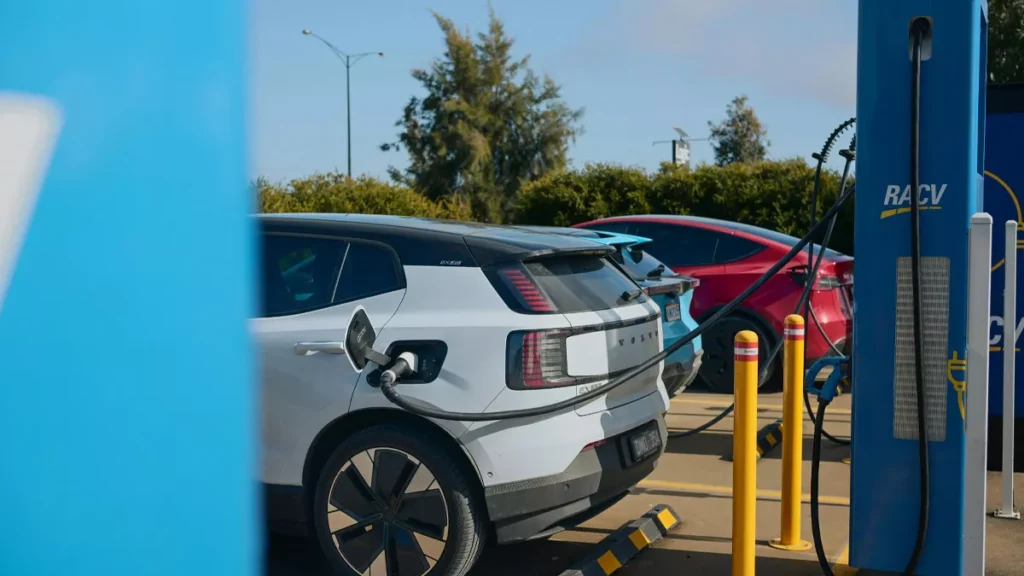
Charging stations are still limited and unevenly distributed. Skilled technicians familiar with EV systems are scarce. Spare parts supply chains are fragmented. And for many visitors, renting an electric vehicle is still not a default option.
This gap is not just a constraint—it is where the opportunity lies.
Unlike the villa market, where competition is already intense, electric mobility in Bali is still in its early build-out phase.

Where Investors Are Starting to Look
1. EV Rental for Tourists
Demand for electric scooters and cars exists—but supply remains inconsistent.
Well-positioned rental fleets in areas like Canggu, Seminyak, and Ubud could attract eco-conscious travelers, especially if paired with:
- reliable vehicles
- transparent pricing
- seamless digital booking
However, adoption is still uneven, and many tourists continue to prioritize convenience over sustainability—making execution critical.
2. Service and Maintenance Centers
As EV adoption grows, so does the need for maintenance.
Currently, Bali has limited capacity for EV diagnostics, repairs, and battery servicing. This creates a clear infrastructure gap.
A well-equipped workshop with trained technicians and access to spare parts could become a foundational business in the ecosystem.
3. Charging and Battery Infrastructure
Charging availability remains one of the biggest bottlenecks.
Strategic placement of charging stations—at hotels, commercial hubs, and tourist areas—could significantly improve usability.
For two-wheelers, battery swapping models may prove more practical than traditional charging, especially in high-traffic areas.
These investments require capital and regulatory coordination, but offer potential first-mover advantage.
4. Conversion and Hybrid Solutions
Programs to convert combustion motorcycles into electric are beginning to gain traction.
This opens opportunities in:
- conversion workshops
- component supply
- certification services
However, standardization and quality control remain key challenges.
5. Supporting Ecosystem
Beyond vehicles themselves, the EV transition creates demand for:
- technician training programs
- logistics for batteries and components
- fleet management software
- solar-powered charging integration
These adjacent sectors may offer more stable and scalable returns than direct vehicle ownership.
A More Realistic View of the Risks
The opportunity is real—but so are the constraints.
- Adoption is still early-stage, especially outside urban areas
- Infrastructure remains uneven, particularly in less developed regions
- Technical expertise is limited, creating operational bottlenecks
- Electric grid reliability varies, which can affect scalability
- Consumer behavior is not fully aligned yet, with many still prioritizing familiarity over sustainability
In short, this is not a mature market. It is an emerging one.
Why Investors Are Paying Attention Anyway
Compared to Bali’s property sector—which in some areas is showing signs of oversupply—the EV space is still relatively open.
This does not guarantee success. But it does mean that:
- competition is lower
- market positions are still being defined
- early entrants have a chance to shape standards and expectations
For investors, the appeal lies less in immediate returns, and more in positioning.
A Shift in How to Think About Bali
Bali’s investment story is evolving.
For decades, it has been driven by land and tourism. That foundation remains. But the next layer of growth may come from the systems that support it—transport, energy, and infrastructure.
Electric mobility sits at the intersection of all three.
A Shift in How to Think About Bali
Bali’s investment story is evolving.
For decades, it has been driven by land and tourism. That foundation remains. But the next layer of growth may come from the systems that support it—transport, energy, and infrastructure.
Electric mobility sits at the intersection of all three.
Hey Bali Perspective:
The most successful investments in Bali have rarely been the obvious ones. They have been the ones made before the shift became visible.
Electric mobility may not yet be mainstream. But it is no longer hypothetical.