

BADUNG, Bali — A 45-year-old British national wanted by Interpol on allegations of money laundering was detained by Indonesian immigration officers moments after landing at Bali’s main international gateway, underscoring the island’s growing role in global law enforcement cooperation.
The man, identified by his initials SL, arrived on a flight from Singapore and was stopped at the international arrivals area of I Gusti Ngurah Rai International Airport at approximately 12:45 p.m. local time. During routine immigration checks, officers flagged his identity through an integrated system linked to Interpol’s Red Notice database.
Authorities say the arrest was not incidental—it was the result of a system designed to detect individuals sought across borders in real time.
“We emphasize that Bali will never be a safe haven for international fugitives,” said Bugie Kurniawan, head of the Ngurah Rai Immigration Office, in a statement released Saturday.
A System That Worked as Intended
According to immigration officials, the alert was triggered automatically as the traveler’s passport was processed. The Red Notice indicated that SL is suspected of involvement in a money laundering case and is believed to be connected to an international criminal network operating through shell companies.
Officials did not provide further details about the alleged operations or jurisdictions involved. But the designation of a Red Notice typically signals that a suspect is being sought for serious transnational crimes and that member countries are requested to locate and provisionally arrest the individual pending further legal proceedings.
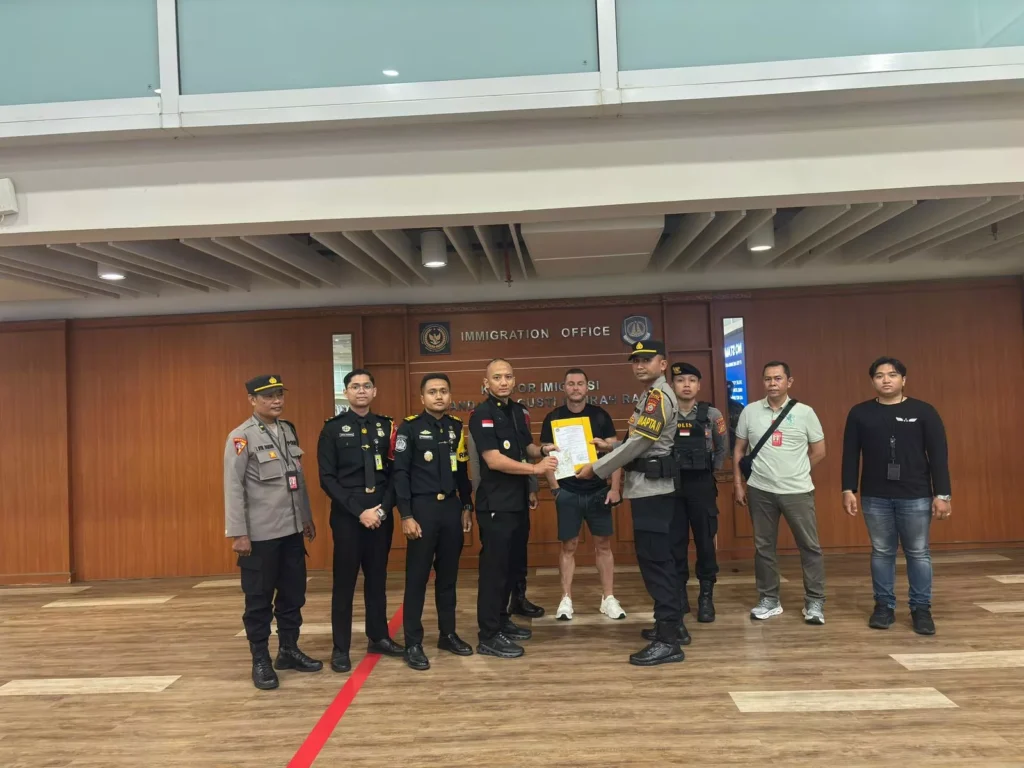
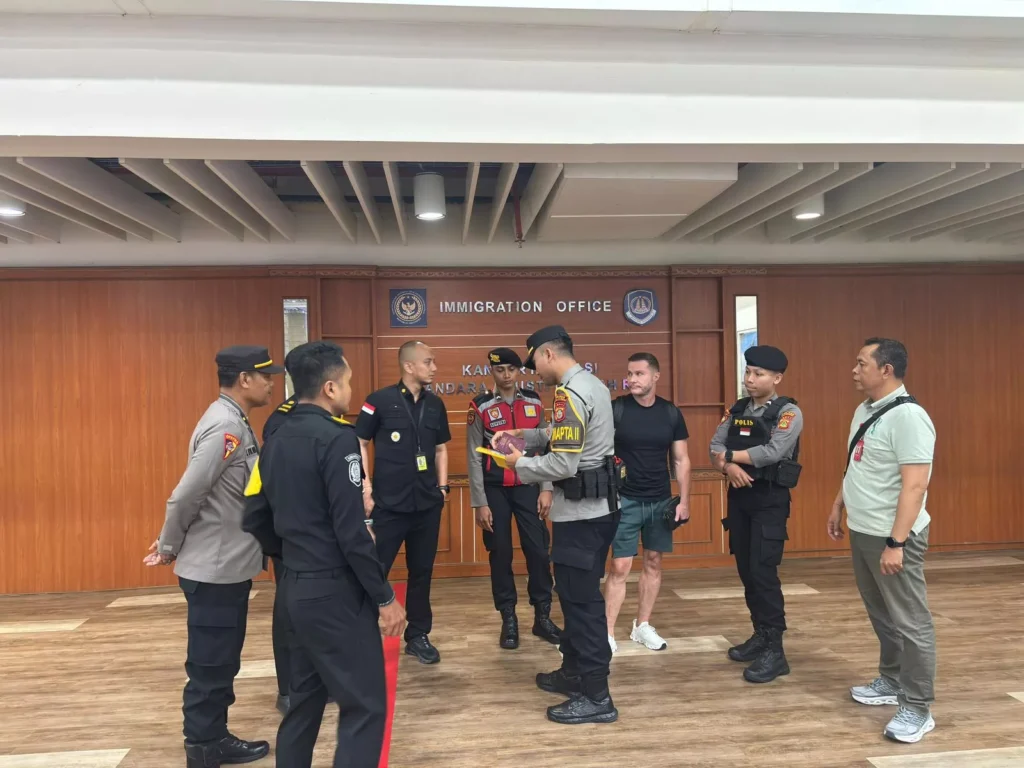
Following his detention, SL was handed over to the Airport Police (Polres Kawasan Bandara Ngurah Rai) for further investigation and processing, in accordance with procedures governing international fugitives.
A Message Beyond a Single Arrest
For Bali—an island better known for its beaches, temples, and tourism economy—the arrest carries broader implications.
Felucia Sengky Ratna, head of the Bali Regional Office of the Directorate General of Immigration, described the case as evidence that Indonesia’s border control systems are functioning as intended in an era of increasingly mobile criminal networks.
“This success demonstrates that immigration supervision in Bali is effective, integrated, and responsive to transnational threats,” she said.
The statement reflects a wider effort by Indonesian authorities to strengthen oversight of foreign nationals entering the country, particularly through major tourism hubs like Bali, where high volumes of international arrivals intersect with the realities of global mobility.
What This Means for Travelers and Expats
For visitors and expatriates in Bali, the incident is unlikely to affect day-to-day travel. Immigration checks at the airport continue to operate as normal, and the vast majority of travelers will pass through without issue.
But the arrest serves as a reminder of a less visible layer of infrastructure: behind the efficiency of airport arrivals lies a system designed not only to facilitate movement, but also to monitor it.
In practical terms, that means:
- Border controls are digitally integrated with international law enforcement databases
- High-risk individuals can be flagged instantly upon entry
- Coordination between immigration and police authorities is active and ongoing
For law-abiding travelers, these systems are largely invisible. For those sought by international authorities, they are increasingly difficult to evade.
A Balancing Act
Bali’s position as one of Southeast Asia’s busiest tourism destinations presents a constant balancing act. The island must remain open and welcoming to millions of visitors each year, while also ensuring that its openness does not become a vulnerability.
Cases like this highlight how that balance is evolving.
Rather than tightening access broadly, authorities are leaning on data integration and international cooperation—targeting specific risks without disrupting the overall flow of travel.
The Bigger Picture
The arrest of a single fugitive does not redefine Bali’s security landscape. But it does illustrate how the island fits into a wider global network—one in which borders are no longer just physical checkpoints, but nodes in a system of shared intelligence.
For Bali, the message from authorities is clear: the island remains open to the world—but not without scrutiny.
And for those moving across borders in an increasingly connected era, anonymity is becoming harder to maintain.