
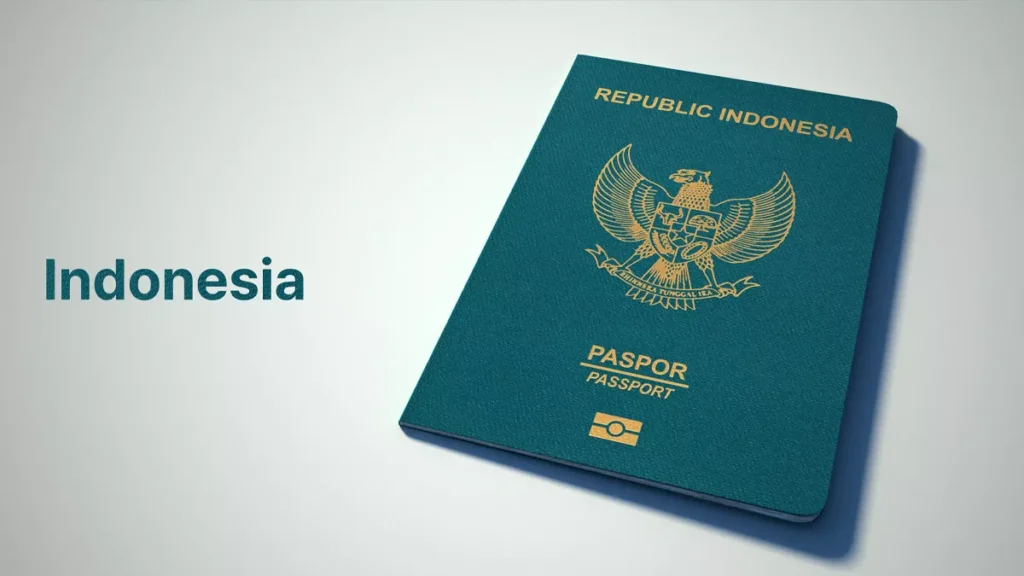
A new global ranking reveals both the expanding reach and persistent limitations of the Indonesian passport, reflecting the nation’s diplomatic standing and impacting Bali’s own global connections.
BALI, Indonesia – In the complex calculus of global mobility, the strength of a nation’s passport is a telling barometer. The latest data, updated February 6, 2026, places the Indonesian passport at a “mobility score” of 88, granting its citizens visa-free access to 42 countries and visa-on-arrival (VoA) entry to 41 more. While this represents significant regional access, it also highlights a plateau, with Indonesia ranked 58th globally and still requiring visas for 110 nations, including most major Western powers.
For Bali, an island whose lifeblood is international exchange, the evolving access afforded to its own citizens mirrors its own place in the world and has subtle but real economic and social implications. For young Balinese professionals and creatives, this passport access increasingly shapes career horizons as much as personal ambition.
The Current Visa-Free Landscape: A Focus on the Global South
The list of 42 visa-free countries for Indonesian passport holders is a map of deepening ties within the Global South and Southeast Asia. It includes key regional neighbors like Thailand (60 days), Singapore (30 days), Vietnam (30 days), and the Philippines (30 days). Beyond ASEAN, the access extends to strategic partners in South America (Brazil, Chile, Peru), the Middle East (Turkey, Morocco), and across Africa and the Caribbean.
This access facilitates not just leisure travel but business, education, and cultural exchange. For Bali-based entrepreneurs and professionals, easier travel to markets like Brazil or Turkey can open direct channels for trade in artisan goods, wellness tourism partnerships, or tech collaboration.
The Diplomatic Ceiling: The Doors That Remain Closed
The flip side of the report is the extensive list of countries still requiring visas, which reads like a roster of the world’s largest advanced economies: the United States, the United Kingdom, Canada, Japan, China, and the entire Schengen Area in Europe. This barrier represents a diplomatic and bureaucratic hurdle that affects Bali’s community directly.
It limits the ease with which Indonesian business owners can explore markets, artists can tour, or students can attend conferences. For a Balinese creative selling handicrafts or a Seminyak-based restaurateur scouting trends, the cost and uncertainty of securing a Schengen or US visa remain significant obstacles to global growth.
The Bali Angle: Reciprocity and Perception
Bali’s reality is one of fascinating asymmetry. Every year, millions of citizens from visa-required countries (Australians, Europeans, Americans) enjoy easy entry to Indonesia, often with a simple visa-on-arrival or e-visa. This one-way ease has been foundational to Bali’s tourism economy.
The passport ranking subtly influences this dynamic. The relative difficulty for Indonesians to travel to the home countries of their guests can, over time, create a subtle perceptual imbalance. Strengthening the passport’s power through diplomatic channels is not just about convenience for travelers; it’s about fostering a sense of mutual mobility and respect.
A stronger Indonesian passport would enable more of Bali’s hospitality leaders, cultural ambassadors, and business innovators to engage with the world as easily as the world engages with Bali.
The Road Ahead: More Than Just Stamps
Analysts cite economic stability, security protocols, and international diplomatic confidence as keys to improving passport strength. For Bali, a more powerful Indonesian passport would mean a more globally connected local population, leading to richer cross-cultural exchanges and more diversified economic opportunities beyond tourism.
The current ranking shows a passport that is pragmatically powerful within its region and across emerging economies but still knocking on the door of the traditional “Global North.” Its journey toward greater access is, in many ways, parallel to Bali’s own evolution: deeply connected, globally beloved, but navigating the complex rules of a world order it didn’t design. Each new visa-free agreement is a small step toward a more balanced and open exchange.