




























HEYBALI.NEWS – In a move that offers modest financial relief at the start of the new year, Indonesian state-owned energy giant Pertamina has lowered prices for its range of non-subsidized fuels nationwide, effective Thursday, January 1, 2026. The price adjustments reflect recent shifts in the global oil market and the performance of the Indonesian Rupiah against the US Dollar.
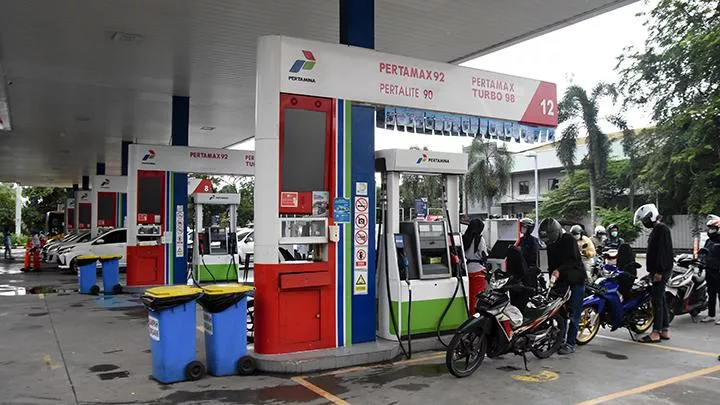
Announced by its commercial arm, Pertamina Patra Niaga, the new pricing structure sees reductions across its premium product lines. The widely used Pertamax (RON 92) now retails at Rp 12,350 per liter, down from Rp 12,750. The higher-octane Pertamax Turbo (RON 98) is now Rp 13,400 per liter, reduced from Rp 13,750.
Other premium fuels saw more significant cuts. Dexlite fell to Rp 13,500 per liter from Rp 14,700, while the top-tier Pertamina Dex was lowered to Rp 13,600 per liter from Rp 15,000. Pertamax Green 95 was adjusted to Rp 13,150 per liter.
Robert Dumatubun, Corporate Secretary of Pertamina Patra Niaga, stated that the periodic adjustments follow a government-mandated pricing formula. “We continue to maintain Pertamax Series and Dex Series prices as competitive,” he said in an official release.
Crucially, the prices of heavily subsidized fuels, which form the backbone of consumption for most Indonesians and the transport sector, remain unchanged. Pertalite (RON 90) stays at Rp 10,000 per liter, and subsidized Solar (diesel) remains at Rp 6,800 per liter. Final retail prices can vary slightly by region due to differing provincial vehicle fuel taxes.
The price correction was mirrored by private fuel retailers. Shell and BP-AKR stations in major markets like Jakarta and Java also lowered their premium fuel prices in line with the market trend.
For Bali’s large community of expatriates, tourists, and businesses—many of whom rely on vehicles requiring higher-octane fuel—the reduction provides welcome, if incremental, relief from operational and living costs. The island’s tourism and hospitality sectors, significant consumers of diesel and premium gasoline for transport and generators, will see a slight easing of overhead pressures.
Economists view the move as a responsive measure to favorable global conditions rather than a policy shift. It underscores Indonesia’s continued dual-track fuel pricing system, where subsidized fuels remain shielded for social stability, while premium fuels are allowed to fluctuate, passing on international market savings to consumers when possible. Analysts caution that prices will remain subject to monthly review, tied to the volatile calculus of global crude prices and currency exchange rates.