
























Nusa Penida – Nearly three weeks after Bali Governor I Wayan Koster ordered the removal of the Kelingking Beach glass lift, the controversial structure remains untouched on the cliffs of Nusa Penida. On Thursday, 11 December, there was still no sign of workers, machinery, or any early step toward dismantling the stalled project.
Kadek, a local guide who regularly brings visitors to the cliffs, told Kompas that nothing has changed on the ground. “Three days ago, I took guests there. The Kelingking Beach glass lift was still standing,” he said. “If demolition had started, we’d hear it right away in the driver groups.” His account is echoed by other residents who say the site has remained quiet since the governor issued his order.
Koster’s directive, delivered on 23 November, gave the developer — PT Indonesia Kaishi Tourism Property Investment Development — up to six months to dismantle the structure on their own. The lift was built without proper permits and has been widely criticized for disrupting the coastal landscape and ignoring zoning rules designed to protect Nusa Penida’s fragile cliffs.
A Company That’s Hard to Locate
The company behind the Kelingking Beach glass lift lists a Denpasar address on LinkedIn: Jalan Tukad Badung XI-B No. 8 in Renon. Reporting by Kompas, which we cite here, found no physical office at that address.
Hey Bali News conducted its own follow-up visit and reached the same conclusion. The buildings at No. 8A, 8B, and 8C are residential homes. A large white structure next door — possibly the intended location — is still under construction and shows no indication of being an active office. A worker at the site said the project had been in limbo for years and could not confirm its purpose. The absence of a functioning office raises questions about oversight, accountability, and the company’s ability or willingness to complete the demolition.
Why the Order Matters
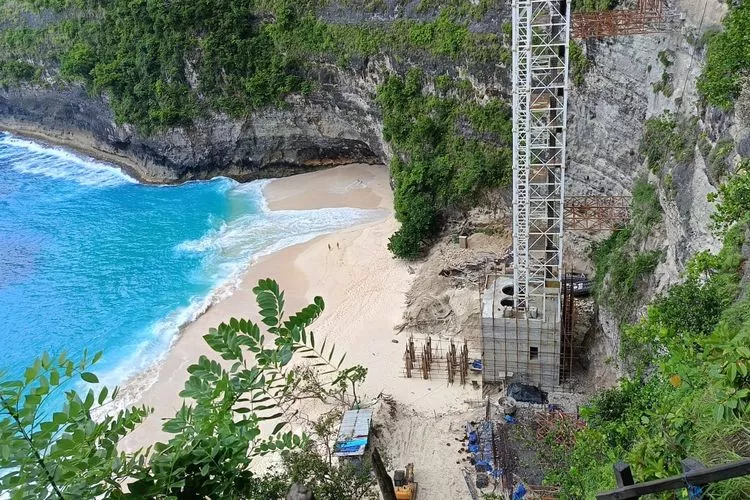
Authorities have stressed that the Kelingking Beach glass lift must be removed not only because of licensing violations but because it disrupts protected coastal space. Koster has said publicly that any tourism development in Bali must honor environmental law, cultural values, and community impact.
If the developer fails to act within the six-month window, provincial and Klungkung district authorities will carry out the demolition themselves. The company is also required to restore the damaged land within three months once the lift is removed.
Tourism analyst Giostanovlatto told Hey Bali News that the situation reflects wider issues in Bali’s investment landscape.
“Projects like the Kelingking Beach glass lift push ahead without proper transparency or community engagement. When companies can’t even be located at their registered addresses, it raises red flags. The lack of visible progress on demolition only deepens public concern.”
No Sign of Movement on the Ground
Despite the official order, the site today looks frozen in time. The lift tower stands tall on the cliffside, locked behind barriers but otherwise unchanged. Local drivers say no workers have returned since the governor’s press conference. Residents walking the area confirm the same: no equipment, no disassembly, no indication of anything being prepared.
That reality leaves a lingering question — whether the developer intends to comply at all — and what it means for local governance if a major order involving the Kelingking Beach glass lift can go unenforced for weeks.
As Bali continues to welcome record numbers of international visitors, cases like this have become a test of how the island manages tourism growth while protecting the landscapes and cultural values that make it unique.
Reported by Ferry Fadly
Written by Hey Bali Newsroom