
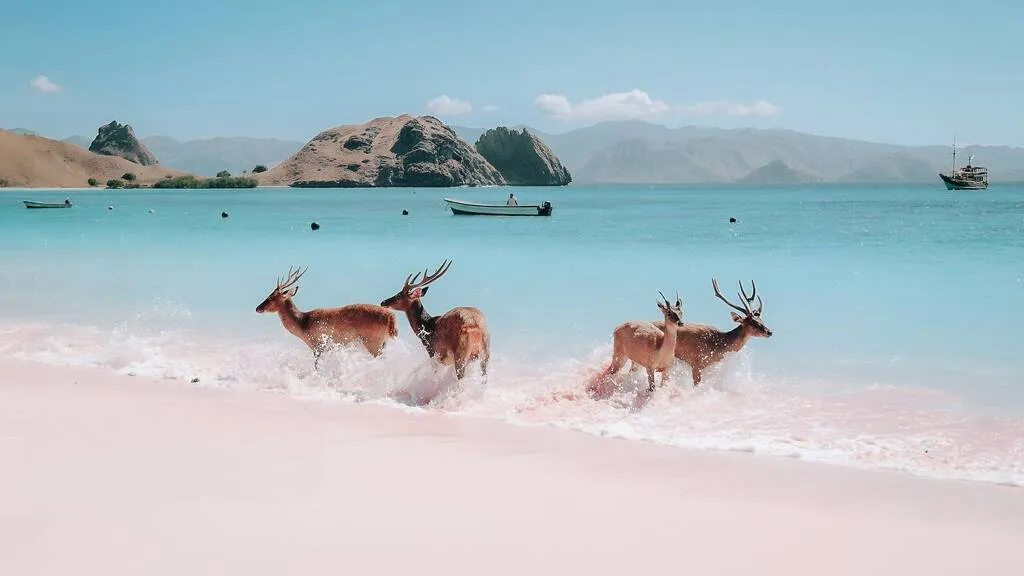
LABUAN BAJO, Indonesia — Few places on Earth feel as raw, as ancient, and as visually striking as Komodo National Park. Now, that reality has been formally recognized: the Indonesian archipelago has been named the second-most beautiful place in the world by Time Out, placing it among a rare class of global destinations defined not just by scenery, but by presence.
Only Spain’s Picos de Europa ranked higher.
For Komodo, the recognition is less about a single landmark than a rare convergence—prehistoric wildlife, rugged savannah islands, and one of the most biodiverse marine environments on the planet. It is a place where scale and silence still matter, where landscapes feel largely unchanged by time.
A Landscape Unlike Anywhere Else
Spread across more than two dozen islands between Sumbawa and Flores, Komodo National Park is defined by contrast.
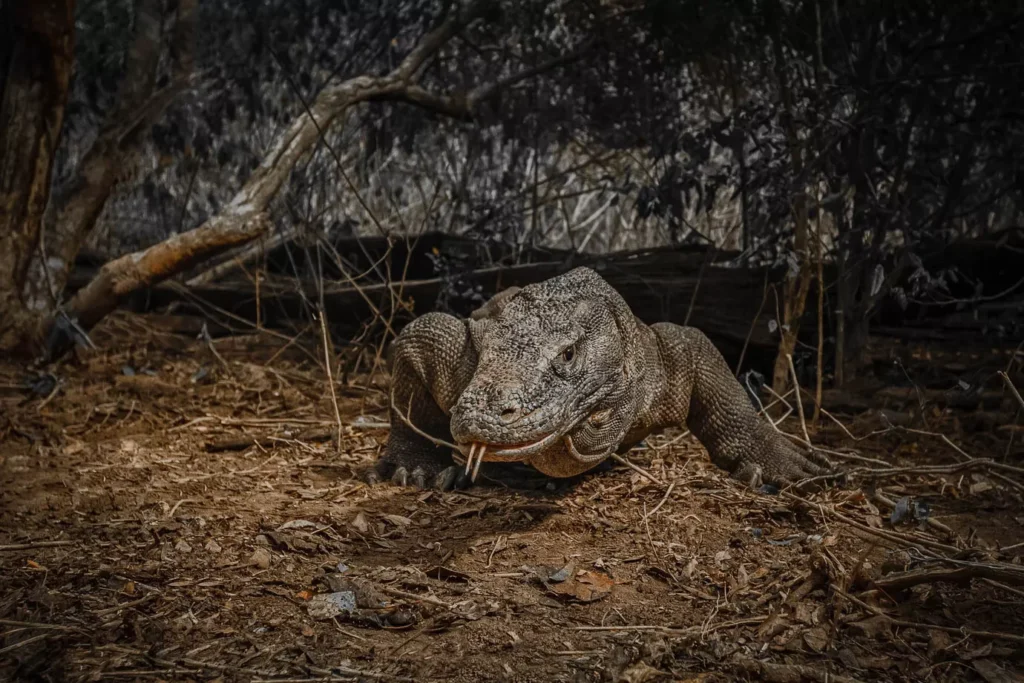
Dry, golden hills rise abruptly from turquoise waters. Pink-tinted beaches meet coral reefs teeming with life. And on land, the Komodo dragon—the world’s largest lizard—moves through the landscape with a quiet authority that feels almost out of another era.
It is this combination that drew Time Out’s attention.
“The park blends exotic landscapes, captivating islands, and the habitat of the Komodo dragon—an ancient creature found only here,” the editors wrote.
Unlike destinations built around a single viewpoint or attraction, Komodo offers something more immersive: a sense of entering an ecosystem that still operates on its own terms.
A Global Ranking with Local Consequences
The ranking places Komodo ahead of destinations long considered benchmarks of natural beauty, including Big Sur in California, Portugal’s Douro Valley, and Victoria Falls.
It is also the only Southeast Asian location in the top ten.
But recognition at this scale carries weight.
In recent years, Labuan Bajo—the gateway to Komodo—has undergone rapid transformation. Once a quiet fishing town, it is now a growing tourism hub, with expanded airport capacity, new hotels, and an increasing number of liveaboard and day-trip operators catering to international visitors.
The question is no longer whether Komodo will attract attention.
It is how much—and at what cost.

The Tension Between Beauty and Pressure
Komodo National Park is not just a destination. It is a protected ecosystem, home to species found nowhere else and marine environments considered among the richest in the world.
Its appeal is inseparable from its fragility.
The very qualities that earned global recognition—its isolation, its biodiversity, its relative lack of development—are also what make it vulnerable. Increased visitor numbers bring pressure: on reefs, on wildlife habitats, and on the delicate balance between conservation and access.
Tourism, in places like Komodo, is not a neutral force. It reshapes the environment it depends on.
And recognition, while valuable, can accelerate that process.
What Travelers Should Understand
For visitors, the ranking may reinforce what many already suspect: Komodo is extraordinary.
But it also reframes the experience.
To visit Komodo is not simply to see a beautiful place. It is to enter a space where boundaries matter—where designated paths, guided tours, and conservation rules are not restrictions, but safeguards.
The difference between sustainable tourism and irreversible damage can be subtle, and often invisible in the moment.
That makes awareness essential.
More Than a Destination
Komodo’s significance extends beyond tourism rankings.
It is a UNESCO World Heritage Site, a critical habitat for endangered species, and a rare example of a landscape where ecological processes remain largely intact.
For Indonesia, its global recognition is a point of pride. For local communities, it is a source of livelihood. But for both, it also presents a responsibility: to ensure that growth does not outpace protection.
Because once ecosystems like this are altered, they cannot easily be restored.
What Comes Next
Awards and rankings can elevate a destination overnight. They can shape perception, drive demand, and redefine a place’s position on the global map.
But they can also test its limits.
Komodo National Park does not need to be discovered. It has always been there—remote, complex, and extraordinary.
What matters now is how it is experienced.
Because the future of Komodo will not be decided by how beautiful it is.
It will be decided by how carefully that beauty is managed.