
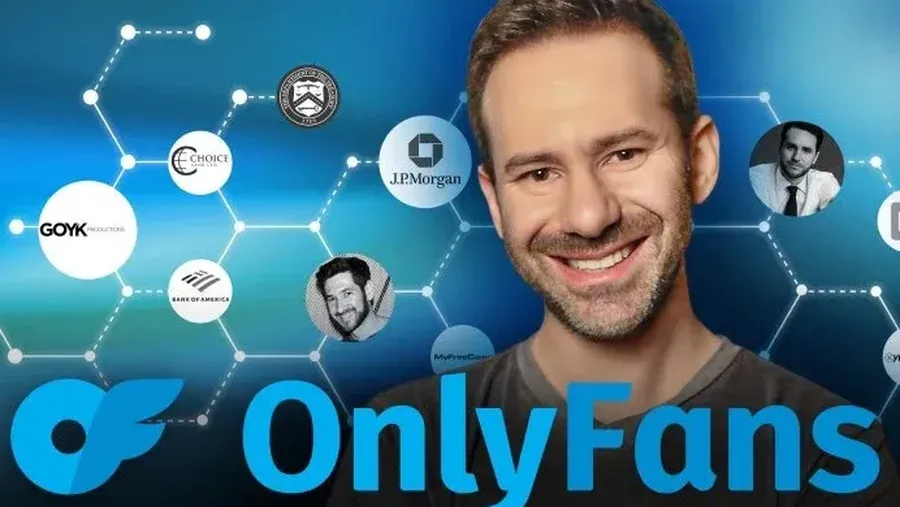
LONDON — Leonid Radvinsky, the Ukrainian-born entrepreneur who turned OnlyFans from a little-known startup into one of the most profitable—and controversial—platforms on the internet, died on Sunday at 43.
His company confirmed his death in a brief statement, offering few details beyond noting that he had died after a long illness. The restraint was fitting. For years, Radvinsky had shaped a global business that thrived on visibility, while remaining almost entirely out of sight himself.
He leaves behind a company that helped redefine how content is created and monetized online—and a legacy that resists easy judgment.
A Platform Reimagined
When Radvinsky acquired OnlyFans in 2018, it was a struggling subscription-based platform with limited reach and uncertain prospects. Founded two years earlier by British entrepreneurs, it had yet to find a clear identity.
Radvinsky saw something different.
Drawing on his experience in building online businesses, he recognized the potential for a simple but powerful model: a direct financial relationship between creators and their audiences, unmediated by traditional gatekeepers.
Under his ownership, OnlyFans grew rapidly. The transformation accelerated during the COVID-19 pandemic, when lockdowns pushed both creators and consumers into digital spaces. What had once been niche became mainstream.
By 2024, the platform had evolved into a global ecosystem, generating more than a billion dollars in annual revenue and serving hundreds of millions of users. It turned performers into entrepreneurs and reshaped the economics of online content.
At the center of it all was a business model that was both straightforward and highly effective: OnlyFans would take a percentage of each transaction, allowing creators to retain the majority of their earnings while scaling the platform’s growth.

A Man Who Preferred Distance
Despite the scale of his success, Radvinsky remained an unusually private figure.
He rarely granted interviews, avoided public appearances, and delegated the company’s public voice to others. In an industry built on exposure, he cultivated absence.
Born in Ukraine and raised in Chicago, he studied economics at Northwestern University. Over time, he built and sold several internet businesses before turning his attention to OnlyFans.
In later years, he lived in Florida, where he managed his investments quietly. His philanthropic contributions included support for Memorial Sloan Kettering Cancer Center—an institution that would later take on personal significance as he faced his own illness.
A Business Built on Tension
OnlyFans occupies a complicated place in the digital economy.
On one hand, it offered creators—many of them women—a level of control over their work and income that had rarely existed at scale. It allowed individuals to monetize content directly, bypassing traditional industries that had long dictated terms.
On the other, the platform became closely associated with adult content in ways that were both commercially successful and socially contentious.
Radvinsky rarely addressed that tension publicly.
In 2021, the company announced it would prohibit sexually explicit content, citing pressure from financial partners. The decision prompted an immediate backlash from creators, many of whom depended on the platform for their livelihoods.
Within days, OnlyFans reversed course.
Radvinsky did not publicly explain the shift. As in much of his career, the most consequential decisions unfolded without his voice attached to them.
What He Leaves Behind
Radvinsky’s controlling stake in OnlyFans now passes to his estate. The company has said it will continue operating without interruption, though it has not disclosed details about future leadership.
For the millions who built careers on the platform, his death marks a turning point—though one shaped by a figure many never saw and rarely heard.
An Influence Still Unfolding
Radvinsky’s impact extends beyond the platform he built.
He was among a small group of entrepreneurs who understood early that the internet was moving toward direct relationships between creators and audiences—relationships defined not by institutions, but by access, attention, and payment.
OnlyFans became one of the clearest expressions of that shift.
Yet his legacy remains unsettled.
To some, he was a pioneer who expanded economic opportunity in a rapidly changing digital landscape. To others, he was the architect of a platform whose broader cultural implications are still being debated.
In the end, his influence may be measured less by the controversies that surrounded his company than by the model he helped normalize—one in which intimacy and commerce converge, and where the boundaries of both continue to evolve.
He built a system that allowed others to be seen.
And in doing so, he ensured that he would remain, almost entirely, unseen.