

























An Opinion Essay by Giostanovlatto, Founder Hey Bali News
The journey to Komodo National Park is often framed as a pilgrimage to the sublime. Tourists cross oceans drawn by images of turquoise seas and the primordial silhouette of the dragon. It is marketed as a place where the ancient world still holds sway. Yet what unfolded in the Padar Island Strait in the final days of 2025 revealed a more sobering truth: this paradise is fragile, shaped not only by nature’s whims, but by human systems, human error, and human consequence.
The story emerged in fragments of frantic news and social media posts, almost too tragic to absorb. A traditional pinisi schooner, the KM Putri Sakinah—its silhouette a symbol of Indonesia’s maritime heritage—sank into dark waters on a Friday night. On board was Martin Carreras Fernando, a Spanish football coach, traveling with his young family. What should have been a highlight of a holiday became the beginning of a 15-day ordeal that would grip a nation, shame a community, and test the limits of hope against the unforgiving sea.
What followed unfolded in two competing narratives. The first was official and procedural: the immediate mobilization of a large-scale Search and Rescue operation. Indonesia’s National Search and Rescue Agency deployed personnel and assets in a solemn promise to bring closure. Battling strong currents and heavy rain, teams searched relentlessly for more than two weeks. Their success was partial but undeniable. They recovered Fernando, his 12-year-old daughter, and his 10-year-old son. Three of four were returned to their family for burial. In that mission, they succeeded.
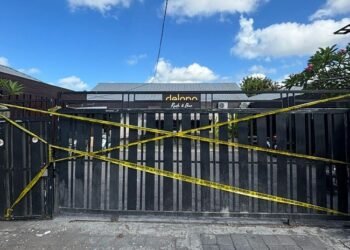
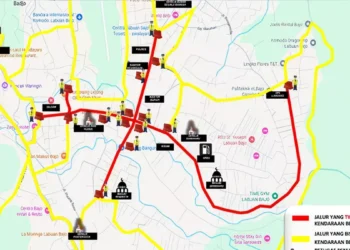
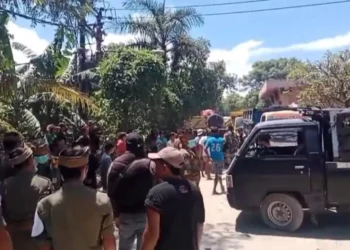
The second narrative was raw and public. In Labuan Bajo, the gateway to Komodo, grief curdled into fury. The sinking was no longer viewed as an accident, but as a systemic failure. Protesters gathered outside port authority offices, accusing officials of corruption, illegal fees, and ignored safety warnings. Anger deepened as authorities imposed a blanket suspension of all tourism sailings, cutting off the town’s economic lifeline. What began as mourning evolved into collective hardship. Trust was not merely damaged; it was shattered.
The official response blended accountability with regulation. Authorities named the vessel’s captain and a crew member as suspects, citing negligence. A sweeping ban on nighttime sailing for tourist boats followed, an implicit acknowledgment of the risks that had long been tolerated. Yet for many, these measures felt reactive—safeguards enforced only after a family had paid the highest price.
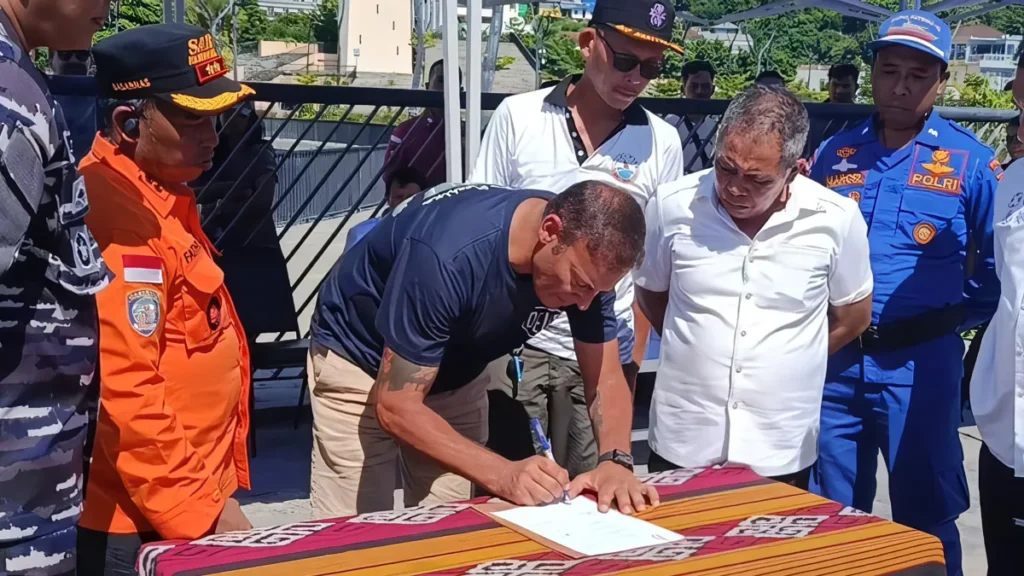
On the fifteenth day, the search formally ended. At a quiet ceremony attended by local officials and surviving family members, the operation was closed. The sea had returned three bodies. It kept the youngest. One boy, now officially declared lost, remained unaccounted for—his absence an unanswered question suspended between hope and grief.
This unresolved ending is the tragedy’s most human truth. It satisfies no one: not the family, left with a grief compounded by uncertainty; not the rescuers, whose creed is recovery; and not the global audience that longs for closure. Yet within this absence lies the story’s deeper lesson. The loss of this child is not only personal—it exposes the unresolved gaps in adventure tourism systems, in Indonesia and beyond. It reveals the distance between cultural heritage and modern safety standards, between economic ambition and regulatory discipline, between the beauty we sell and the risks we choose to overlook.

The waters of Komodo will calm. Boats, now restricted to daylight, will again cross the strait. The dragons will continue their ancient patrol. But the absence of one boy will endure—a silent depth beneath a destination celebrated for its wonders. His story stands as the counter-narrative to the postcard, a reminder that before paradise can be promised, the most basic human contract must be honored: the assurance of a safe return. The search has ended. The reckoning has not.