
In a notable shift, Bali’s police intelligence division is seeking closer cooperation with online journalists to improve public communication on sensitive issues, from foreigner misconduct to environmental crises.
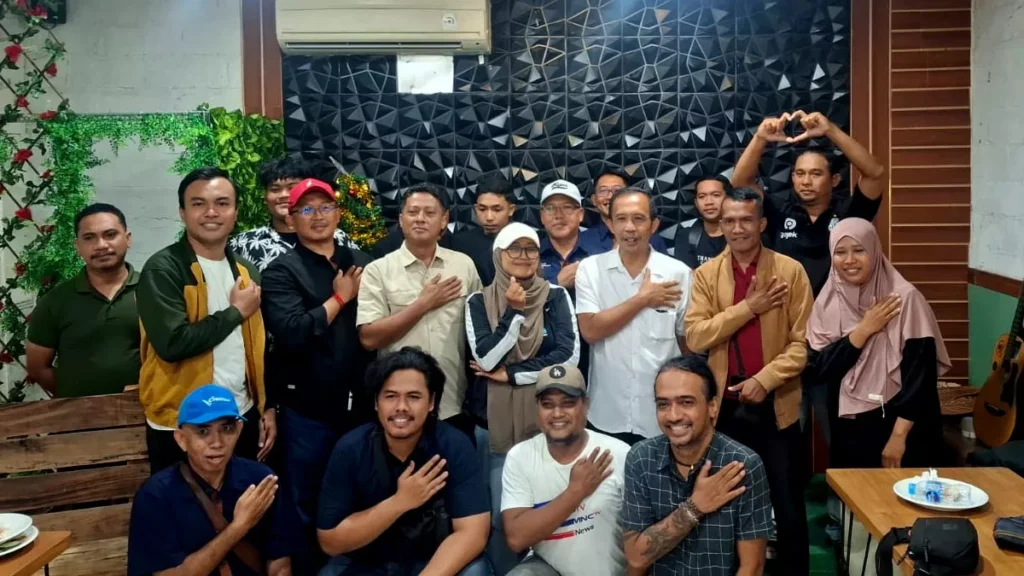
DENPASAR, Bali — Behind the casual ambiance of a Renon café this week, a significant meeting unfolded that could redefine how Bali’s story is told to the world. Senior officers from the Bali Police’s Intelligence and Security Directorate (Ditintelkam) sat down with leadership from the Bali chapter of the Online Journalists Association (IWO).
The stated aim, according to participants, was to evolve the relationship beyond routine information exchange toward actively supporting the island’s security, order, and global image.
A Partnership for Stability in the Digital Age
AKBP Agung Budiarto, Head of Sub-Directorate I of Ditintelkam, framed the media’s role as foundational to modern public safety. “We highly value the good relationship that has been built.
The role of the media, from our perspective, is very strategic. Not only as a conveyor of news but as a stabilizer,” Agung stated in the meeting, as reported in an official IWO Bali release.
This statement underscores a contemporary reality: in an era where viral narratives can impact tourism and social harmony, maintaining security (Kamtibmas) extends beyond physical patrols into the digital realm of newsfeeds and social media.
Five Pillars of Collaborative Narratives
The dialogue crystallized five key areas where police seek media collaboration:
- Environmental Crisis Management: Focusing on issues like flooding and waste, authorities requested media move beyond sensational images of damage toward more constructive, educational reporting that fosters preparedness without inciting panic—a direct effort to protect Bali’s image as a resilient destination.
- Strategic Policy Advocacy: For major infrastructure projects, police asked media to act as partners in fostering public understanding to prevent negative framing that could stall development, a move that some observers may see as nudging the media’s role toward policy communication alongside its traditional watchdog function.
- Public Education on Foreign Nationals: A primary focus was the sensitive issue of misconduct by foreign nationals (WNA). Police urged media to frame reports on violations—from overstaying to cultural disrespect—as educational moments that highlight law enforcement actions, transforming public anxiety into confidence in institutional response.
- Combating Misinformation: The classic call to “verify before sharing” was reinforced, with intelligence officials viewing credible media as essential “force multipliers” to counter the speed of hoaxes and false news.
- Crisis Communication Protocols: From the media’s side, IWO Bali Chair Tri Widiyanti emphasized the need for more fluid communication channels and clear official statements from police, especially during crises, to prevent the spread of speculative and confusing information online.
Analysis: From Adversarial Dynamics to Functional Alignment
This meeting signals a deliberate evolution in Bali’s police-media relations. The often-adversarial dynamic, balancing transparency against investigative secrecy, is being recalibrated into a more structured alliance.
The police intelligence apparatus recognizes online media as a double-edged sword capable of either calming or inflaming public sentiment. By engaging directly with IWO, which represents grassroots digital media, authorities aim to integrate a “security awareness” directly into the news production process.
IWO Bali, for its part, appeared receptive to this defined role. “IWO is committed to supporting the Bali Police in maintaining regional stability through positive, balanced, and responsible reporting. We are also ready to coordinate on media literacy activities and capacity building for online journalists,” affirmed Tri Widiyanti. This commitment serves as reciprocal currency for the deeper access and coordination offered by the police.
Implications for Bali’s Global Audience
For Bali’s international residents, business owners, and frequent visitors, this developing cooperation is highly relevant. It indicates a more centralized, proactive approach to managing the island’s reputation.
The news consumed about tourist behavior, environmental challenges, or infrastructure projects will increasingly be framed within this collaborative approach to stability and public order. While promising more consistent and “positive” narratives, it also invites scrutiny regarding the diversity of viewpoints and independent critical reporting that will remain accessible to the public.
This alliance marks a sophisticated, if controversial, step in narrative stewardship, acknowledging that in today’s Bali, security is not just enforced on the streets but is also managed in the headlines and social media posts that shape global perception.