
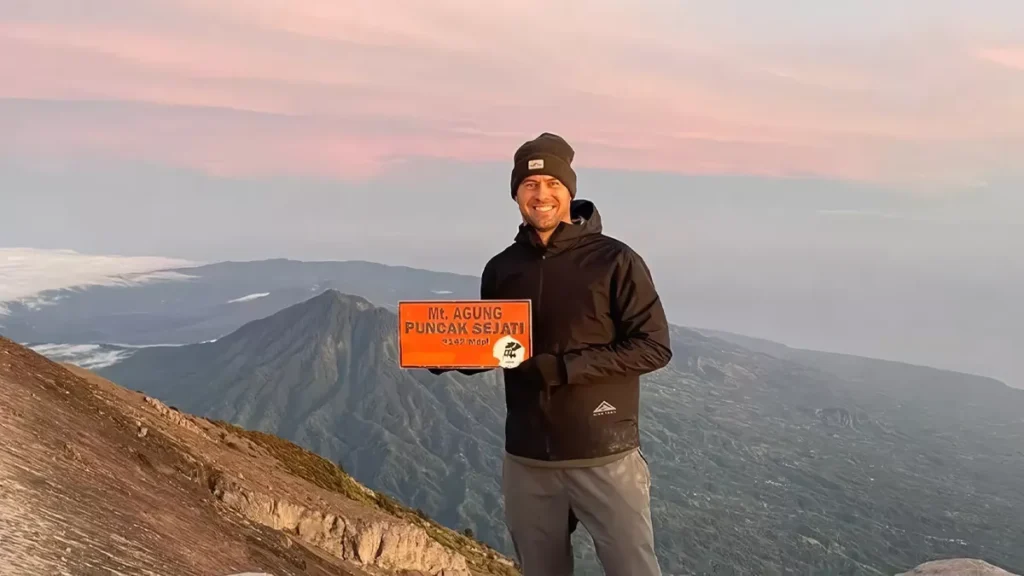
KARANGASEM, Bali — For many travelers, climbing Mount Agung is the defining adventure of a Bali trip. For the next 28 days, that experience will simply not be possible.
From March 28 through April 24, 2026, Mount Agung—Bali’s highest and most sacred volcano—will be closed to all trekking activity. The temporary closure, announced by local authorities, coincides with one of the island’s most important religious events: the Karya Ida Bhatara Turun Kabeh (IBTK) ceremony at Besakih Temple.
For visitors, it may feel like a disruption. For Bali, it is something else entirely.
When the Sacred Sets the Schedule
The decision to close Mount Agung was made by the traditional authorities of Besakih, led by Bendesa Adat Jro Mangku Widiartha, following consultations with temple custodians and community leaders.
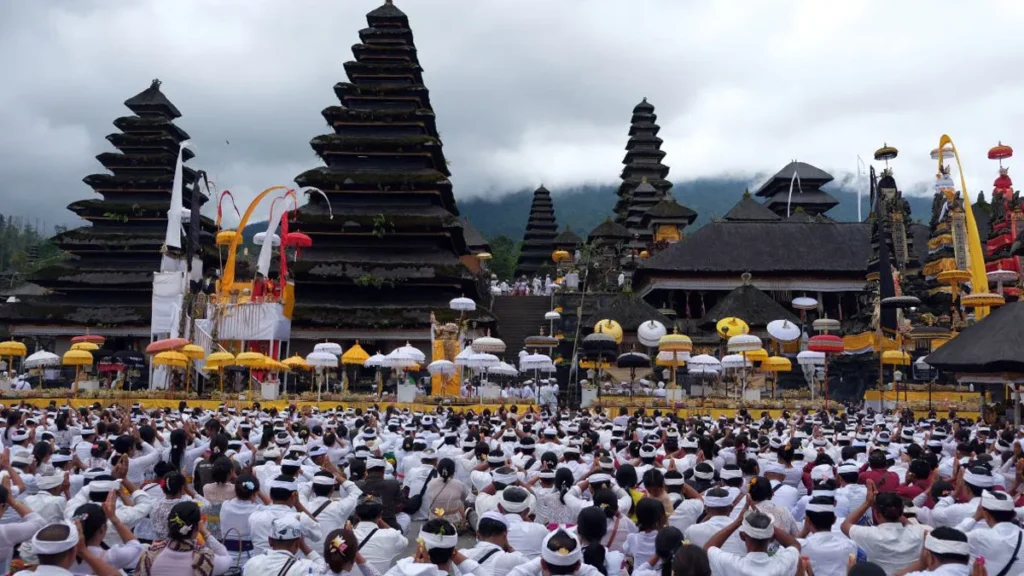
The timing is deliberate. On March 30, a key ritual known as nedunang will take place—marking the ceremonial descent of deities (Ida Bhatara) from their shrines to the main temple complex at Penataran Agung. The ceremony reaches its peak on April 2, drawing thousands of devotees from across the island.
During this period, Mount Agung is not just a mountain. It is a sacred axis—an active spiritual space where rituals unfold.
And when that happens, tourism pauses.
Authorities have formally notified trekking guides, tour operators, and travel agencies. The message is clear: no climbing will be permitted during the ceremony.
Why Mount Agung Is More Than a Trek
To many visitors, Mount Agung represents a physical challenge—a sunrise hike above the clouds, a bucket-list experience.
But for Balinese Hindus, the mountain holds a far deeper meaning.
It is considered the dwelling place of the gods, the spiritual center of the island, and the point around which religious life is oriented. The IBTK ceremony, held periodically at Besakih—the “Mother Temple”—is one of the largest and most complex rituals in Bali’s calendar.
In this context, the closure of Mount Agung is not a restriction. It is a continuation of tradition.
Even the presence of climbers on upper slopes during this period is seen as a potential disruption to the spiritual balance of the ceremony.
Mount Agung Trekking Closure: What Travelers Need to Know
For those planning to climb Mount Agung in Bali, the closure dates are fixed:
- Closed: March 28 – April 24, 2026
- Reopens: April 25, 2026 (after the penyineban closing ritual)
If your plans are affected:
- Reschedule your trek. Most local operators are aware of the Mount Agung closure and will offer alternative dates.
- Consider other hikes. Mount Batur (Kintamani) and Mount Abang remain open and offer rewarding trekking experiences.
- Respect local rules. Attempting to climb during the closure is strongly discouraged and unsupported by guides.
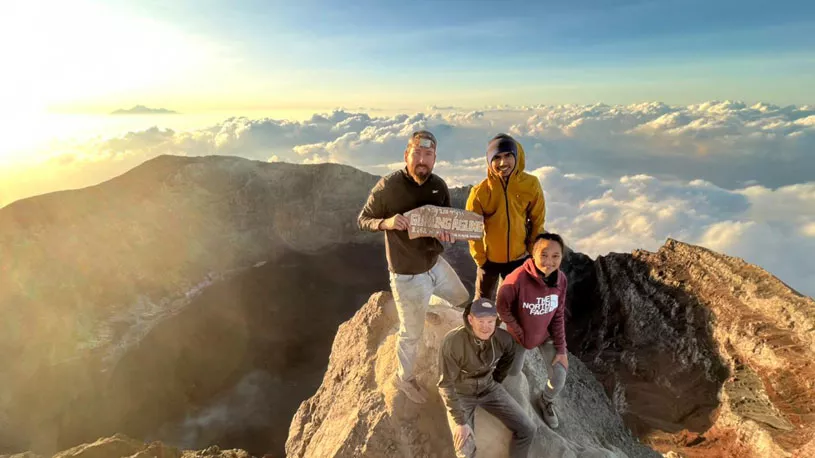
For many travelers, the closure may come as an unexpected change—especially for those who planned their itinerary around the climb.

Where Culture and Tourism Intersect
Bali’s tourism calendar is busy, predictable, and global.
Its spiritual calendar is not.
Moments like this—when Mount Agung is closed due to religious ceremonies—highlight a fundamental truth about the island: Bali is not a destination built solely for visitors. It is a living culture, where traditions continue to shape daily life.
For long-term residents and returning visitors, this rhythm is familiar. For first-time travelers, it can be surprising.
But it is also part of what makes Bali distinct.
A Different Way to Experience Bali
The closure of Mount Agung does not mean a loss of experience—it offers a different one.
During this period, East Bali remains rich with alternatives:
- The quiet coastline of Amed
- The historic water palaces of Karangasem
- The forested trails of Mount Abang
Without the usual trekking crowds, these places offer a slower, more reflective side of the island.
After the Ceremony Ends
On April 25, the mountain will reopen. Guides will return. Trekkers will once again begin their pre-dawn ascent toward the summit.
But the pause itself carries meaning.
Because in Bali, even the highest peak does not belong to climbers—it belongs to something older, and far more sacred.
Hey Bali News Tip
If your travel dates overlap with the Mount Agung closure, adjust your itinerary early and explore alternative regions. Understanding Bali’s ceremonial calendar is not just helpful—it is part of experiencing the island respectfully.