
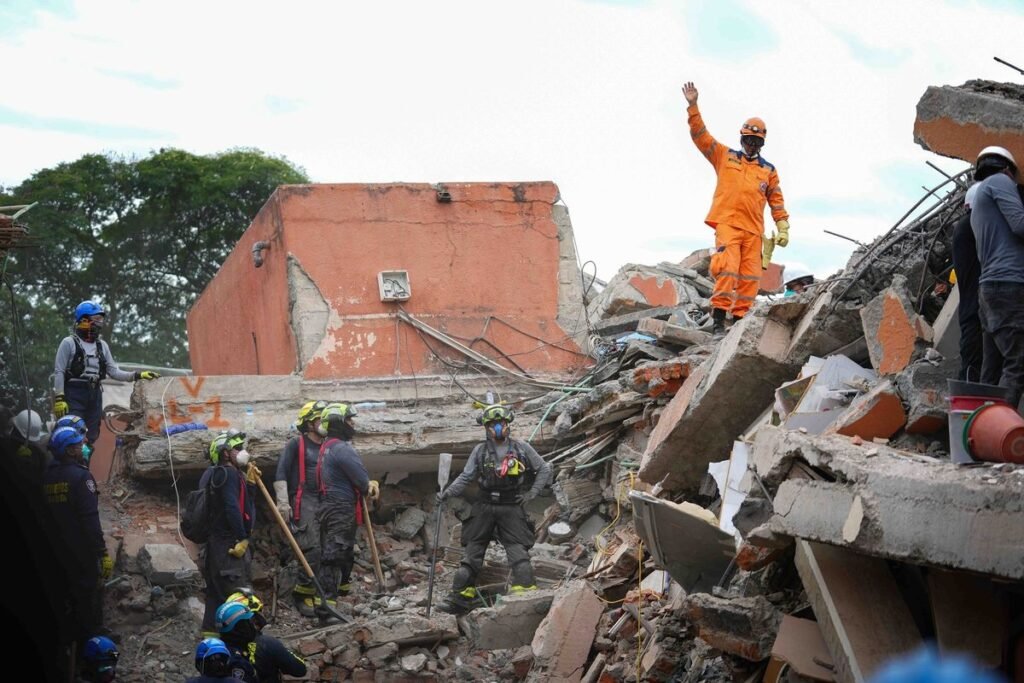
HEYBALI – Almost 12,000 homes across East Nusa Tenggara have been damaged or destroyed following the region’s recent earthquake, according to fresh government figures, with authorities now moving into the harder phase of any disaster response: verifying claims and getting compensation to the people who need it fastest.
The National Disaster Management Agency, known as BNPB, confirmed 11,925 damaged housing units in a briefing on Tuesday. Of those, 5,516 were classified as severely damaged, 1,916 as moderately damaged, and 4,493 as lightly damaged, according to Berton SP Panjaitan, acting head of BNPB’s disaster data and communications center.
Where the Damage Is Concentrated
The hardest-hit areas are Nagekeo, West Manggarai, and Ngada, three regencies on Flores island that bore the brunt of the seismic activity. For travelers and expats familiar with the region primarily through Labuan Bajo’s tourism corridor, the damage is a reminder that West Manggarai extends well beyond the gateway town to Komodo National Park, into rural communities now facing months of rebuilding.
A Tiered Compensation System, Tied to Damage Severity
Indonesia’s government has structured its response around three tiers of financial assistance, calibrated to how badly each home was affected.
Homeowners with lightly damaged houses will receive 15 million rupiah, roughly 1,000 US dollars, while those with moderate damage will receive 30 million rupiah, about 2,000 US dollars, BNPB chief Lieutenant General Suharyanto said during a visit to Riung Community Health Center in Ngada.
For homes classified as severely damaged, often meaning structurally destroyed, the government is offering residents a choice rather than a single fixed payout. Families can opt for a temporary housing allowance of 600,000 rupiah, intended to cover rental costs while they arrange alternative accommodation, or they can move into government-built temporary shelters while permanent housing is constructed.
“For severe damage, where a home has essentially collapsed, we will build temporary housing as a place to stay while permanent housing is built, or provide a temporary housing allowance instead,” Suharyanto explained.
Why Verification Comes Before Payment
Before any household receives assistance, officials say each property must go through a data collection and verification process to confirm the actual extent of damage. Suharyanto framed this step as essential to preventing duplicate claims and ensuring compensation matches the real damage category, a safeguard against both fraud and administrative error in a disaster zone spanning multiple regencies.
BNPB has partnered with regional government agencies, along with local disaster management offices known as BPBD, to carry out this verification. Every affected district and municipality has also been instructed to form a rapid-response task force, assembled by local mayors and regents, to coordinate damage assessments and ensure aid reaches residents in a structured, accountable way.
“Data collection needs to be a shared priority. We want to make sure affected residents receive assistance that matches the actual condition of their homes. That’s why coordination across all levels of local government is critical to making this process fast, accurate, and accountable,” Suharyanto said.
For residents across Nagekeo, West Manggarai, and Ngada, the coming weeks will likely be defined less by the earthquake itself and more by the verification process now underway, one that will determine how quickly displaced families can either rebuild or find stable temporary housing. For a region that depends heavily on tourism revenue from nearby Komodo National Park, how efficiently that process moves may shape recovery timelines well beyond the immediately affected households.