
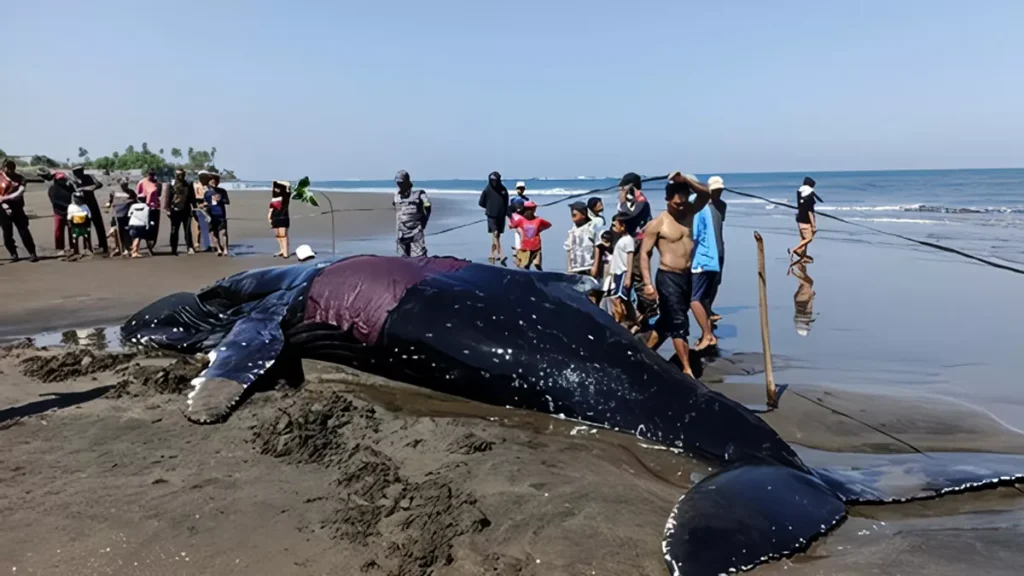
JEMBRANA, Bali — A humpback whale that stranded itself on Bali’s west coast has died despite hours of rescue efforts by marine experts, emergency responders and local residents who twice attempted to return the massive animal to the sea.
The whale, measuring 7.7 meters (25 feet) in length, died on Tuesday afternoon after becoming stranded on Perancak Beach in Jembrana Regency.
The death came just hours after rescuers launched an intensive operation that included pushing the whale back into deeper water twice, creating an emergency tidal pool to keep it alive, and waiting for rising tides that ultimately never came in time.
Two Rescue Attempts Failed
Earlier in the day, volunteers and local residents managed to push the whale offshore, but the exhausted marine mammal repeatedly drifted back onto the beach as extremely low tide left it unable to swim away.
Recognizing the growing danger, specialists from the Indonesia Wildlife Network (JSI) joined the rescue operation alongside local authorities and community volunteers.
The team examined the whale’s condition, recorded body measurements and dug a temporary water pit around the animal to keep its skin moist while reducing pressure on its internal organs.
“The water pit was created because the tide was extremely low,” said Dr. Farida Ulya Nugrahatin, a veterinarian with JSI.
“Our goal was to keep the whale’s body hydrated and reduce pressure on its organs while waiting for the sea level to rise.”
A 7.7-Meter Humpback Whale
Marine experts identified the animal as a humpback whale (Megaptera novaeangliae), one of the world’s most recognizable whale species, known for its long pectoral fins and seasonal migrations across the Pacific and Indian Oceans.
The whale measured 7.7 meters in length, although rescuers were unable to determine whether it was male or female because of its position on the beach.
Whale Succumbs After Hours Ashore
Despite continuous efforts throughout the day, the whale’s condition deteriorated after spending too much time stranded on land.
Authorities confirmed the animal died at approximately 3:30 p.m. local time.
“Every possible effort was made to save the whale,” said Jembrana Police Chief I Putu Suparta.
“However, because it had been stranded for such a long period, it eventually died.”
Necropsy to Determine What Happened
Wildlife specialists are now conducting a necropsy to determine the cause of the stranding and assess the whale’s health before death.
After the examination is completed, authorities plan to bury the carcass to prevent environmental contamination.
Whale strandings remain relatively rare in Bali, and marine experts say determining why they occur is often complex. Illness, injury, navigational errors, changing ocean conditions and environmental stress can all contribute, making post-mortem examinations an important part of understanding each incident.
The whale’s death has drawn widespread attention in Bali, where residents and rescuers spent hours trying to save one of the ocean’s largest mammals before the operation ultimately ended in tragedy.
#balinews | Source: Detik