

Picture a typical Bali commute: 20 minutes on a scooter from Canggu to Seminyak, midday sun overhead, humidity hovering near 80%. By the time you park, your skin has absorbed nearly the same UV exposure as an hour spent lying on the beach, minus the sunscreen most people remember to apply at the beach, but forget on the way to lunch.
For the estimated hundreds of thousands of tourists and expats who rent scooters in Bali each year, a helmet feels like enough protection. Dermatologists say it isn’t.
Why a Helmet Alone Doesn’t Cut It
“Even with a full face helmet, parts of the face, primarily the nose, cheeks, and lips, are exposed for longer than you think, long enough to put you at risk of a severe sunburn, which can lead to skin cancer, including melanoma,” according to AZ Medical Group, a U.S.-based physician network that has published specific UV safety guidance for motorcyclists.
That warning becomes far more relevant in Bali than in most riding destinations. The island sits close to the equator, where UV Index readings routinely fall between 10 and 14, classified as “Very High” to “Extreme,” with some months peaking as high as 15. Combined with year-round humidity averaging 75-85%, Bali produces almost ideal conditions for skin damage that many riders never register as it’s happening, since sweat and wind make overheated, sun-damaged skin feel deceptively cool.
What’s Actually Happening to Your Skin


Continuous exposure to UV radiation, dust, pollution, and wind while riding can trigger sunburn, dark spots, and accelerated signs of premature aging, including fine lines and wrinkles. Dust and pollution that settle on the skin can also clog pores, increasing the risk of acne, irritation, and a dull complexion.
The risk doesn’t stop with skin appearance. According to Dr. Olushola Akinshemoyin Vaughn, a dermatologist with the Froedtert & Medical College of Wisconsin health network, quoted by Wheel & Sprocket, “Ultraviolet (UV) radiation increases the risk of certain skin cancers including melanoma, which can be especially aggressive and deadly.” She adds a detail worth remembering next time you’re deciding whether to skip sunscreen for a “quick ride”: science can’t reliably predict how much individual protection any one person’s skin needs, which is why dermatologists recommend protecting skin consistently, not selectively.
Protection also isn’t limited to the face. The neck, hands, and forearms remain vulnerable even with a helmet and jacket, since some skin inevitably stays exposed during a ride.
Sunscreen Isn’t Optional, According to Dermatologists


Applying sunscreen before getting on a scooter is one of the most important steps riders routinely skip. Sunscreen helps block UVA and UVB rays responsible for sunburn, hyperpigmentation, and accelerated aging.
Choose a broad-spectrum sunscreen with at least SPF 30, and apply it roughly 15-20 minutes before heading out so it has time to properly absorb. AZ Medical Group recommends carrying a small tube of SPF 30+ sunscreen and reapplying every two hours during longer rides, and specifically flags the wrists as a commonly missed spot where sleeves and gloves don’t quite meet.
For maximum protection, pair sunscreen with a visored helmet, long sleeves, and gloves to further reduce direct sun and dust exposure during the ride.
One detail dermatologists emphasize that’s often overlooked: a Duke University Medical Center study found that applying a Vitamin C and E serum underneath sunscreen provides roughly four times the protection of sunscreen alone, a simple addition worth considering for anyone riding daily in Bali’s intense equatorial sun.
Sunscreen Reapplication Guide for Bali Riders
| Ride Duration | Recommended Action |
| Under 30 minutes | One application, 15-20 minutes before riding |
| 30 minutes – 2 hours | Apply before riding; reapply once if stopping midway |
| 2+ hours or multiple stops | Apply before riding; reapply every 2 hours, and immediately after removing/reapplying gloves or jacket |
| Beach day + scooter riding | Reapply after swimming or sweating, in addition to the standard 2-hour interval |
Keeping Skin Hydrated and Clean After Riding


Wind, dust, and pollution during a ride can strip away skin’s natural moisture, leaving it feeling dry, rough, or tight by the time you arrive. To keep the skin barrier strong, apply moisturizer both before and after riding.
Look for products containing ceramides, hyaluronic acid, or glycerin, ingredients that help lock in hydration for longer. Once you reach your destination, cleanse your face promptly with a gentle cleanser to remove leftover sunscreen, dust, pollution, and grime accumulated during the ride.
Avoid scrubbing too aggressively, which can trigger irritation, particularly after sun and wind exposure. Thorough cleansing also helps prevent clogged pores, reducing the risk of blackheads, breakouts, and a dull complexion, a genuinely useful habit for anyone riding daily between Bali’s beaches, rice terraces, and coworking spaces.
Gear Is Your First Line of Defense
Skincare products alone aren’t enough. Riding gear plays an equally important role as the first barrier against sun, dust, wind, and insects.
A visored helmet, long-sleeved jacket, gloves, and a neck buff or covering help protect exposed skin throughout a ride. Beyond physical protection, staying well hydrated matters just as much. Prolonged exposure to hot weather increases the risk of dehydration, which can leave skin looking drier and duller, particularly noticeable after a full day exploring the island by scooter.
Drinking enough water before and after riding helps maintain fluid balance while supporting skin health from within, not just from the outside.
Bali Riding Skin Checklist
✓ Apply broad-spectrum SPF 30+ sunscreen 15-20 minutes before riding
✓ Reapply sunscreen every 2 hours on longer rides
✓ Don’t forget the neck, hands, wrists, and lips
✓ Wear a visored helmet, long sleeves, and gloves
✓ Moisturize before and after riding
✓ Cleanse skin gently upon arrival to remove sunscreen, dust, and pollution
✓ Stay hydrated throughout the day, not just while riding
What This Means for Your Time on the Road in Bali

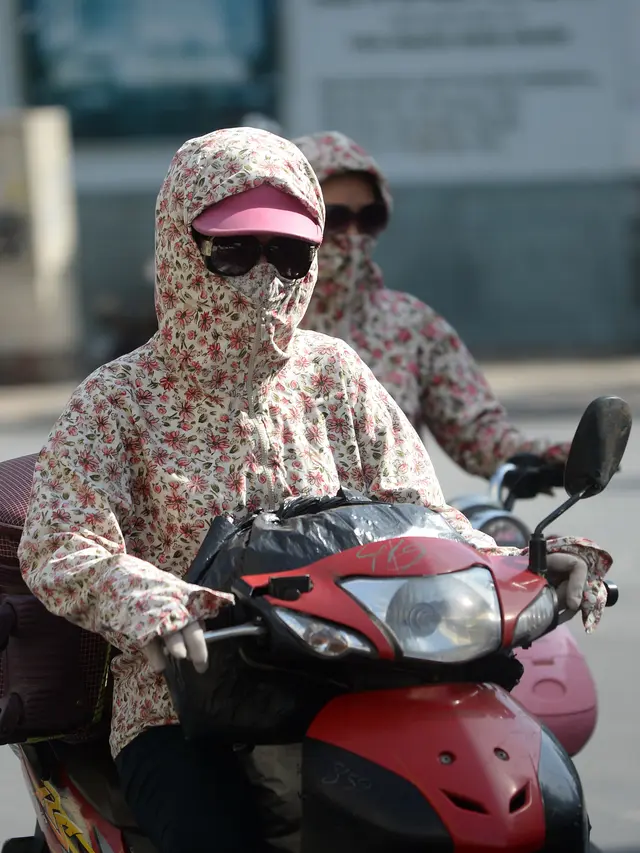
Scooters are one of the easiest ways to experience Bali, but the island’s equatorial sun and near-constant humidity mean your skin works harder here than it would on an ordinary commute back home. Combining physical protection, consistent hydration, and a simple skincare routine won’t make the ride any faster, but it will mean your skin looks and feels just as good on day 30 in Bali as it did on day one.
FAQ: Skincare for Scooter Riders in Bali
Do I still need sunscreen if I’m wearing a full-face helmet?
Yes. Even full-face helmets leave the nose, cheeks, lips, and chin exposed to UV rays for extended periods, enough to cause sunburn and long-term skin damage over repeated rides. Dermatologists specifically recommend not skipping sunscreen just because a helmet is being worn.
What SPF should I use for daily scooter rides in Bali?
A broad-spectrum sunscreen with at least SPF 30 is the standard recommendation. Given Bali’s consistently high UV Index (often 10-14, sometimes higher), reapplying every two hours during longer rides is more important than simply choosing the highest SPF number available.
Why does my skin feel dry after riding, even though Bali is so humid?
Wind exposure while riding strips moisture from the skin’s surface faster than humidity can replace it, which is why skin can feel dry, tight, or rough after a ride despite Bali’s generally humid climate. Applying moisturizer before and after riding helps counteract this effect.
Can dust and pollution from riding cause breakouts?
Yes. Dust and pollution that settle on the skin during a ride can clog pores, increasing the risk of acne, irritation, and a dull complexion, particularly if the face isn’t cleansed soon after arriving at your destination.
Is it necessary to protect my hands and neck, not just my face?
Yes. These areas are often only partially covered by gloves, sleeves, and helmets, leaving gaps, like the wrists, where sun exposure adds up unnoticed over repeated rides.