
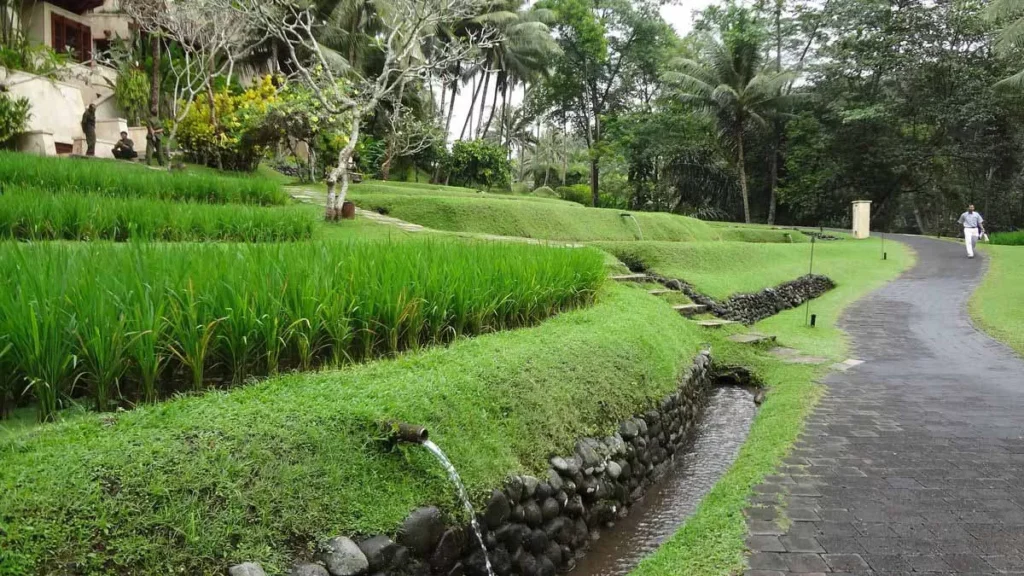
BALI – In Denpasar, the leaders of Bali’s centuries-old irrigation system are now receiving a monthly government salary.
Not a ceremonial allowance handed out during festivals. Not a symbolic cultural subsidy. An actual wage deposited each month as Bali’s capital struggles to keep one of the island’s most important traditions alive amid accelerating urban development.
Starting this year, the Denpasar city government has begun paying 2.5 million rupiah per month to each of its 42 pekaseh, the traditional heads of subak communities, alongside 1.5 million rupiah for 144 pangliman, or deputy leaders.
The policy may sound administrative on paper. In reality, it reflects something far larger unfolding across Bali: the quiet weakening of the subak system inside an island increasingly shaped by land certificates, villas, and urban expansion.
For visitors, subak often appears timeless. Tourists photograph emerald rice terraces in places like Jatiluwih or cycle through the paddies surrounding Ubud, seeing a landscape that feels inseparable from Bali itself.
But inside Denpasar, Bali’s fast-growing urban center, the pressures facing the subak are becoming harder to ignore.

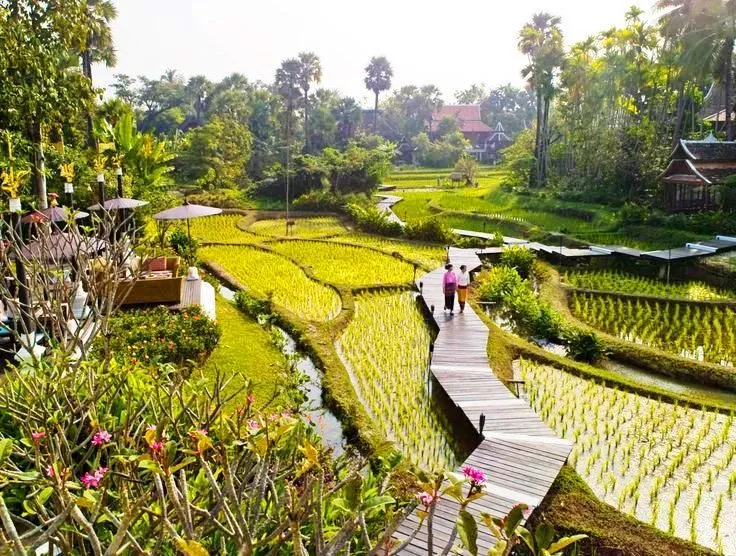
The subak is not simply an irrigation network. Recognized by UNESCO as part of Bali’s cultural heritage, it combines water management, farming cooperation, temple ritual, and customary law into a system that has shaped Balinese life for generations.
Its structure rests on three interconnected elements: the spiritual relationship centered around water temples, the farming community led by traditional authorities, and the agricultural land itself.
Increasingly, that final element is disappearing.
Rice fields on the edges of Denpasar continue to shrink as land changes ownership and agricultural plots are converted into housing, warehouses, cafés, and tourism accommodation. In some areas, irrigation channels still run beside concrete walls and newly built villas, remnants of a farming landscape being gradually absorbed into the city.
Yet even when the rice fields vanish, the religious obligations tied to the subak often remain.
“Take Peraupan Barat as an example,” said Raka Purwantara, head of Denpasar’s Culture Agency, during an interview in May. “The land is now dry and used for vegetables, but the temple is still there. Even if the farmland disappears, the responsibility to maintain the temple does not disappear.”
That burden increasingly falls on fewer active farmers.
Denpasar’s monthly payments are intended to keep the system functioning while the economic foundations underneath it continue to erode. The salaries help support ceremonial duties, coordination among farmers, and the preservation of subak institutions that once depended almost entirely on agricultural activity.
But the deeper challenge facing Bali’s urban subak may no longer be water alone. It is ownership.
Purwantara acknowledged that customary village regulations, known locally as awig-awig or perarem, only apply within the traditional community structure. Once land is sold outside the customary village and formally certified through Indonesia’s land administration system, the authority of the subak becomes significantly weaker.
“If the land already has a certificate, we cannot intervene,” he said. “The law follows what is written on that certificate.”
The distinction matters across Bali, where agricultural land is increasingly caught between traditional governance and formal property law.
Land still categorized as traditional or uncertified can sometimes remain under stronger customary oversight, allowing coordination between village authorities, land agencies, and agricultural offices. But once fully certified and transferred into private ownership, enforcing traditional protections becomes far more difficult.
For many foreign residents and investors arriving in Bali’s property market, the legal shift can be almost invisible. A rice field viewed during a holiday visit may look permanent, even sacred. A few years later, the same landscape may hold private villas, cafés, or boutique accommodation.
In many cases, the transformation begins not with bulldozers, but with paperwork.
At the same time, Denpasar’s remaining farmers are confronting another reality: growing rice inside an expanding city is becoming increasingly difficult to sustain economically.
Rather than insisting on preserving rice cultivation at all costs, local officials are now encouraging farmers to adapt. In smaller urban plots, horticulture crops such as chili, tomatoes, flowers, corn, and eggplant are often considered more financially viable than rice.
Purwantara noted that migrant farmers, particularly from Java, have already adjusted to those conditions by renting smaller plots and focusing on high-value seasonal crops.
“Our local farmers have not fully seen the opportunity yet,” he said. “The migrants who come here understand strategy.”
The city’s agricultural future, he suggested, may depend less on preserving an idealized image of Bali’s farming past and more on helping younger farmers survive economically within a rapidly urbanizing island.
Not all subak in Denpasar face identical pressures. Areas in eastern Denpasar still maintain relatively stable irrigation and continue rice cultivation, while downstream districts dealing with poorer water quality are considered more suitable for horticulture and mixed crops.
Still, the broader trajectory remains difficult to ignore.

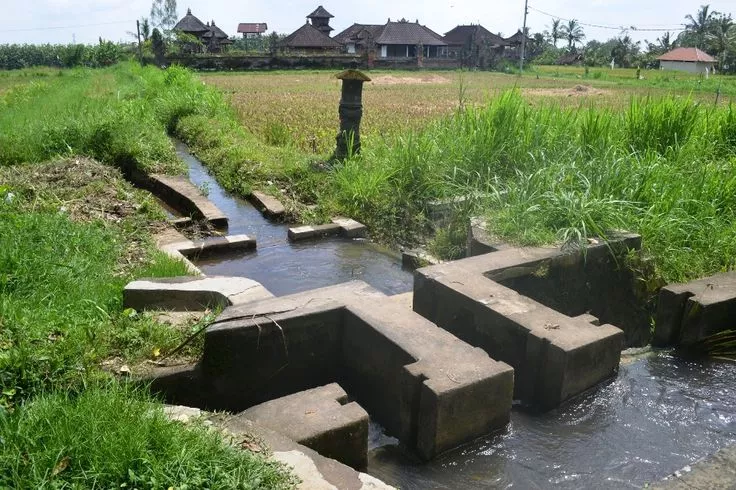
For travelers, Bali’s rice fields often symbolize tranquility and continuity. For local authorities trying to preserve them, the landscape has become a negotiation between culture, economics, tourism, and property law.
The city’s decision to pay subak leaders each month reveals how much that balance has changed. Traditions once sustained organically through farming communities are now increasingly dependent on state support to survive inside the urban economy.
For now, Denpasar still has 42 active subak.
But across Bali’s capital, the ancient system that once governed water and agriculture through collective obligation is entering a new phase — one where preservation no longer depends solely on ritual and harvests, but also on whether tradition can endure in a city where the value of land continues to rise faster than the fields themselves.