
Hey Bali – You choose the cheapest quote. You pay on time. You trust the progress photos.
And when the contractor disappears, you discover you have paid for a 5-billion-rupiah villa that is barely worth 4 billion — if it is even finished at all.
Across Bali’s fast-growing property market, stories like this circulate quietly between villa owners, architects, and expat WhatsApp groups. Half-finished projects. Contractors who stop answering calls. Structures that look polished from the outside but conceal cheaper materials beneath fresh paint and newly tiled floors.
According to Yohanes, a 20-year construction veteran and Director of PT Pilar Intan Konstruksi, the pattern has become disturbingly familiar.
In an exclusive interview with Hey Bali News, Yohanes did not speak in vague warnings or general industry complaints. He spoke in percentages.
And the numbers are difficult to ignore.
The Missing 20 Percent
A standard villa in Bali today costs roughly 10 to 12 million rupiah per square meter to build. For a 400-square-meter property, the total contract value can easily reach between 4 and 5 billion rupiah.
Now apply Yohanes’ estimate.


He says dishonest contractors can quietly extract between 10 and 20 percent of a project’s value by reducing specifications across multiple stages of construction: lower-grade steel hidden inside concrete, cheaper waterproofing beneath tiles, unbranded electrical components replacing specified materials, thinner finishes concealed behind freshly painted walls.
“It can be 10 to 20 percent of the contract value,” Yohanes told Hey Bali News. “If they do this across every element, the amount becomes significant.”
On a 5-billion-rupiah villa, 20 percent equals 1 billion rupiah.
Not through one dramatic theft. Through dozens of smaller substitutions most owners never notice until cracks appear, leaks emerge during rainy season, or structural problems surface months after completion.
“We are not talking about efficiency,” Yohanes said. “We are talking about cheating.”
The problem, he argues, becomes worse because many foreign owners are not physically present during construction. Some monitor projects remotely from Singapore, Australia, Europe, or Jakarta, relying almost entirely on progress photos and contractor updates sent through messaging apps.
That distance creates opportunity.
When Payments Move Faster Than Construction
Yohanes describes a payment pattern he says he has witnessed repeatedly over the years. The contractor claims the project has reached 50 percent completion. Photos are submitted. Payments are transferred. But on-site progress may only be closer to 30 percent.
“The owner overpays,” he explained. “They believe the work is already at 50 percent, but in reality it is far behind.”
The financial gap between perceived progress and actual construction becomes critical. Once contractors receive more money than the project stage justifies, cash flow problems often begin to spread across the site.
Workers stop arriving consistently. Material deliveries slow down. Construction timelines quietly drift. Excuses become more frequent.
And in the worst cases, the contractor disappears entirely.
“Once they have received too much money, they usually run,” Yohanes said.
For villa owners, the damage extends far beyond the missing funds. Replacing a contractor midway through construction is expensive, legally complicated, and technically risky, especially when hidden structural shortcuts may already exist inside the building itself.
The Cheapest Quote


There is usually a moment early in the process when the warning signs first appear.
Three contractors submit bids. Two prices seem relatively close. One comes in dramatically lower.
For many owners, especially first-time investors entering Bali’s booming villa market, the cheaper quote feels like a fortunate discovery.
For Yohanes, it is often the opposite.
“Dishonest contractors present unreasonable prices,” he said. “Too cheap.”
In more experienced corporate construction environments, he noted, the lowest bid is often treated cautiously rather than celebrated. Prices far below market averages frequently signal future compromises: lower specifications, incomplete budgeting, unstable cash flow, or a strategy that depends on renegotiating costs later once construction is already underway.
“The cheapest bid is not considered the safest,” Yohanes explained. “It is considered risky.”
The psychology behind the trap is simple. Owners want to believe they have negotiated well. Bali’s villa boom attracts many first-time buyers who assume construction operates like a competitive retail market, where paying less for the same product represents smart decision-making.
But construction does not work that way.
If one contractor’s price falls dramatically below the realistic market range, Yohanes warns, the missing money usually reappears somewhere else: inside downgraded materials, delayed timelines, hidden shortcuts, or unfinished work.
Building Blind
For foreign owners building remotely, he recommends three forms of protection.
First, avoid chasing the cheapest quote purely to reduce upfront cost. A dramatically lower bid may not represent savings at all, but future risk hidden inside the contract.

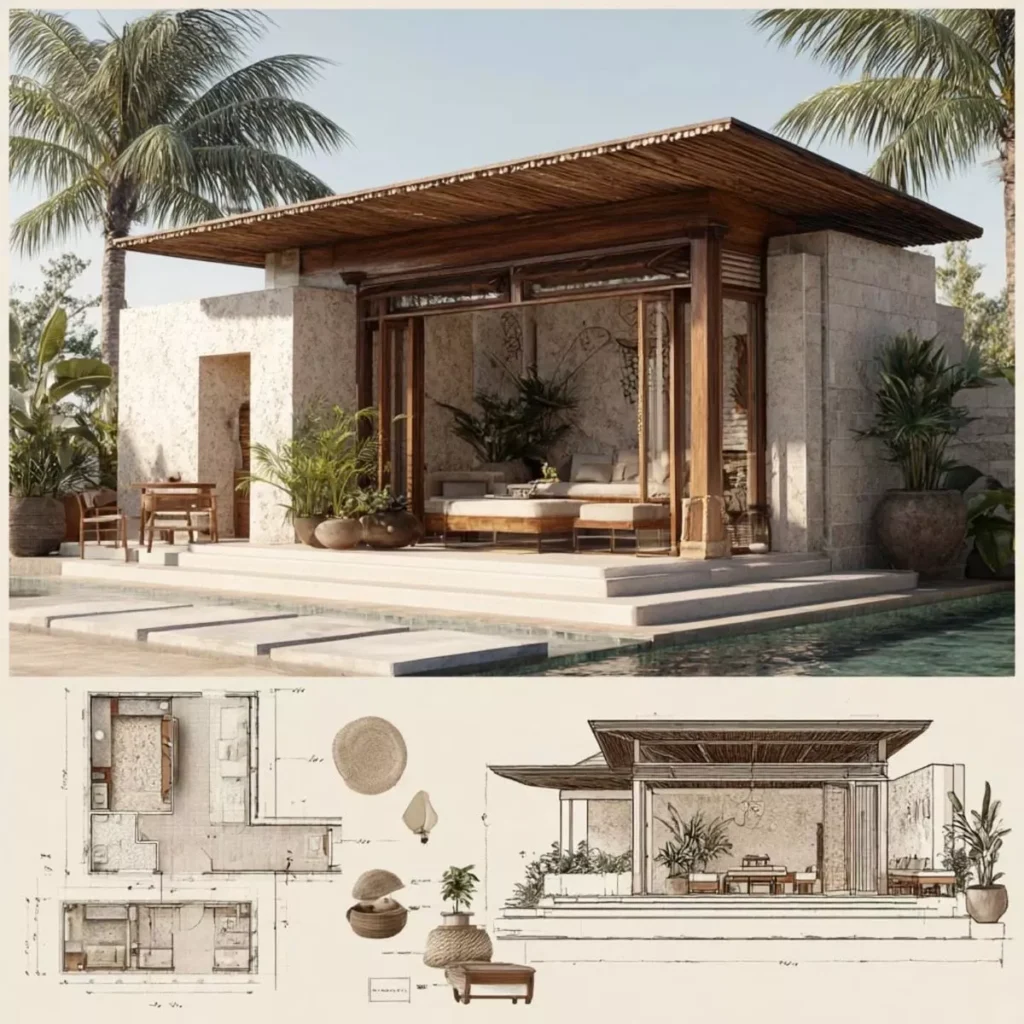
Second, ensure construction drawings and specifications are highly detailed. Every major material should be documented clearly, including brands, dimensions, product standards, finishes, and color codes. If specifications remain vague, substitutions become easier later.
Third, tie every payment to measurable physical progress verified independently against a detailed bill of quantities. Payments should reflect what has actually been completed on-site, not simply what appears in photographs or contractor reports.
Yohanes has spent two decades watching Bali’s construction industry evolve alongside the island’s tourism and property boom. He has seen reputable contractors build exceptional villas. He has also seen abandoned project sites where exposed steel rusts under tropical rain while owners struggle to recover financially from projects that stalled halfway through construction.
The pattern, he says, survives because many owners remain absent, contracts remain imprecise, and construction knowledge remains uneven between buyers and builders.
“You choose the cheapest quote. You pay on time. You trust the progress photos.”
That is often how the story begins.
Whether it ends with a finished villa or a silent construction site usually depends on how carefully an owner verifies everything happening between those three decisions.
Readers with experiences involving Bali villa construction, contractor disputes, or property development issues can contact Hey Bali News confidentially as part of our continuing coverage on Bali’s growing construction and property sector.