

Once a sleepy fishing island, Vietnam’s Phu Quoc is now attracting global travelers, luxury investors, and international acclaim. But can it succeed without repeating Bali’s mistakes?
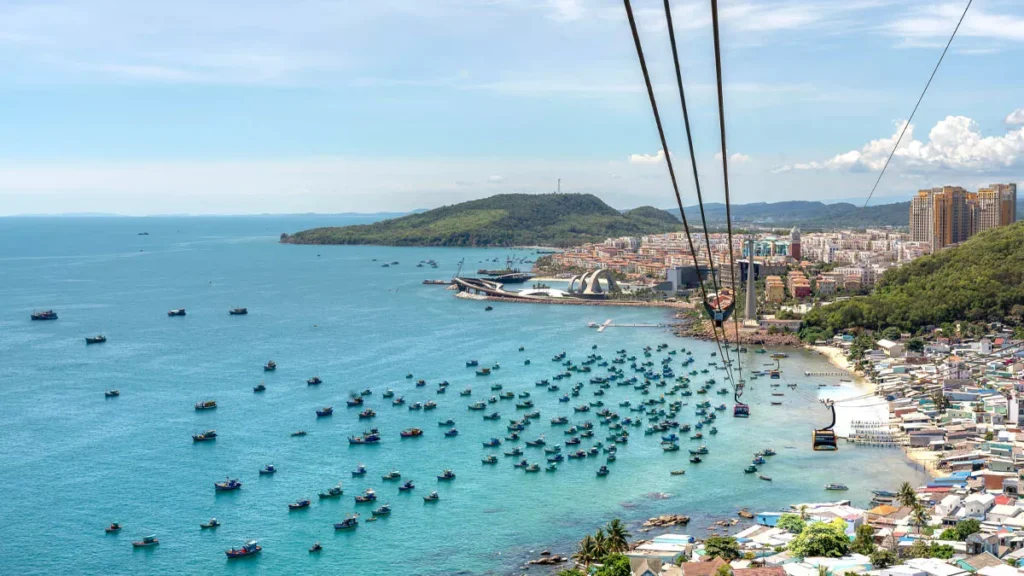
BALI – As the sun begins to sink over Vietnam’s Gulf of Thailand, dozens of cable cars glide silently above emerald waters toward a cluster of tropical islands that, until recently, barely appeared on the radar of international travelers.
Below, fishing boats return with their daily catch. Along the coast, luxury resorts prepare for another evening of rooftop cocktails and beachfront dinners. In the distance, construction cranes rise above palm trees, signaling a transformation that is reshaping one of Asia’s fastest-growing destinations.
A decade ago, few travelers outside Vietnam had heard of Phu Quoc.
Today, it is being mentioned in the same breath as Bali, Phuket, and Palawan.
And according to one of the travel industry’s most influential rankings, it has just surpassed them.
In the recently released Travel + Leisure Luxury Awards Asia Pacific 2026, Phu Quoc was named the second-best island destination in the region, ranking ahead of Bali, the Philippines’ Palawan, and Malaysia’s Langkawi. Only Thailand’s Koh Samui claimed a higher position.
For an island once known primarily for fish sauce production and pearl farming, the rise has been nothing short of extraordinary.
A Tourism Boom Unlike Anything in Southeast Asia
.The numbers tell a remarkable story.
Between January and May 2026, Phu Quoc welcomed approximately 4.77 million visitors, representing a 34.2 percent increase compared to the same period a year earlier.
International arrivals grew even faster, surging more than 51 percent to reach 1.17 million travelers.
Tourism revenue exceeded 26.96 trillion Vietnamese dong, or roughly US$1 billion.
Such growth would be impressive anywhere.
In Southeast Asia’s fiercely competitive tourism market, it is extraordinary.
The island has become one of the clearest examples of how traveler preferences are evolving after the pandemic. More visitors are looking beyond famous destinations and seeking places that still offer a sense of discovery.
Increasingly, Phu Quoc appears to be exactly that.
Why Travelers Are Looking Beyond Bali

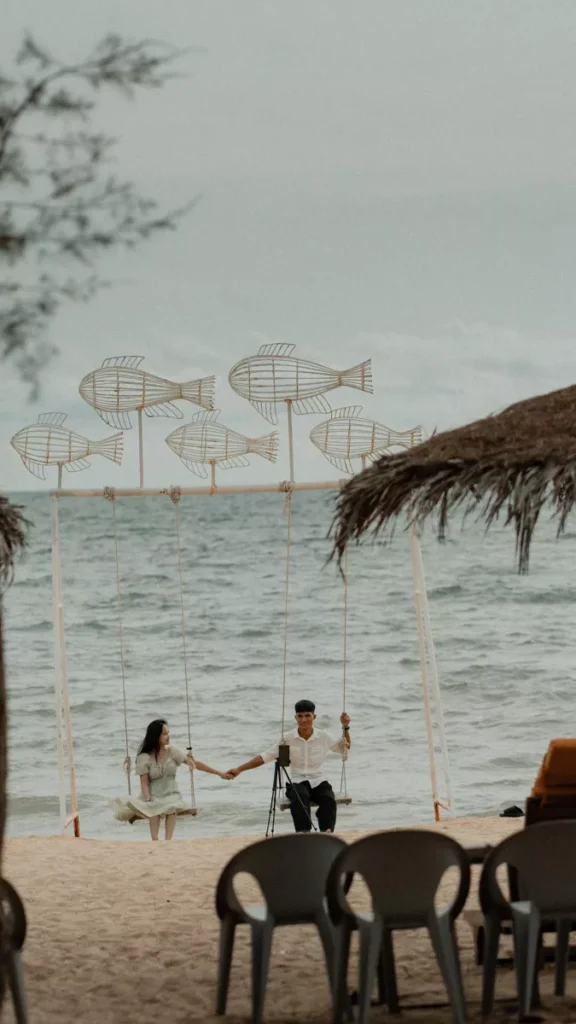
For decades, Bali enjoyed a near-monopoly on the dream of tropical living.
The formula was irresistible.
Ancient culture. World-class beaches. Affordable luxury. A thriving international community.
But success carries consequences.
Anyone who has spent time in Bali recently is familiar with them.
Traffic congestion now defines parts of southern Bali. Property prices continue to rise. Popular beaches are increasingly crowded. Infrastructure struggles to keep pace with visitor numbers.
None of this diminishes Bali’s appeal.
The island remains one of the world’s great destinations.
Yet for some travelers, particularly digital nomads, long-term expats, and repeat visitors, the search for something quieter has begun.
Australian entrepreneur Mark Sullivan, who has spent years traveling between Bali and Vietnam, describes the difference bluntly.
“Phu Quoc reminds me of Bali before the traffic, before the crowds, before everyone discovered it,” he says.
Whether that comparison is entirely fair may be open to debate. But it is a sentiment increasingly echoed by travelers across Southeast Asia.
Phu Quoc is emerging as one answer.
The island remains compact, easy to navigate, and significantly less crowded than many of the region’s tourism hotspots. A journey across Phu Quoc that might take thirty minutes can easily require several hours in Bali’s busiest districts.
For travelers accustomed to spending large portions of their day in traffic, that difference matters.
Beyond Beaches and Postcards


Like Bali, Phu Quoc possesses obvious natural beauty.
Kem Beach consistently appears on lists of Asia’s most beautiful coastlines. Marine reserves surrounding the island support coral reefs, tropical fish, and increasingly popular snorkeling and diving sites.
But natural beauty alone no longer guarantees tourism success.
What separates Phu Quoc from many tropical competitors is the scale of investment that has accompanied its rise.
Over the last several years, billions of dollars have flowed into new airports, roads, resorts, marinas, entertainment complexes, and transportation infrastructure.
The most striking example may be the Hon Thom Cable Car.
Stretching nearly eight kilometers across the sea, it ranks among the world’s longest cable car systems and offers panoramic views that have become an attraction in their own right.
Nearby, Sunset Town has emerged as one of Vietnam’s most ambitious tourism developments.
Its Mediterranean-inspired architecture has attracted both admiration and criticism, but there is little doubt that it has helped establish Phu Quoc as a destination capable of competing with the region’s biggest tourism brands.
At night, visitors gather for large-scale multimedia performances such as Kiss of the Sea and Symphony of the Sea, productions that would not look out of place in Singapore, Dubai, or Macau.
Better Value, Fewer Crowds

Part of Phu Quoc’s growing appeal is economic.
While luxury tourism is expanding rapidly, many travelers still find the island noticeably more affordable than Bali’s most popular districts.
A beachfront resort room that might command premium prices in Seminyak or Canggu can often be found at significantly lower rates in Phu Quoc. Fresh seafood dinners overlooking the ocean remain accessible to travelers who might pay considerably more at comparable venues elsewhere in the region.
For digital nomads and long-stay visitors, the value proposition is becoming increasingly difficult to ignore.
The island offers many of the comforts international travelers expect, without some of the costs and congestion associated with more mature tourism destinations.
The Recognition That Changed Everything
The Travel + Leisure ranking did not emerge in isolation.
Over the past two years, international recognition has arrived in waves.
Condé Nast Traveler readers voted Phu Quoc among the most beautiful islands in the world.
DestinAsian readers ranked it among Asia’s top island destinations.
Major travel publications increasingly describe the island as Southeast Asia’s next luxury hotspot.
For tourism officials in Vietnam, these accolades validate years of strategic investment.
For travelers, they serve as confirmation that one of Asia’s most intriguing destinations is no longer a secret.
The Question Bali Knows Better Than Anyone

Yet perhaps the most fascinating aspect of Phu Quoc’s rise is not how quickly it is growing.
It is whether it can avoid repeating the mistakes made elsewhere.
The island’s rapid development has already sparked debate.
Environmental groups have raised concerns over coastal development, marine ecosystem protection, waste management, and the long-term sustainability of mass tourism.
The concerns sound familiar because they are.
They are the same questions Bali continues to confront.
How much development is too much?
How many visitors can an island absorb before its identity begins to change?
Can tourism growth coexist with environmental protection?
There are no easy answers.
What makes Phu Quoc particularly interesting is that it stands at a crossroads Bali passed many years ago.
The decisions made today may determine what the island looks like twenty years from now.
APEC 2027 and the Next Chapter
The island’s future is set to accelerate even further.
Vietnam is preparing to host APEC 2027, and Phu Quoc is expected to play a central role.
Major infrastructure projects are already underway.
Airport expansions, new luxury developments, and transportation upgrades are expected to increase the island’s international connectivity dramatically.
Industry analysts believe the event could become a defining moment in Phu Quoc’s transformation from regional tourism success story into a truly global destination.
The Bigger Story
The rise of Phu Quoc is ultimately about more than one island.
It reflects a broader shift occurring across Asia.
For years, travelers followed familiar routes.
Bali. Phuket. Boracay. Langkawi.
Today, those routes are expanding.
A new generation of destinations is emerging, offering experiences that feel fresher, less crowded, and more connected to local culture.
Phu Quoc is leading that movement.
The irony, however, is impossible to ignore.
Twenty years ago, travelers spoke about Bali the way they now speak about Phu Quoc.
Untouched.
Authentic.
Affordable.
Full of possibility.
The question is no longer whether Phu Quoc can become the next Bali.
The real question is whether it can avoid becoming what Bali has become.
For now, travelers still have a chance to experience Phu Quoc before the rest of the world arrives.
Whether that opportunity lasts another decade, another five years, or only a few more seasons remains to be seen.
But one thing is already clear.
The future of Southeast Asian tourism is no longer being written in Bali alone. It is being written across a new generation of destinations—and right now, no island is attracting more attention than Phu Quoc.