






























JAKARTA — The viral controversy surrounding Morowali’s airports has revealed a complex dual-airport system, with one facility officially inaugurated by former President Joko Widodo and another privately-operated airport now under intense government scrutiny over sovereignty concerns.
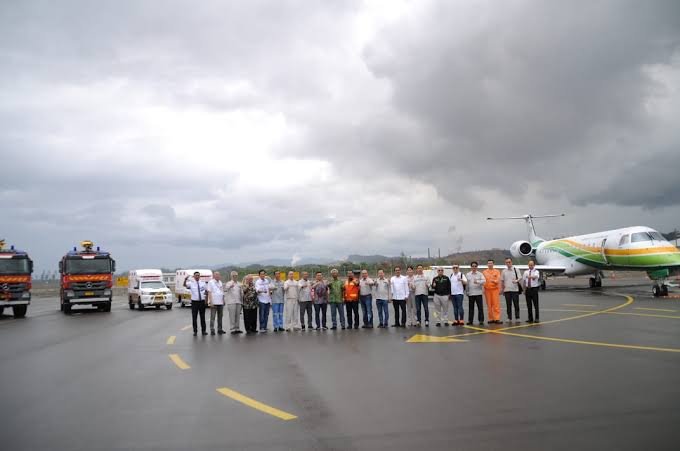
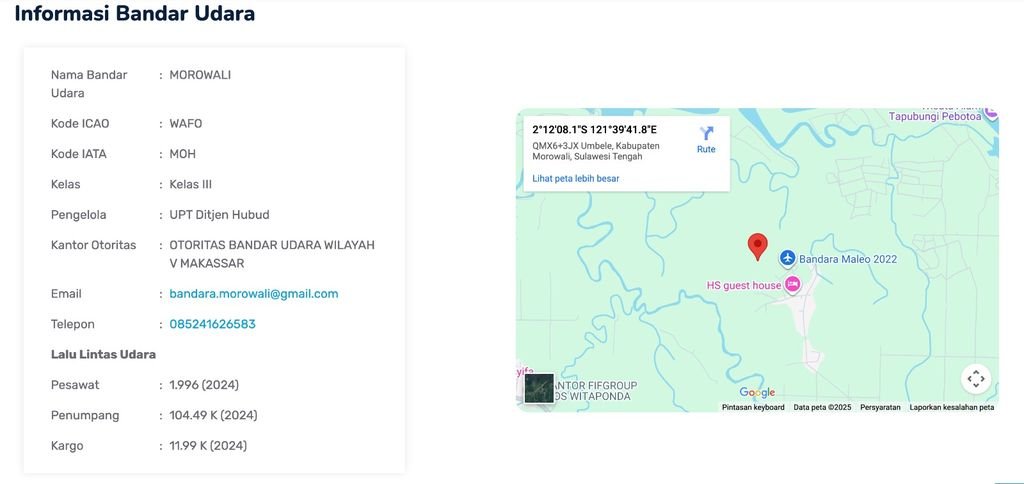
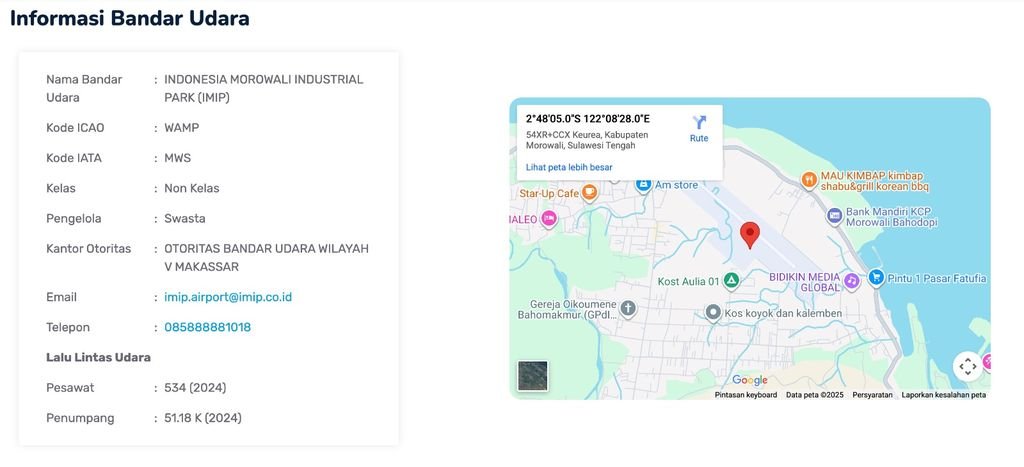
New findings confirm two distinct airports operate in Central Sulawesi’s mining region: the state-managed Bandara Morowali (ICAO: WAFO, IATA: MOH) and the privately-operated PT IMIP Airport (ICAO: WAMP, IATA: MWS), with the latter sparking national security alarms despite holding domestic classification.
The Presidential Inauguration vs Private Operation
Contrary to viral social media claims, President Joko Widodo officially inaugurated Bandara Morowali on December 23, 2018—a 158-hectare state facility with 1,500-meter runway and 1,000-square-meter passenger terminal in Umbele Village, managed by the Transportation Ministry’s Directorate General of Civil Aviation.
“We hope this development will genuinely facilitate travel and accelerate logistics distribution across regions,” President Widodo stated during the inauguration, as recorded on the Cabinet Secretary’s website.
The IMIP Facility: Special Status, Sovereignty Questions
The separate PT IMIP airport, while legally classified as a domestic facility under Transportation Ministry oversight, operates under “special status” permitting direct international flights for medical evacuation, disaster response, and corporate cargo—regulated under Transportation Ministerial Decree No. 38/2025.
However, Defense Minister Sjafrie Sjamsoeddin’s recent inspection revealed critical gaps: the absence of customs and immigration officials at the private facility, creating what officials term “sovereignty vulnerabilities” near strategic sea lanes ALKI II and III.
National Security Implications
Minister Sjafrie’s visit, conducted in his capacity as Daily Chair of the National Defense Council, focused on testing sovereignty protection procedures at National Vital Objects like the IMIP airport amid widespread mining sector violations.
“Various modus operandi continue emerging from interest groups intentionally attempting to exploit state resources,” Sjafrie stated, emphasizing consistent enforcement measures against proven violations.
The defense establishment has now launched integrated TNI exercises across multiple strategic locations, deploying 41,397 personnel in Bangka Belitung before the Morowali operations, signaling intensified monitoring of resource-rich regions.
Regulatory Framework vs Implementation Gap
While both airports appear in official Transportation Ministry records as domestic facilities, the enforcement disparity highlights Indonesia’s challenge in monitoring private infrastructure in remote resource regions.
The IMIP airport’s special classification requires coordination with customs, immigration, and quarantine agencies for international flights—a provision investigators are now scrutinizing amid concerns about unchecked movement of personnel and cargo.
Broader Pattern Emerging
The Morowali case echoes similar findings in Bali’s development sector, where private projects in strategic locations face increased government scrutiny over regulatory compliance and national interest considerations.
As authorities continue integrated exercises nationwide, the dual-airport situation in Morowali represents a critical test case for Indonesia’s ability to balance economic development with uncompromised sovereignty enforcement in frontier regions.