































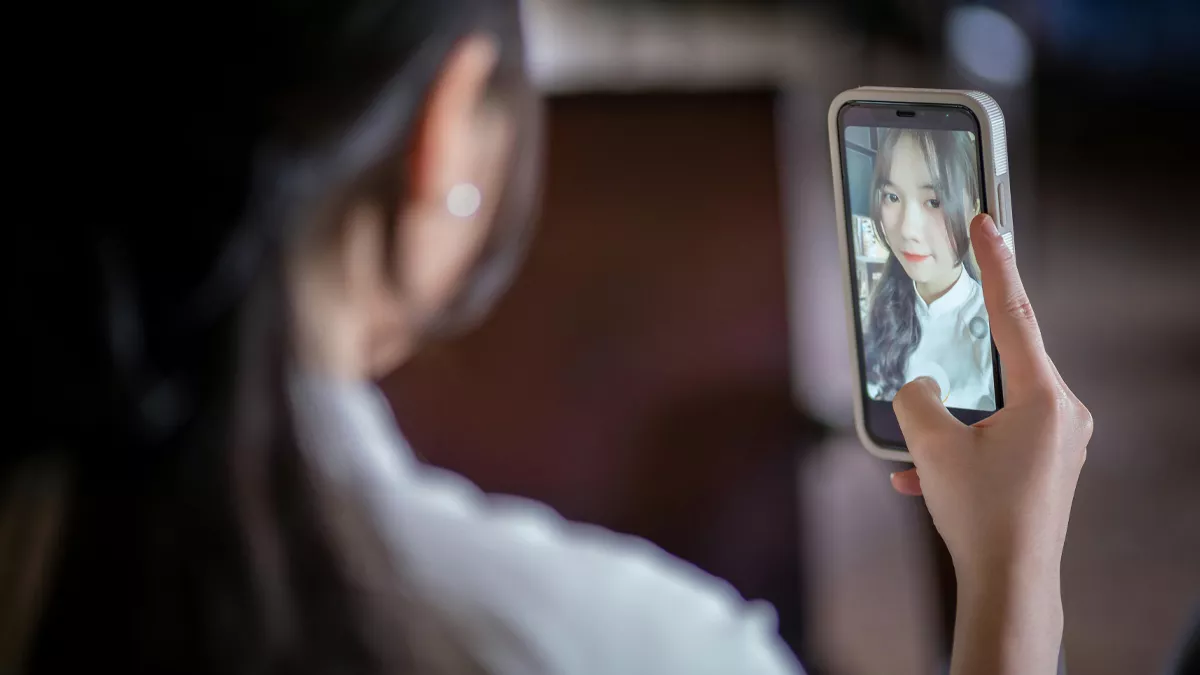
Apple’s latest acquisition, an Israeli facial-tracking startup, highlights a profound shift in how technology ‘reads’ us. For Bali’s digital community, the questions are about privacy, ethics, and the very nature of connection in a tech-dependent paradise.
In the cafes of Canggu and the co-working spaces of Ubud, a particular ecosystem thrives: the glow of Apple logos. From iPhones and MacBooks to AirPods and FaceTime calls, this technology is the silent backbone of Bali’s global, digital life. A recent, multi-billion dollar move by the tech giant, however, signals a new and intimate frontier—one that extends beyond gadgets and into the realm of human expression itself.
Apple has acquired Q.ai, an Israeli startup specializing in advanced facial movement tracking, for a reported $2 billion. The technology’s core function is to understand non-verbal communication by analyzing microscopic muscle movements in a person’s face as they speak. While speculation centers on future applications for AirPods, FaceTime, or Apple’s long-rumored augmented reality glasses, the implications ripple far beyond feature lists.
From FaceID to Reading Your ‘Micro-Expressions’
This move is not Apple’s first foray into this domain. Q.ai’s founder, Aviad Maizels, previously led PrimeSense, a 3D sensor company whose technology, after Apple’s 2013 acquisition, became the foundation for FaceID. We’ve grown accustomed to our phones recognizing our faces to unlock. The next step, it seems, is for them to interpret them.
The potential is framed as convenience: AI that can understand your silent commands or enhance communication. Yet, for a community that values mindfulness and authentic presence, it introduces a poignant question: in a place where many come to reconnect with themselves and others, are the tools in our pockets evolving to observe us with unprecedented intimacy?
The Unavoidable Tangle of Geopolitics and Tech Ethics
The acquisition, as noted by outlets like Gizmodo, arrives amid a complex backdrop. A segment of Apple’s own workforce has historically urged the company to scrutinize its investments in Israel. Reports have previously linked Apple to donations for the Israeli Defense Forces (IDF), and the company maintains significant R&D operations in the country. Furthermore, Israeli tech news site CTech reported that approximately 30% of Q.ai’s employees were recruited for IDF service following the events of October 7, 2023.
This context is inseparable from the technology itself. It pushes the conversation beyond pure innovation into the realm of ethics and origin. For a globally-minded audience in Bali, it raises a reflective, rather than polemical, point: can the devices we rely on for work, creativity, and connection ever be truly neutral when their development is woven into the world’s most fraught geopolitical fabrics?
Bali’s Paradox: Slow Living in a High-Tech Stream
Herein lies a defining paradox for modern Bali. The island sells an ideal of slow living, spiritual awareness, and being present in the body. Simultaneously, it hosts a population that is profoundly dependent on the latest technology to sustain their lifestyle and livelihoods.
Apple’s investment in Q.ai sharpens this contrast. It points to a future where our devices may not just capture our attention but actively decode our unspoken reactions, intentions, and emotions during a video call or while listening to music. For the remote worker, the digital creator, or the wellness seeker whose life is mediated through these tools, it’s a shift that demands consideration. What does privacy mean when a device can read a micro-expression you didn’t even know you made?
A Question for the Digital Resident
Apple’s senior VP, Johnny Srouji, praised Q.ai for “pioneering new and creative ways to use imaging and machine learning technology.” The creative potential is vast. Yet, the story for Bali’s community is less about the specs and more about the subtle recalibration of our relationship with technology.
It’s a reminder that the devices we carry are becoming less like tools and more like interlocutors—ones being taught to understand the most nuanced language we have: our faces. As this future integrates into the daily flow of life in Bali, from sunrise yoga sessions to sunset business meetings, the most relevant question may be: are we ready to be read so closely?