





























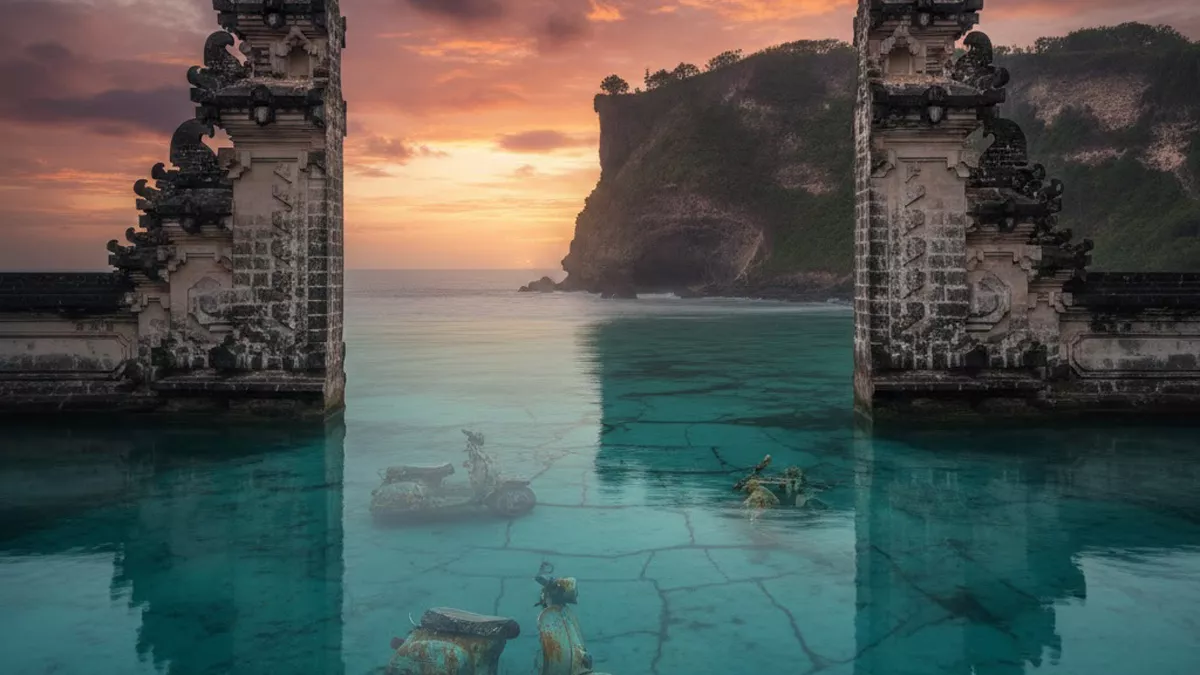
Indonesia’s meteorological agency and researchers warn that a dual crisis—rising sea levels and sinking land—is putting coastal communities, from Jakarta to Bali, at severe risk, demanding immediate mitigation.
JAKARTA — A slow-moving, dual environmental crisis is reshaping Indonesia’s coastline, threatening infrastructure, ecosystems, and communities. The nation’s Meteorology, Climatology, and Geophysics Agency (BMKG) has highlighted that rising global sea levels, coupled with dramatic local land subsidence, are creating an acute vulnerability for low-lying coastal regions.
Global sea level rise, driven by climate-change-induced polar ice melt and thermal expansion of seawater, has accelerated from an average of 1.4 mm per year (1901-1990) to 3.6 mm per year (2006-2015).
“The increase is not always visible year to year, but the impacts are real, especially for coastal areas,” BMKG stated in a recent social media post.
A Compounding Crisis: When the Sea Rises and the Land Falls
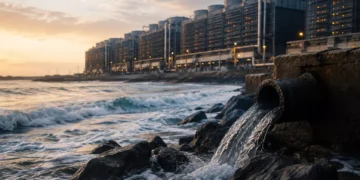
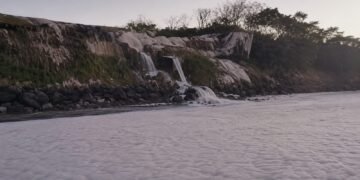
The threat is magnified in areas like Sayung, Demak (Central Java), and North Jakarta, where the sea’s advance is met by the land’s retreat. In Sayung, thousands of hectares have been lost to a combination of rising waters and land subsidence sinking 10-15 cm annually. North Jakarta holds a more alarming record, with some areas subsiding over 10 cm per year—one of the highest rates globally—making it acutely vulnerable to tidal flooding (banjir rob).
The National Research and Innovation Agency (BRIN) identifies excessive groundwater extraction, the natural compaction of soft sediments, and the weight of urban construction as the primary causes of land subsidence. In some areas, the land has sunk more than one meter in just eight years.
“This is a serious threat,” said Joko Widodo, a researcher at BRIN’s Geoinformatics Research Center. “Without proper mitigation and adaptation, the consequences could be devastating, ranging from loss of land to severe disruption of coastal communities’ lives.”

Implications for Bali and a Global Community
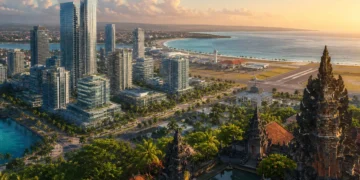
For Bali, an island whose identity and economy are inextricably linked to its coast, the implications are profound. While not currently experiencing subsidence at the extreme rates of Java’s north coast, Bali’s beaches, seaside communities, and critical infrastructure are on the front line of sea-level rise. Erosion, saltwater intrusion into freshwater aquifers, and increased flooding during storms and king tides are clear and present dangers.
The health of marine ecosystems, particularly coral reefs already stressed by warming waters and bleaching events, is also crucial. Healthy reefs and mangroves act as natural buffers against wave energy and erosion, making their conservation a vital part of coastal defense.
A Path Forward: Mitigation and Global Action
BMKG urges collective action, advocating for reduced carbon footprints, coastal conservation like mangrove reforestation, coral reef protection, and support for international frameworks like the newly enacted High Seas Treaty (effective January 2026), which aims to protect marine ecosystems as vital carbon sinks.
The situation presents a stark reminder that environmental resilience is not just a global abstraction but a local necessity. For residents and the international community in Bali, understanding this dual threat underscores the importance of sustainable water management, supporting coastal conservation efforts, and advocating for policies that address the root causes of climate change.
Hey Bali News provides this analysis to inform our community about critical environmental challenges that shape the future of the island and the region.