













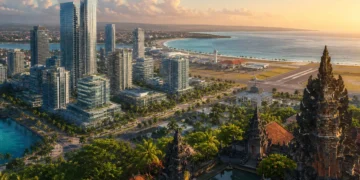





















KUTA, Bali — A short video filmed at Beachwalk Shopping Center has ricocheted across social media, eliciting a mix of amusement, disbelief, and palpable irritation. The clip shows a foreign tourist, dressed in a patterned shirt, taking a brief run-up before executing a casual backflip into a shallow decorative pond within the popular mall—a move that froze nearby shoppers mid-stride.
But the clip did more than amuse or annoy; it became the latest flashpoint in Bali’s ongoing, delicate negotiation between its identity as a global sanctuary and its reality as a destination navigating the pressures of its own popularity. The splash was small, but the reaction laid bare a widening fault line.
Entertainment or a Discordant Note?
Online reactions fractured along predictable yet revealing lines. Some framed the act as harmless, spontaneous showmanship—a burst of energy fitting for a place synonymous with escape.
For many, however, the spectacle struck a discordant note. Commentary spiraled from jokes about the man being “flying high” to sharper critiques of performative attention-seeking. Several commenters pointedly tagged local immigration authorities, a digital act that transcends mere complaint to become a demand for accountability. The weary local aphorism deployed in such cases resurfaced, reflecting a building frustration that has long since curdled past humor.
A Wearying Anthology of Incidents
The online uproar, however fleeting, taps into a deeper reservoir of local sentiment. For many residents, the Beachwalk incident is not an isolated lapse in judgment but part of a wearying anthology. Recent years have furnished a steady stream of viral evidence: tourists scaling sacred temples for photos, causing disturbances at solemn ceremonies, or treating rented scooters and public roads as personal stunt tracks.
This evolving dynamic places a new onus on visitors—tourists and expatriates alike. The viral backflip, however minor, serves as a cipher for a larger, unspoken expectation: that Bali’s generous invitation to unwind is not a license for abandon.
Beachwalk Kuta is archetypal of this tension. It is not merely a tourist attraction but a vital, shared public space—a thoroughfare for local families, workers, and international guests where commerce and community intersect. Actions deemed “playful” by some can easily read as disruptive, disrespectful, or simply unsafe to others sharing that space.
The Unspoken Contract of Paradise
As of now, there has been no official statement from mall management or authorities regarding the individual or any consequences. The message from the court of public opinion, however, is unequivocal.
Bali’s economy and spirit are built on welcome. Yet that hospitality is predicated on a reciprocal, if often unspoken, contract of awareness and respect. For the global community that chooses to live in or visit the island, this moment is a micro-lesson in macro-responsibility. In a place where tourism and daily life are inextricably fused, a single act in a mall pond can ripple outwards, becoming a referendum on behavior and belonging.
In the end, the man climbed out of the pond, likely damp and quickly anonymous. But the digital ripples of his stunt continue to spread, reminding all who encounter them that in today’s Bali, every public space is a potential stage, and every action, however trivial, is a statement in the island’s complex, ongoing conversation with the world it welcomes.