





















GILI AIR, Indonesia — The waters off Gili Air were calm on Tuesday morning, the kind that draw thousands of divers each year to this chain of small islands just off Lombok’s northwest coast.
Shortly after 11:00 a.m., a British national entered those waters alone.
He never resurfaced.
Hours later, his body was found on the seabed.
Authorities identified him as Robert Peter Ladd, 46, who had been conducting a solo shore dive—a practice not uncommon among experienced divers, but one that carries risks that can escalate quickly when something goes wrong.
The Moment He Didn’t Return
According to local search and rescue officials, Ladd had entered the water from shore and was expected to return within a standard dive window. When he failed to surface after about an hour, concern began to spread among nearby divers and operators.
What followed was a rapid, coordinated search.
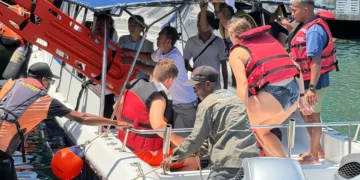
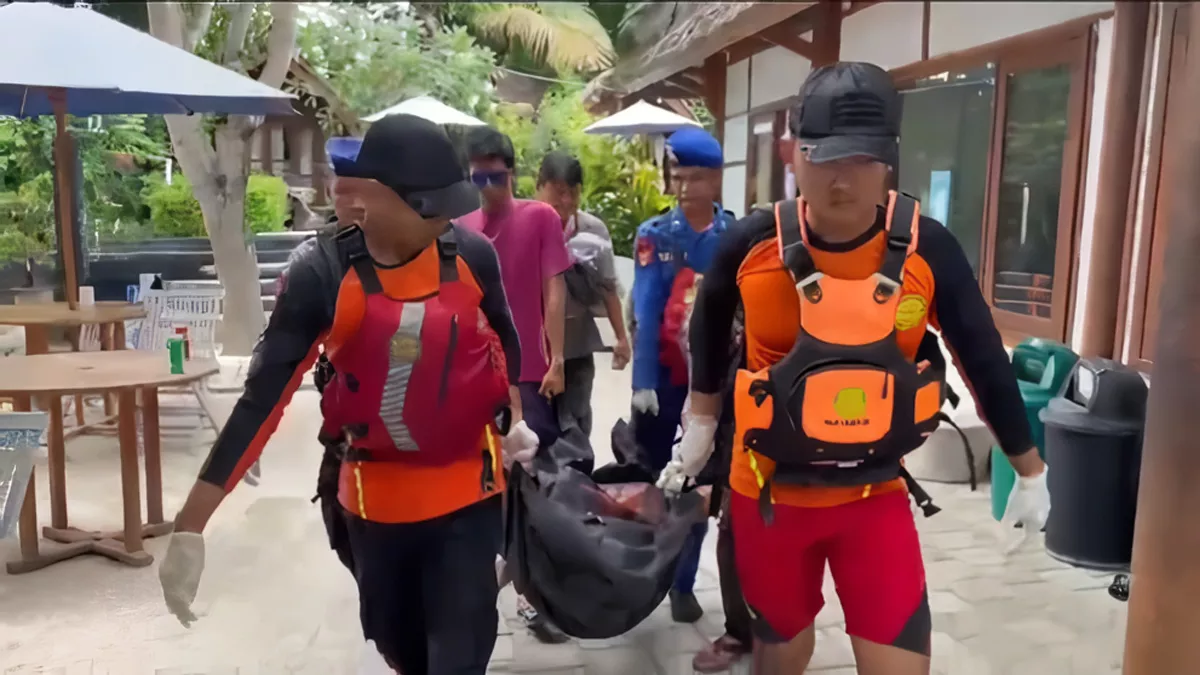
Rescue teams, police units, military personnel, dive operators, and local volunteers mobilized across Gili Air, scanning the waters and retracing what was believed to be his dive path. The response was swift, reflecting both the island’s close-knit diving community and the urgency of the situation.
But time, in diving emergencies, is rarely forgiving.
At approximately 1:20 p.m., Ladd was located at a depth of 12 meters, not far from where he had first descended. He was unresponsive.
He was brought to shore, where medical personnel began cardiopulmonary resuscitation almost immediately.
The effort continued for more than ten minutes.
At 1:33 p.m., he was pronounced dead.
A Familiar Setting, Hidden Risks
Gili Air, along with neighboring Gili Trawangan and Gili Meno, is widely regarded as one of Indonesia’s most accessible diving destinations. Its clear waters, gentle currents, and abundant marine life make it attractive to both novice and experienced divers.
But accessibility can create a false sense of security.
Within the diving community, solo diving remains a debated practice. While some experienced divers undertake it with careful preparation, most training standards continue to emphasize the “buddy system”—a fundamental safety principle in which divers monitor and assist one another underwater.
Without that second person, small problems can escalate unnoticed. Equipment malfunctions, sudden medical events, or disorientation can become life-threatening within minutes.
And when they do, there is often no one there to help.
Authorities have not yet determined what caused Ladd’s death. Investigators are examining whether medical factors, equipment issues, or environmental conditions played a role.
After the Recovery
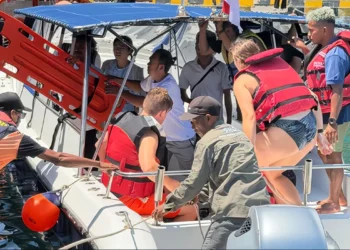
Following the recovery, Ladd’s body was transported by boat to the mainland before being transferred to medical facilities in Lombok for further procedures.
The British Embassy has been notified and is assisting with the necessary arrangements.
For those who live and work on Gili Air, the incident has left a quiet but palpable impact. In a place defined by routine dives and familiar waters, the loss has unsettled the sense of predictability that many rely on.
What the Incident Reveals
For divers—whether tourists or long-term residents—the circumstances surrounding Ladd’s death underscore a set of precautions that are often repeated, but not always followed.
Never dive alone. Stay within personal limits. Check equipment carefully. Let someone know your plan.
They are simple measures. But in environments where conditions can change quickly, they are often the difference between routine and emergency.
Beneath the Surface
The waters around the Gilis remain as inviting as ever—clear, calm, and filled with life.
But what they conceal is less visible: the narrow margin for error that defines diving itself.
On the surface, everything can appear still.
Below it, things can change without warning.
And sometimes, as in this case, there is no second chance to respond.











Thank you for the very respectful report. Rob was an amazing human and was not only extremely experienced – he had been part of the professional diving community on Gili Air for many years.
Unlike other outlets like the „Mirror“, which depict him falsely as this high risk guy, your report was a very good source of information that helped us to grasp this tragedy.
Whatever happened – Rob was a great a reliable diving instructor and buddy inside and outside the water.
He will be extremely missed. RIP and dive in peace, Rob. We love you
Greetings from friends in Austria