





























For decades, Bali’s skyline has remained intentionally low.
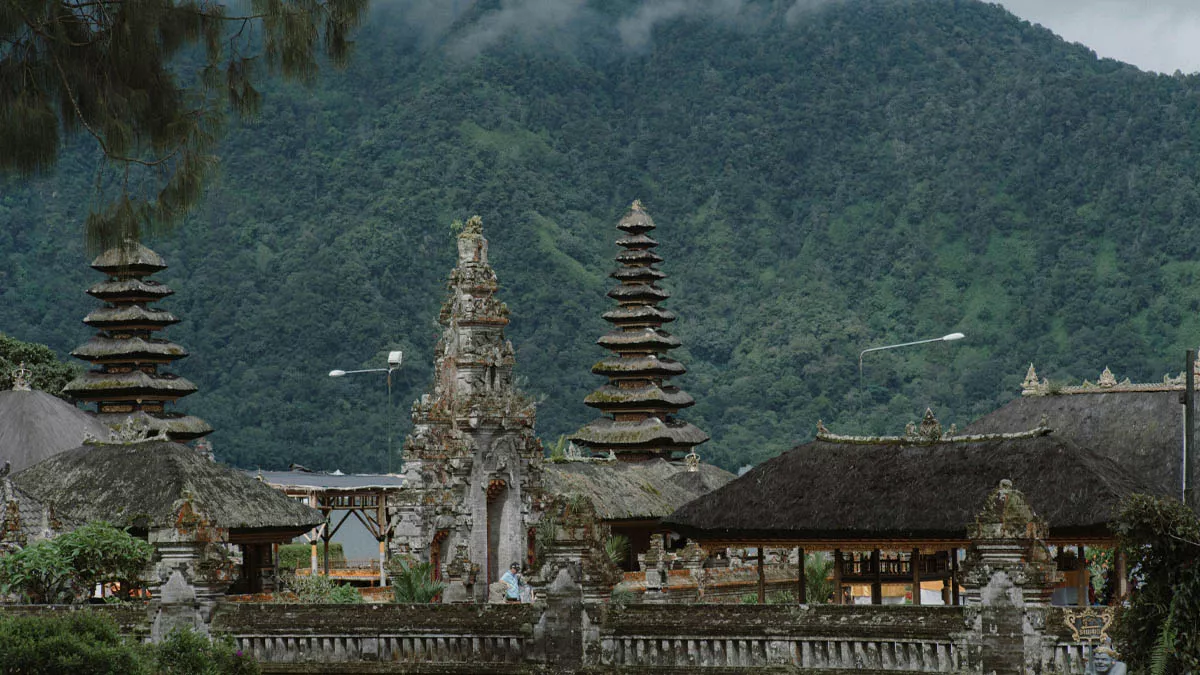
No skyscrapers. Few high-rises. Mostly temple roofs, palm trees, and open horizons.
That could soon change.
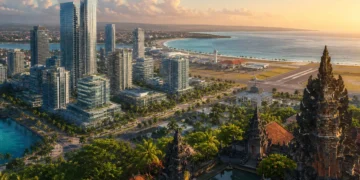
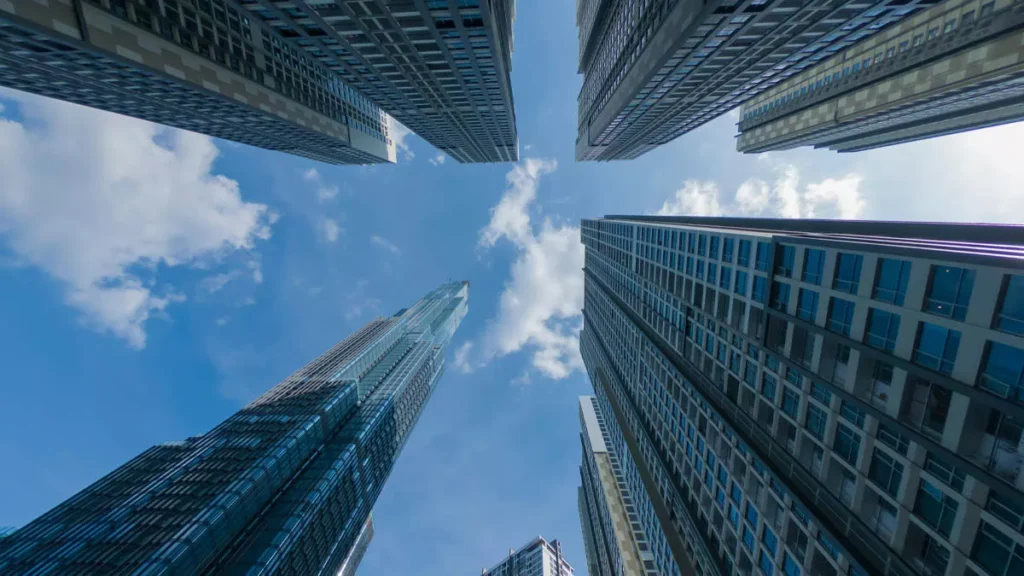
A proposal to increase building height limits from 15 meters to 45 meters in selected areas has reopened one of Bali’s most sensitive debates: how much development can the island absorb before it begins losing the very identity that made it valuable in the first place.
“If we open up to 45 meters without strong governance, it will only lead to chaos,” said academic I Putu Gede Suyoga during a public forum organized by the Center for Dharmatic Studies on Thursday.
Officially, the discussion focused on building height regulations.
In reality, it raised a much larger question.
What happens when an island built around cultural balance collides with the economic logic of growth?
The Proposal
The debate resurfaced in April when a special committee within Bali’s regional legislature proposed revising zoning regulations based on cultural and spiritual considerations.
Under current rules, most of Bali remains subject to a maximum building height of approximately 15 meters, equivalent to around five stories.
The proposal would largely maintain those restrictions while allowing buildings up to 45 meters in selected zones, including parts of Nusa Dua, South Kuta, Sanur, Tabanan’s coastline, and Gianyar.
Supporters argue the change is becoming increasingly necessary.
Land prices continue rising. Investment pressure is intensifying. Meanwhile, urban expansion across southern Bali continues consuming agricultural land as villas, hotels, and commercial developments spread outward.
The argument is straightforward:
If development cannot move upward, it will continue moving outward.
Critics, however, question whether vertical growth solves one problem only by creating another.
A Debate Bigger Than Buildings
The Bali chapter of Parisada Hindu Dharma Indonesia (PHDI) has urged caution.
According to chairman I Nyoman Kenak, increasing the limit from 15 to 45 meters is not simply a planning decision. It touches questions of culture, spirituality, and the visual character of the island itself.
In Balinese cosmology, landscapes are not merely aesthetic spaces.
Mountains hold sacred meaning. Temple structures follow symbolic proportions. Views and spatial relationships often carry religious significance beyond their physical form.
Opponents fear significantly taller buildings could alter landscapes that have long shaped both ritual life and community identity.
A 45-meter hotel or condominium tower may not simply change what Bali looks like.
It may change how Bali is experienced.
The Development Argument
Suyoga, despite warning about the risks, does not reject vertical development entirely.
He argues that today’s Bali faces pressures that did not exist decades ago.
Southern Bali is increasingly urbanized. Productive agricultural land continues disappearing. Traffic congestion has worsened, groundwater resources are under pressure, and demand for hospitals, universities, parking infrastructure, and mixed-use developments continues to rise.
“The pattern of Bali’s tourism is moving toward a metropolitan tourism city model,” he said.
Supporters of reform argue that existing restrictions may have unintentionally encouraged inefficient land use.
If developers cannot build higher, they build wider.
That expansion requires more roads, more infrastructure, and more land conversion.
From this perspective, compact development may ultimately prove less destructive than uncontrolled sprawl.
The Risks
But vertical development carries its own consequences.
According to Suyoga, allowing buildings up to 45 meters could gradually reshape one of Bali’s most recognizable characteristics: its low skyline.
Palm trees, temple roofs, and open horizons could increasingly compete with concrete towers and dense urban corridors.
There are practical concerns as well.
Groundwater supplies are already strained in many areas. Taller buildings generally require larger infrastructure systems, deeper foundations, and higher resource consumption.
Bali also sits within one of the world’s most active seismic regions, raising questions about long-term resilience and infrastructure readiness.
Then comes the economic question.
Who benefits?
Higher buildings often create higher land values.
Higher land values encourage speculation.
And speculation can gradually push local residents further away from economic centers they once occupied.
For many Balinese communities, that concern may ultimately matter more than architecture.
The Choice Facing Bali
No final decision has been made.
But the fact that this debate exists at all illustrates how dramatically Bali has changed.
Tourism numbers continue recovering. Investment continues arriving. Pressure for more housing, more hotel rooms, and more commercial space shows little sign of slowing.
Bali’s policymakers now face a difficult choice.
Build upward and risk altering the island’s visual and cultural character.
Build outward and continue consuming agricultural land.
Or maintain current restrictions and accept worsening congestion, rising costs, and increasing development pressure.
For visitors who fell in love with Bali’s open horizons, this debate matters.
For the people who live there, the stakes are considerably higher.
They are not simply debating building heights.
They are debating what kind of island future generations will inherit.
A 45-meter building can eventually be demolished.
A lost horizon is much harder to rebuild.