




















As fuel prices rise and landfills overflow, a small group of engineers believes the island’s trash problem could become an energy solution.
SIBANG KAJA, Bali — The machine sits inside a modest workshop surrounded by rice fields and tropical trees, humming softly beneath the afternoon heat.
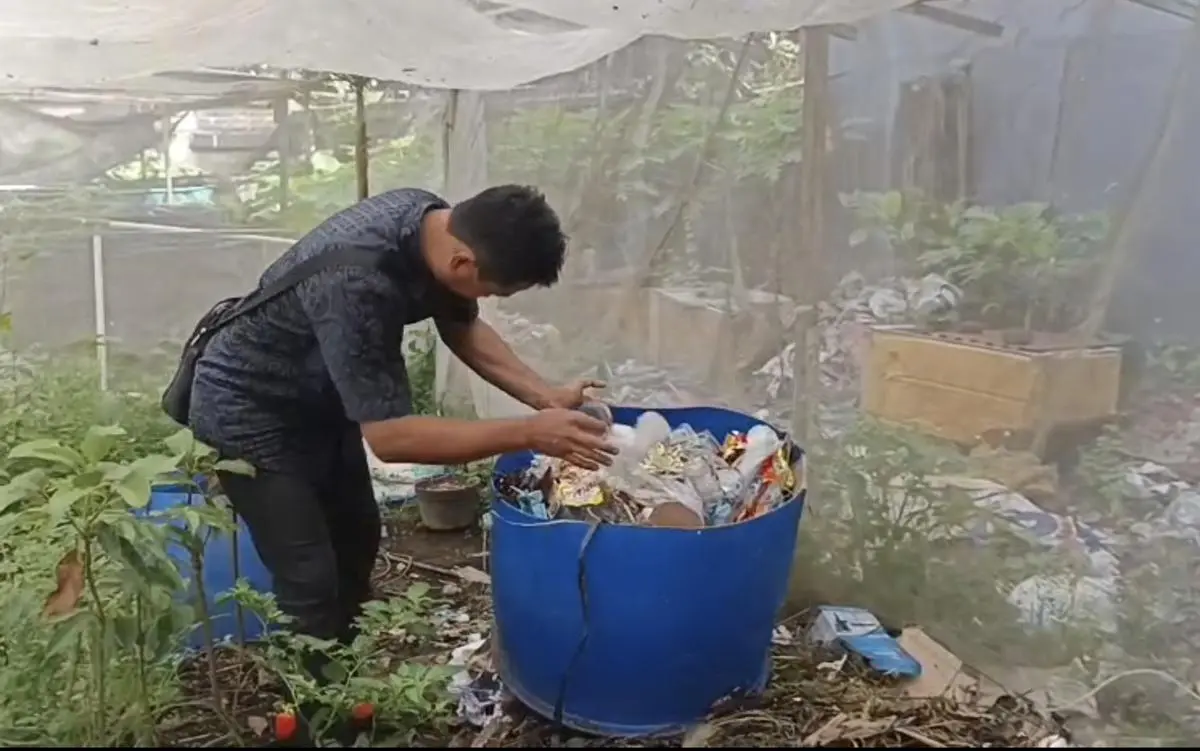
Inside its steel chamber is a mixture of things most people would rather forget: instant noodle wrappers, snack packaging, plastic bags and discarded household waste.
Three hours later, they emerge as something entirely different.
Fuel.
On an island struggling with mounting waste and growing concern over energy costs, a community-led initiative in Bali believes it has found an answer hidden in plain sight.
“We actually have the solution right in front of us,” said Dimas Bagus Wijanarko, founder of Get Plastic, a waste-to-energy community based in Sibang Kaja, Badung Regency. “Plastic waste is treated as a problem. But it can also become part of the solution.”
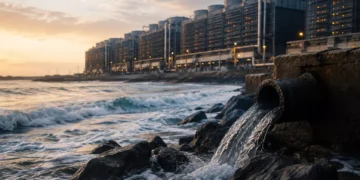
For years, Bali’s waste crisis has become increasingly difficult to ignore. Plastic washes onto beaches during monsoon season. Illegal dumping continues in some areas. Landfills face mounting pressure from a growing population and millions of annual visitors.
At the same time, Indonesians have watched fuel prices fluctuate amid global energy uncertainty.
To Wijanarko, the two challenges are connected.
Since 2013, he has been researching alternative energy systems, convinced that rising fossil fuel costs would eventually force communities to look elsewhere.
“What many people don’t realize is that plastic itself comes from fossil fuels,” he said. “In a way, we’re recovering energy that already exists inside the material.”
The technology employed by Get Plastic is called pyrolysis, a thermal decomposition process that heats plastic in an oxygen-free environment. Unlike open burning, which releases smoke and pollutants directly into the atmosphere, pyrolysis relies on controlled heating at temperatures reaching around 250 degrees Celsius.
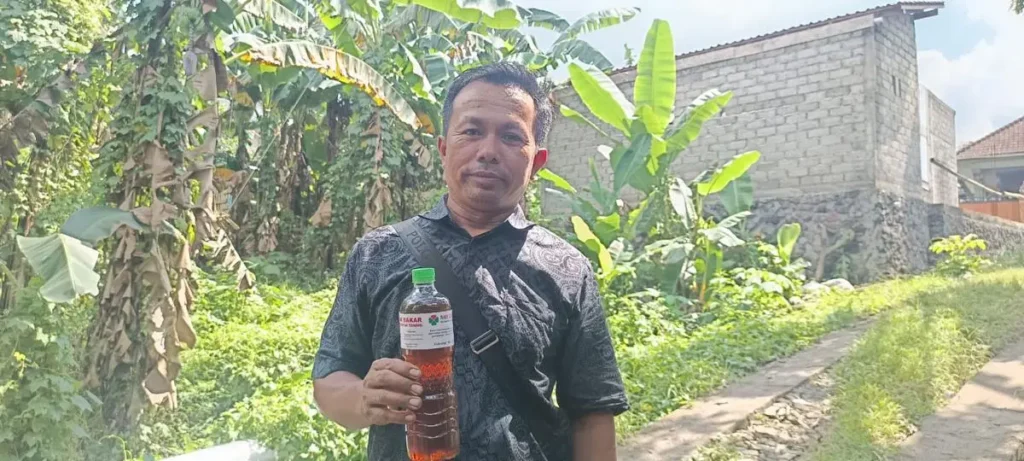
According to Wijanarko, a 10-kilogram batch of low-value plastic waste can produce roughly 10 liters of fuel in about three hours.
The economics are equally striking.
The group estimates production costs at approximately Rp7,000, or about 43 U.S. cents, per liter. That figure is significantly below commercial fuel prices, although the project currently operates as a community initiative rather than a commercial enterprise.
Yet the technology comes with important limitations.
Not every type of plastic can be processed safely. Polyethylene terephthalate (PET), commonly used in beverage bottles, is excluded because it retains higher recycling value. Polyvinyl chloride (PVC), meanwhile, is rejected entirely due to its high chlorine content and potential environmental risks.
There is another caveat.
The fuel itself contains concentrated compounds derived from the original plastic feedstock. For that reason, Get Plastic does not market the product for consumer vehicles. Instead, it is distributed free of charge to community groups operating fishing boats, agricultural machinery, shredding equipment and electricity generators.
“The most dangerous part is actually the oil itself,” Wijanarko acknowledged. “The substances that exist inside the plastic become concentrated in the fuel.”
Over the past decade, Get Plastic has developed more than ten machine prototypes. Today, around three units operate in Bali, while more than forty have been deployed across Indonesia. Wijanarko estimates that roughly 80 percent remain operational.
For him, the long-term vision extends beyond individual machines.
He sees landfills not merely as the final destination for waste, but as untapped energy reserves.
“If we borrow the language of mining,” he said with a smile, “then perhaps our mines are landfills.”
Whether small-scale pyrolysis can become a meaningful part of Indonesia’s future energy mix remains an open question. Environmental experts continue to debate its long-term sustainability, economics and emissions profile.
But as Bali searches for solutions to its growing waste problem, communities like Get Plastic are testing an idea that once seemed improbable: that the island’s mountains of discarded plastic may contain value after all.
Not as waste.
But as fuel.

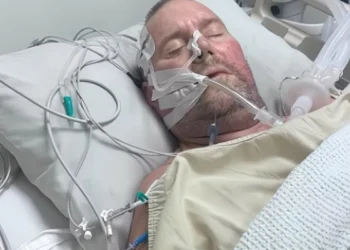













Plastic-to-fuel pyrolysis in Bali carries real dangers: while it reduces visible waste, the process can release toxic chemicals like PFAS, phthalates, and dioxins, posing risks to workers, nearby residents, and the environment if not tightly controlled. Experts warn that without strict emission standards and monitoring, the health hazards may outweigh the benefits.
Main Health & Environmental Risks
Toxic additives: Plastics contain PFAS, phthalates, BPA, flame retardants. When heated, these vaporize into harmful compounds.
Worker exposure: Inhalation of vapors can disrupt metabolism, immune function, liver health, and hormones.
Community impact: Nearby residents risk exposure to carcinogens and endocrine disruptors if emissions are not contained.
Fuel quality: The resulting fuel contains concentrated compounds unsuitable for consumer vehicles, raising safety concerns.
Regulatory gap: Indonesia lacks clear standards for pyrolysis emissions, leaving communities vulnerable.
Thank you for your thoughtful and well-informed comment.
You raise several important concerns that deserve serious discussion, particularly around emissions, public health, fuel quality, worker safety, and the regulatory framework surrounding plastic-to-fuel pyrolysis. These are exactly the kinds of perspectives that help improve public understanding of complex environmental issues.
At Hey Bali, we believe that responsible journalism should not only report on innovation and potential solutions, but also examine the risks, limitations, and unintended consequences that may accompany them. Constructive criticism backed by evidence is an essential part of that conversation.
If you would be interested, we would genuinely welcome a more detailed editorial, opinion piece, or expert commentary from you for publication on Hey Bali. We believe our readers would benefit from a deeper exploration of the concerns you have highlighted, particularly as Bali and Indonesia continue searching for solutions to their waste management challenges.
Should you wish to contribute, please feel free to send your article, supporting references, and a short biography to:
newsroom@heybali.info
If possible, we would also appreciate a headshot photograph and a brief professional profile so we can properly introduce you to our readers.
While we cannot guarantee publication of every submission, we are always eager to provide space for informed voices, evidence-based analysis, and respectful debate on issues that affect Bali’s future.
Thank you again for taking the time to share your perspective. Thoughtful public discussion is exactly what helps move these conversations forward.