


























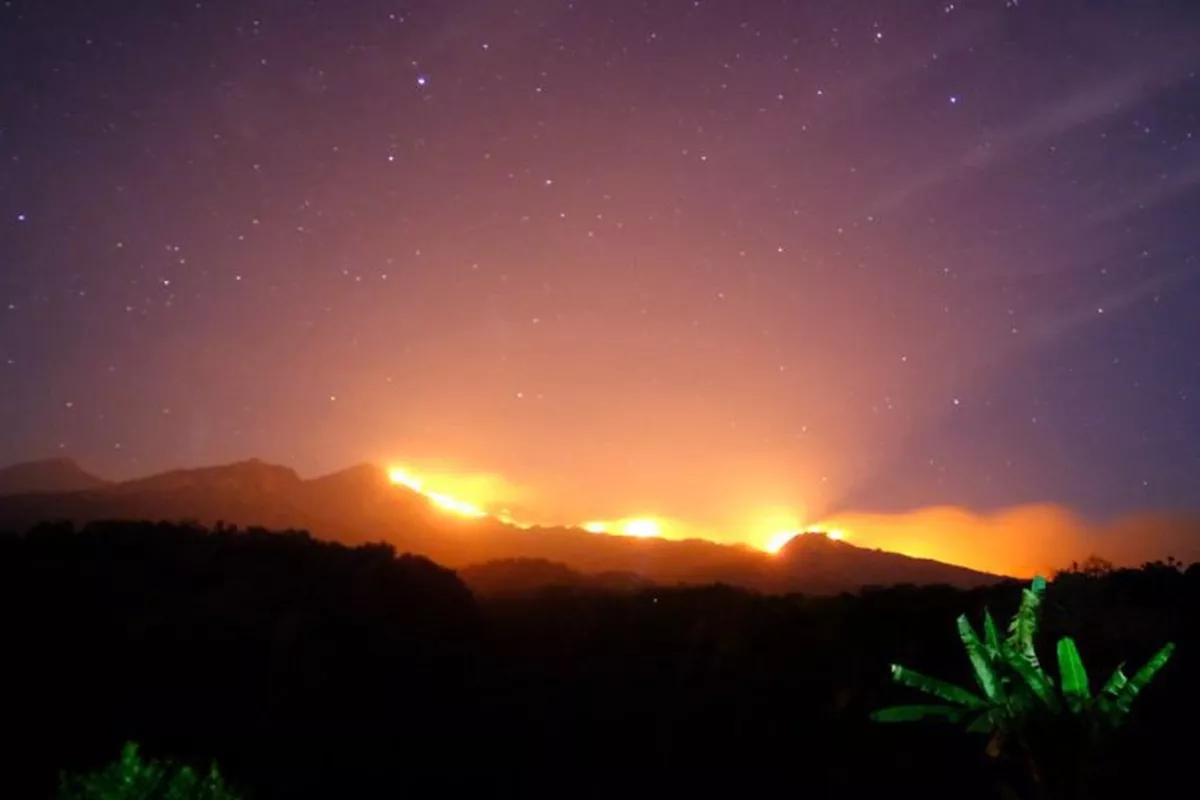
Fifty-five hectares have burned. Strong winds, steep terrain, and a lack of water are crippling efforts to stop the blaze. Authorities are now considering closing the popular trekking route.
SEMBALUN, Indonesia – The fire on Mount Rinjani is getting worse.
Nearly three days after the first flames were spotted in the Propok savanna area, the blaze has spread deep into the forested slopes of one of Indonesia’s most famous volcanoes. As of Thursday, approximately 55 hectares of land have burned — an area roughly equivalent to 77 football pitches.
And the fire is still not under control.
“We have not been able to extinguish the fire,” said Taufikurrahman, head of the Rinjani National Park Resort in Sembalun, on Thursday.
The fire, which began on Tuesday, was initially concentrated in non-climbing zones. But it has since moved toward trekking routes, forcing park officials to consider shutting down the popular Sembalun access point.
“If the fire continues to spread, we will close the Sembalun climbing route,” said Lalu Santawa, fire management coordinator for the Rinjani National Park Authority. Trekkers with existing bookings would be redirected to the Torean or Senaru routes.
A Desperate Battle With Limited Tools
The firefighting effort has grown since Tuesday.
On Wednesday morning at 5:00 AM, visual monitoring from the Sembalun resort office revealed hotspots moving from the Gomongan forest area toward Panggang, in Sembalun Lawang village.
By 8:00 AM, the first fire response team had deployed with five water pumps and jet shooters, carried by motorcycles and operational vehicles. A second team of 27 personnel followed.
But the terrain has proven merciless.
“Fire in the lower western and eastern sections has been brought under control,” Taufikurrahman explained. “But the fire at the top is unreachable. The topography is too steep. There are ravines. The vegetation is thick. And the wind is strong.”
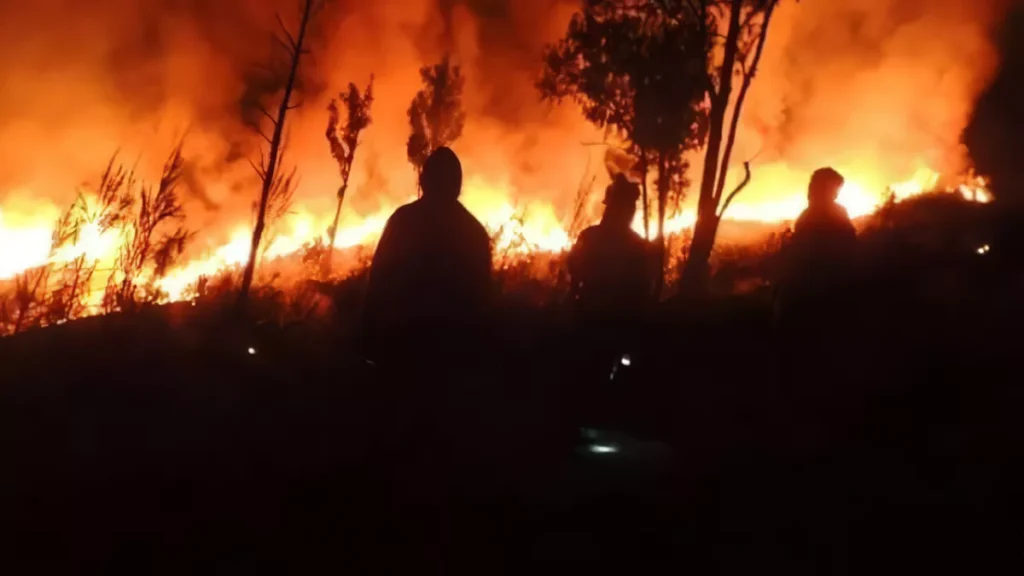
Firefighters are using what they have: jet shooters, tree branches, hoes, shovels, and machetes. Some carry water on their backs. There is no reliable water source near the fire zone.
Of the 55 hectares burned, crews have managed to extinguish only about 15 hectares.
Dry Vegetation, High Winds, and a Familiar Pattern
The fire is burning through a mix of dry shrubs, grass, fallen leaves, and trees including mountain pine, saropan, and acacia decurrens — all highly flammable.
Strong winds have accelerated the spread. Steep ravines have made access nearly impossible. And the absence of nearby water sources means crews must carry everything they need.
This is not the first time Rinjani has burned.
In 2019, a significant fire swept through similar terrain. That blaze also required days to contain. Trekking routes were closed. Tourism was disrupted. And the underlying vulnerabilities — dry seasons, human activity, limited equipment — remain unchanged.
What Sparked the Fire?
Investigators suspect human activity.
But not the usual suspect.
“Based on our examination, this was not land clearing,” Santawa said. “The evidence points more toward hunting.”
If confirmed, it would add a troubling dimension to the story. Not a farmer burning fields. Not a careless trekker discarding a cigarette. But someone potentially using fire as a tool to flush out game — with consequences that have now spiraled far beyond control.
Police are still investigating. No suspects have been named.
The Human Effort
The response has drawn from nearly every available resource in the region.
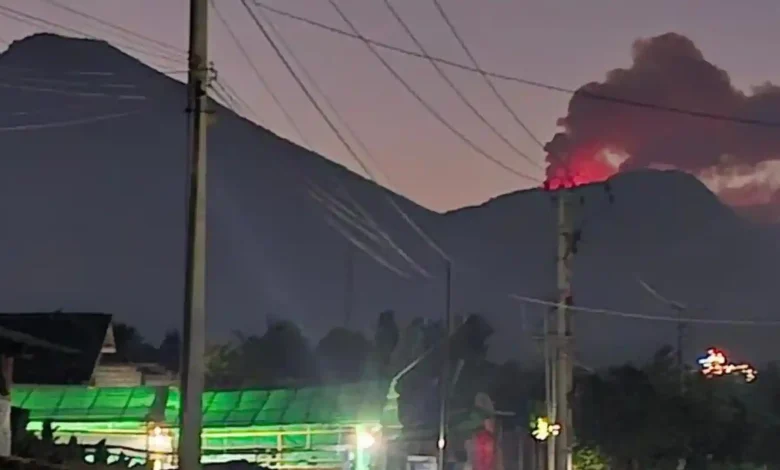
As of Thursday, 39 personnel are engaged in the firefighting operation. They come from multiple agencies:
- Rinjani National Park Resort (15 personnel)
- Sembalun Police Sector (4)
- Sembalun Military District Command (2)
- Brimob Mobile Brigade from East Lombok and NTB Provincial Police (11)
- Sembalun Rinjani Timur Forest Management Unit (3)
- Sembalun District Civil Service Police (3)
- Mountaineering enthusiast groups (6)
- Local community volunteers (6)
They work in shifts. They sleep near the fire line. They return each morning to the same impossible terrain.
After two days of fighting, fire managers have made a strategic shift. Rather than chasing every flame, they will prioritize protecting trekking routes and community agricultural land.
“Based on our evaluation, future operations will focus on the area toward the climbing route and toward community land around the national park,” Taufikurrahman said.
What This Means for Travelers
For international trekkers planning to summit Rinjani, the situation is now uncertain.
The Sembalun route remains open for now. But officials are monitoring hourly. If the fire moves closer, they will close it.
“We are still observing the fire’s development through the afternoon,” Santawa said. “If the fire continues, we will close the Sembalun route.”
Trekkers with existing bookings through Sembalun would be redirected to Torean or Senaru — both viable alternatives but different in terms of terrain, difficulty, and logistics.
Travelers should:
- Contact their tour operators immediately for updates
- Monitor official announcements from the Rinjani National Park Authority
- Be prepared for last-minute cancellations or rerouting
- Consider postponing Rinjani treks if air quality or fire conditions worsen
The Larger Question
Each year, during Indonesia’s dry season, the same scenes play out across the archipelago.
Forests burn in Sumatra. Savannas ignite in East Nusa Tenggara. National parks from Bromo to Komodo issue warnings about fire risk. And each time, the same constraints emerge: limited equipment, underfunded park management, and a firefighting model that relies on human endurance rather than aerial support or advanced technology.
Rinjani is not just a mountain. It is an economic engine for Lombok, drawing tens of thousands of trekkers annually. A prolonged closure — or worse, a major fire that damages the trekking routes — would ripple through local communities that depend on tourism.
For now, the fire continues to burn.
The crews are still fighting.
And the wind, as it always does on Rinjani’s slopes, keeps blowing.