











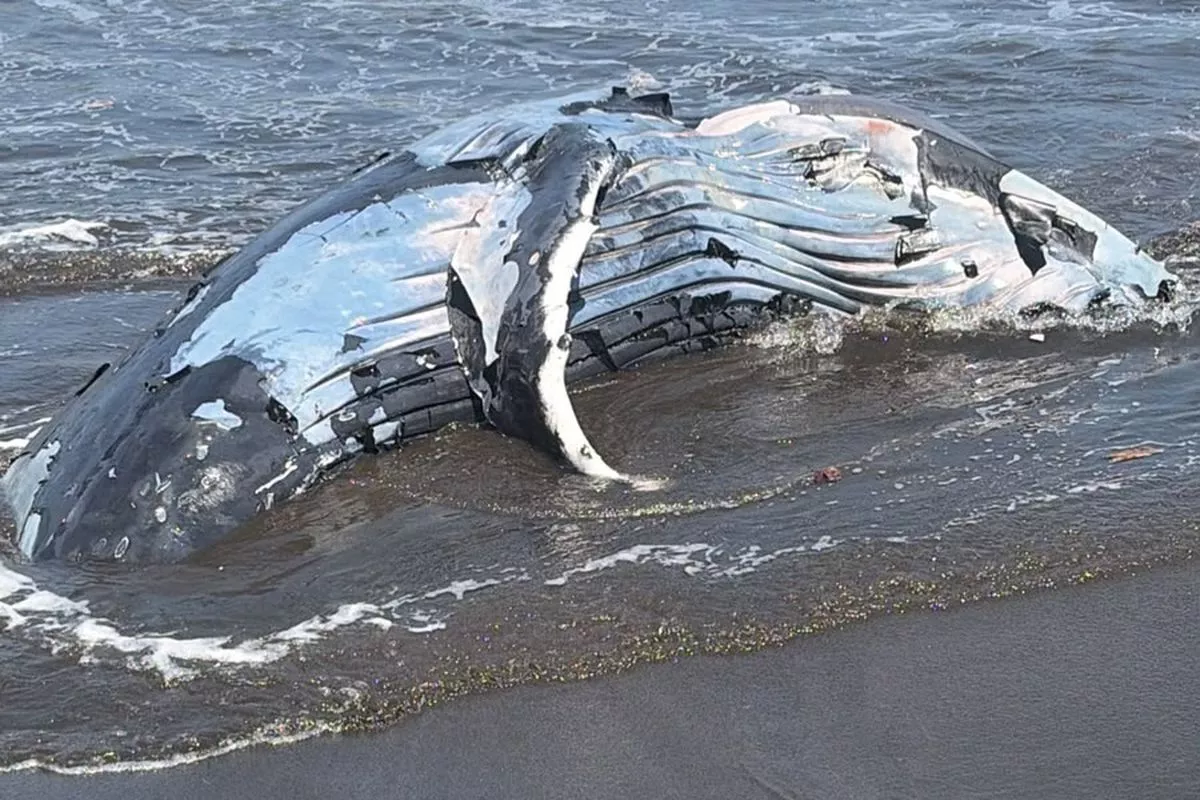
The carcass of a humpback whale buried at Perancak Beach, Jembrana District, Jembrana Regency, Bali, resurfaced on Thursday, July 16, 2026, after tidal action eroded the burial site.
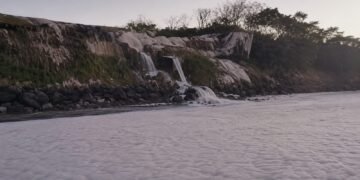
Perancak Village Head I Nyoman Wijana said the carcass’s reappearance was first reported by the local hamlet head at approximately 11:00am local time. Rising tides had eroded the sand covering the burial site, exposing most of the whale’s body and producing a strong odor.
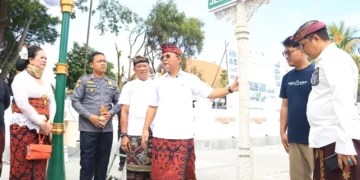
“The carcass has resurfaced again, emerging from the sand, and it smells. Nearby is a densely populated residential area along the coast,” Wijana said when contacted Thursday.
Odor Reaches Village Office
According to Wijana, the smell from the carcass could be detected within a radius of approximately 1.5 kilometers from the burial site, reaching as far as the Perancak Village Office.
Wijana explained that the whale carcass remained at its original burial location, but tidal erosion had washed away the surrounding sand, causing the body to resurface. “Only the tail remains lodged in the sand, while about seven meters of the body has resurfaced,” he said.
He noted that during the burial process several days earlier, workers had difficulty digging the grave because seawater kept seeping into the ground. As a result, the burial pit reached a depth of only about 2.5 meters. “It was likely not deep enough because the location is at the edge of the beach, where waves break and water meets sand,” he said.
Plans for Reburial
Village authorities, together with relevant agencies, planned to rebury the carcass using heavy equipment on Thursday afternoon. Wijana said he intended to recommend shifting the burial site approximately 50 meters from its previous location, which sat on land owned by local residents.
“This afternoon, the plan is to bury it again using heavy equipment,” Wijana said.
Background on the Stranding
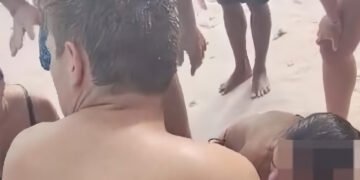
A 7.7-meter humpback whale had originally stranded at Perancak Beach on Tuesday, July 14, 2026. Residents and officers attempted to guide the protected marine mammal back into deeper waters, but it stranded again and was declared dead later that afternoon.
A veterinary team from the Indonesian Animal Network (Jaringan Satwa Indonesia/JSI), the Gondol Center for Mariculture Research and Fisheries Extension (BBRBLPP), and the Denpasar Center for Coastal and Marine Resources Management (BPSPL) conducted a necropsy to determine the cause of death. Following the examination, the carcass was evacuated using heavy equipment and buried on the beach in accordance with standard procedures for stranded, deceased marine animals.