


































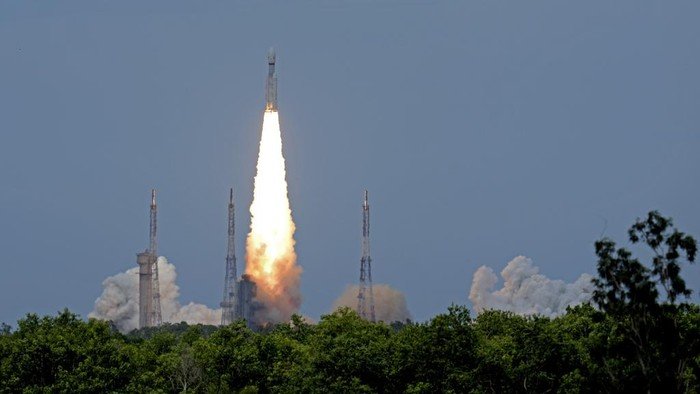
DENPASAR, Bali — For digital nomads in Canggu, travelers trekking through remote parts of East Bali, or sailors in the Lombok Strait, the promise of seamless global connectivity often hits the hard reality of cellular dead zones. A new development in low-Earth orbit may soon change that. In a significant stride toward satellite-to-smartphone technology, a rocket launched from India has placed a pioneering satellite into space, potentially heralding a future where standard mobile phones connect directly to the cosmos for broadband internet.
On December 24, 2025, the Indian Space Research Organisation (ISRO) successfully launched an LVM3 rocket from the Satish Dhawan Space Centre. Its payload was BlueBird 6, a next-generation satellite developed by the U.S.-based company AST SpaceMobile. Approximately 15 minutes after liftoff, the satellite was successfully deployed into low-Earth orbit (LEO), marking a new chapter in the race to provide universal connectivity.
Unlike existing satellite internet services like Starlink, which require users to purchase and set up specialized ground terminals or dishes, the core innovation of AST SpaceMobile’s technology is its ambition to connect directly to unmodified, standard smartphones. This distinction could democratize high-speed internet access in a way previously unimaginable.
Beyond the Dish: The Promise of Direct Connectivity
The BlueBird 6 satellite is a critical piece of a planned global constellation designed to function as orbiting cellular towers. With a communications antenna array larger than any of its predecessors, it is engineered to handle greater data traffic and provide wider coverage.
“For millions in remote regions poorly served by traditional cellular infrastructure, this technology could be transformative,” notes a telecommunications analyst familiar with the project. “The potential to bridge the digital divide is immense, moving from a hardware-centric model to a software-defined network in the sky.”
The launch itself was a milestone for ISRO, as the approximately 6,100-kilogram BlueBird 6 represented the heaviest payload ever carried to orbit by the Indian launch vehicle, underscoring the agency’s growing role in high-stakes commercial space missions.
Implications for Bali and the Global Traveler

The implications for a globally mobile audience in destinations like Bali are profound. While the island’s popular southern areas enjoy robust 4G and expanding 5G coverage, connectivity drops significantly in its interior rainforests, northern coastal stretches, and surrounding seas.
- For Remote Work and Travel: This technology could enable reliable video calls and large file transfers from a cliffside villa in Sidemen or a quiet beach in Pemuteran, without dependency on local internet infrastructure.
- For Safety and Navigation: It promises a fundamental improvement in emergency communications for trekkers, divers, and sailors, providing a vital safety net where traditional signals fail.
- A Shift in the Competitive Landscape: The direct-to-phone approach presents a distinct challenge to other satellite internet providers. It shifts the value proposition from selling additional hardware to integrating seamlessly with the device already in billions of pockets.
Looking Ahead: A Connected, Yet Considerate Future
The successful deployment of BlueBird 6 is a clear signal that the satellite-to-smartphone future is accelerating from concept toward reality. While widespread commercial service from AST SpaceMobile’s full constellation is still on the horizon, the technological barrier has been decisively breached.
For the international community in Bali, this evolution points toward a future of greater freedom and security. It also invites a mindful conversation about the digital footprint we wish to have, even in paradise. The ultimate success of such technology may lie not just in its impressive engineering, but in our collective ability to use it intentionally—connecting us to the global grid when needed, while still allowing space to connect with the timeless rhythm of the island.