
















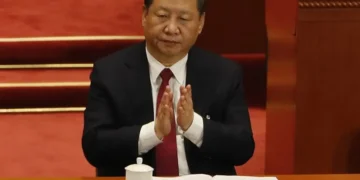

















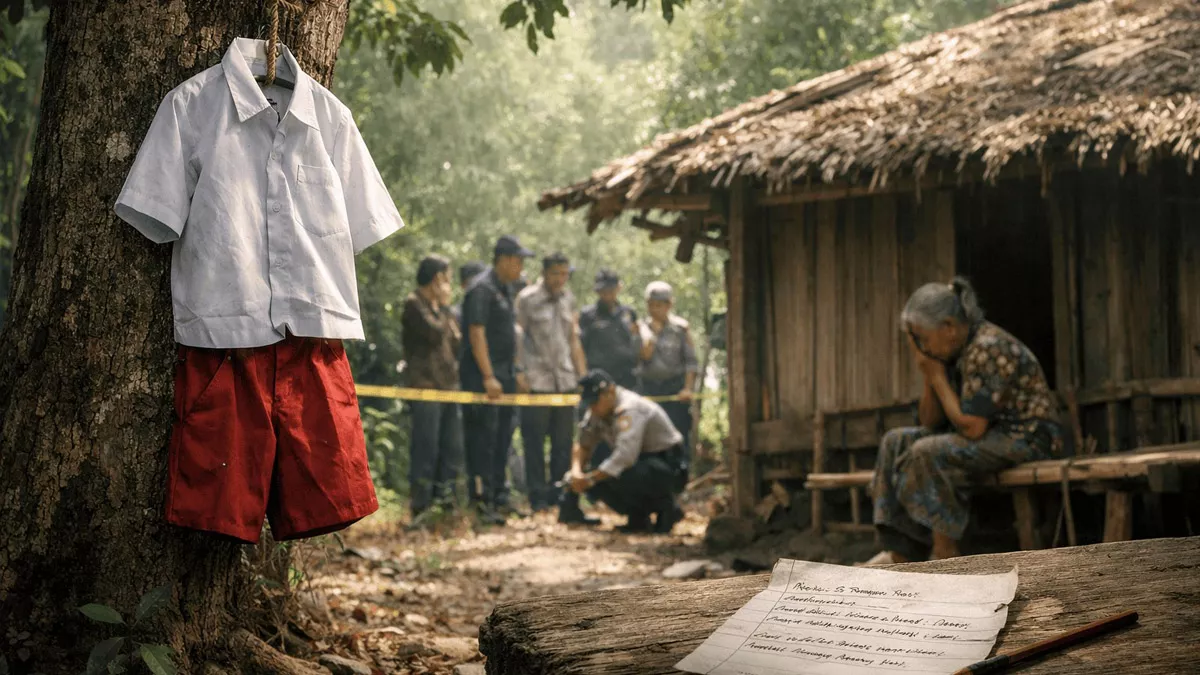
Rocky Gerung’s stark analysis reframes the tragedy in Ngada as a devastating critique of Indonesia’s social and political failures—with implications that resonate far beyond NTT.
When a 10-year-old boy in Ngada, East Nusa Tenggara (NTT), took his own life after his mother could not afford a notebook and pen, the nation mourned a heartbreaking failure of social welfare. Public intellectual Rocky Gerung, however, has offered a far more unsettling and politically charged interpretation. In a provocative analysis, he reframes the tragedy not merely as a consequence of poverty, but as a radical, conscious act of sacrifice—what he terms a “republican” act—that exposes a catastrophic failure in the nation’s moral and political calculus.

His is not a clinical or psychological assessment of the child’s state, but a philosophical device intended to indict the state’s neglect.
Gerung’s Provocation: From Personal Tragedy to Political Critique
Gerung begins with a deliberately jarring premise: the boy “chose” to end his life “to save his mother’s life.” He interprets the suicide note—which asked the mother not to cry or search for him—as a horrifically logical calculation. In Gerung’s stark view, the child internalized his family’s desperate economic reality and concluded that his own removal would alleviate the burden on his mother and four siblings, thereby ensuring their survival.
“One act of republicanism,” Gerung asserts, framing the boy’s decision as a perverse form of civic duty. “He chose to die… so his mother’s life would continue, so the lives of his five siblings would continue… so the public understands that something is wrong with the affairs of the republic.”
It is crucial to note that Gerung’s analysis is a rhetorical and philosophical provocation—a stark metaphor to highlight systemic failure, not an endorsement of the act itself or a claim about the child’s full cognitive or political capacity.
The Brutal Juxtaposition: The Cost of a Pen vs. The Flow of Political Capital
The core of Gerung’s critique lies in a brutal, rhetorical juxtaposition. He contrasts the boy’s unmet need for an item worth approximately Rp 10,000 (less than $1 USD) with the vast sums that circulate in Indonesia’s political and geopolitical spheres. He pointedly invokes the widely reported but politically contentious figure of Rp 17 trillion in social aid contributions facilitated to the United States during the Trump administration—funds framed at the time as strategic foreign policy.
“How many per mille of 17 trillion… is Rp 10,000?” Gerung asks. His rhetorical question is designed to scandalize: who truly embodies a “republican ethos”? The political actors maneuvering trillions on a global stage, or the child whose life was valued below the cost of basic school supplies by the system that failed him? For Gerung, the boy’s fate is “a very mature rational action” only in the sense that it logically, if devastatingly, reveals the broken equation at the heart of national priorities.
A Reflection for Bali: Prosperity’s Shadow and Selective Visibility
While the tragedy unfolded in distant NTT, the uncomfortable questions raised by Gerung’s analysis resonate powerfully in Bali. The island is Indonesia’s gleaming showcase of success—a hub of tourism revenue, foreign investment, and cosmopolitan life.
Yet, this prosperity casts a long shadow. Bali contends with deep inequality, where the children of marginalized communities, migrant workers, or economically strained families can exist in a parallel reality of need, often invisible to the villa-dwelling and digital nomad economy.
Gerung’s provocation challenges Bali’s curated image. It forces a question: does the island’s economic model and social fabric genuinely uphold the “republican” welfare of all who reside within it, or does it perpetuate a system where the most vulnerable can be quietly sacrificed to macroeconomic calculations and political narratives? The silent, tragic calculus of a child in Ngada serves as a stark reminder that a society’s humanity is ultimately measured at its margins, not at its zenith. For Bali, a destination built on the promise of paradise, the lesson is that true wellness cannot be exclusive.
#heybalinews