
































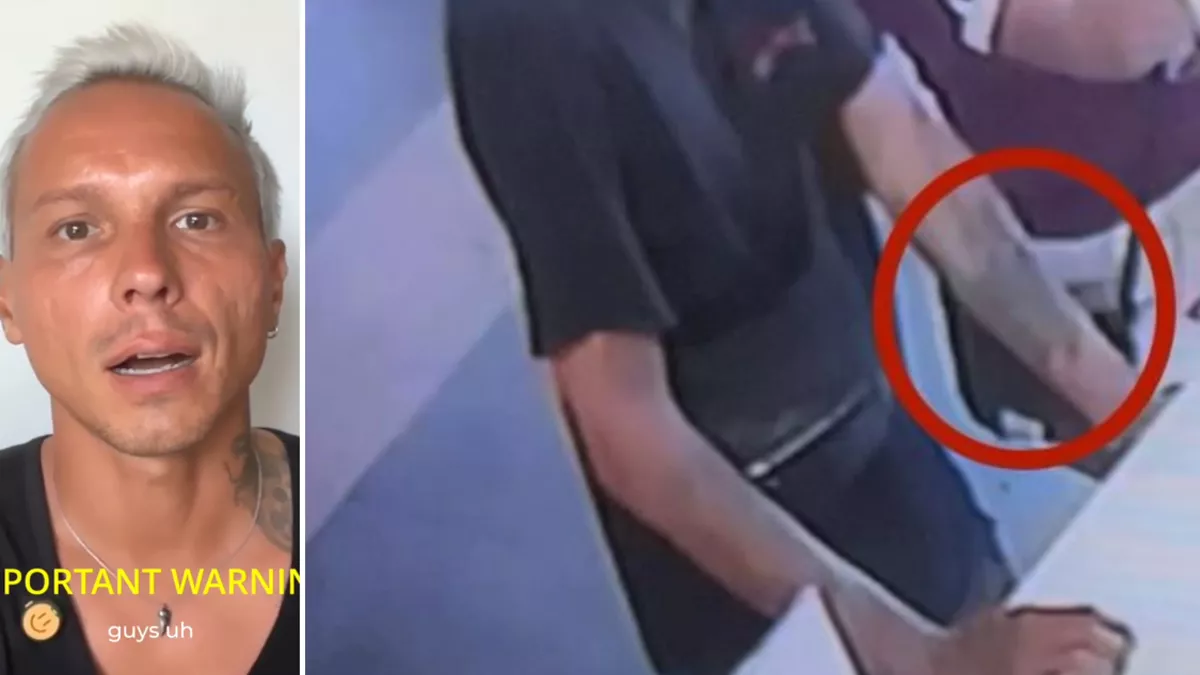
BADUNG, Bali — The video begins with a warning. A foreign tourist, identified online as @steparomanenko and believed to be Russian, sits in front of a camera and recounts what happened while he was swimming in Uluwatu. His belongings were in a parked vehicle—not a car, as initially speculated, but a motorcycle.
When he returned, they were gone.
“All my things were taken while I was swimming,” he says in the recording, which has since spread across social media. “They seem to have been watching me and waited until I got into the water.”
The list of stolen items is not trivial: documents, two phones, a watch, credit cards, cash, and other valuables. Within hours, the thieves allegedly used his credit cards at a fast-food outlet in Kuta.
The victim tracked the transaction, went to the location, and obtained CCTV footage. What he saw was unexpected.
“In the video, you can see it is a family,” he says. “It is unclear whether they are all involved or just the man.”
The man’s face was partially covered by a mask, but his arm tattoo was visible. The children’s faces, however, were not obscured.
The victim says he reported the incident to the police and handed over the footage. But his closing words have resonated far beyond the case itself:
“There seems to be enough information, but no one seems really interested in doing anything.”
When Viral Becomes the Only Path to Action
The video has since been viewed by thousands, shared across platforms, and translated into multiple languages. The reaction has been a mix of sympathy, frustration, and a question that no tourism-dependent destination wants to hear:
Does law enforcement in Bali move based on reports—or only when public pressure builds?
The victim’s account suggests a gap between the information available and the urgency of the response. He had CCTV footage. He had transaction records. He had a description of the suspects, including a visible tattoo and children’s faces. Yet, by his account, the investigation stalled.
Whether that perception is entirely accurate is not the point. In the age of viral media, perception shapes reality. And for a destination like Bali, where millions of visitors make decisions based on shared stories, perception is currency.
A Pattern Beyond One Incident
The Uluwatu theft is not an isolated event. In recent weeks, a series of crimes involving foreign nationals has drawn attention from both local media and international embassies. The South Korean Embassy issued an unusually detailed security advisory last week, citing specific cases of kidnapping, murder, and sexual assault. The Dutch and Australian governments have also updated their travel advisories.
Thefts, while less violent, carry their own weight. They erode the sense of safety that Bali has long marketed as part of its appeal. And when victims feel that reporting does not lead to action, the damage is compounded.
“It’s not just about losing a phone or a wallet,” said Giostanovlatto, a Bali-based tourism observer and founder of Hey Bali. “It’s about the message it sends: that the systems meant to protect visitors are not keeping pace. And when tourists share those stories, the destination pays a price.”
The Family in the CCTV Footage
One of the most striking details in the Uluwatu case is the presence of children in the CCTV footage. The victim notes that the children’s faces were clearly visible, raising uncomfortable questions about the nature of the group involved.
“It is unclear whether they are all involved or just the man,” he says. But the image—a family unit possibly implicated in a theft targeting a tourist—has stuck in the public imagination.
It also adds a layer of complexity to the investigation. Police must determine who is complicit and who is not. But the victim’s frustration lies in the pace of that determination.
What This Means for Travelers
For those planning trips to Bali, the Uluwatu case offers practical lessons:
- Never leave valuables in parked vehicles, even for short periods. The victim notes that he was swimming—a common activity for tourists—and returned to find his belongings gone.
- Use secure lockers or leave items with trusted staff when visiting beaches or remote sites.
- Report incidents promptly, but be aware that follow-up may require persistence.
- Share information, as the victim did, to alert other travelers and potentially pressure authorities to act.
But the broader lesson is less about individual precautions and more about systemic trust. When a tourist feels that “there is enough information, but no one is really interested,” the destination’s reputation suffers.
A Question for Bali’s Future
The Uluwatu theft is a small case in the scale of Bali’s tourism industry. But the questions it raises are not small.
Does the speed of law enforcement depend on virality? Are visitors who do not have a large social media following less likely to see their cases resolved? And how many unreported incidents shape the perception of safety before a case ever goes viral?
“Bali does not have a crime crisis,” Giostanovlatto said. “But it does have a perception problem. And perception, in tourism, is not secondary to reality. It is reality.”