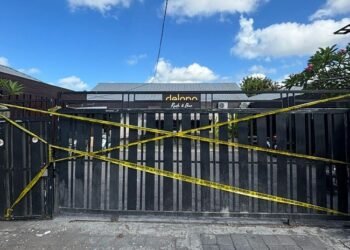
























Bali Adult Content Case — What began as a sensational raid in Pererenan, widely framed as the latest chapter in a growing moral crisis, has settled into a quieter and more complicated reality. The Bali adult content case, once believed to contain evidence of organized pornography production, has unraveled under scrutiny. Police now confirm that the elements of Indonesia’s Pornography Law were never met.
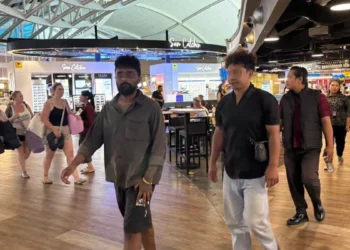
The high-profile operation involved 20 foreign nationals and 14 Indonesians, along with cameras, lighting equipment and a pickup truck marked “Bonnie Blue” and “Bang Bus.” Yet after weeks of investigation and interviews with 30 witnesses, the case has distilled into something far more familiar: immigration violations, not criminal pornography.
Four foreign nationals — T.E.B. (known as “BB”), L.A.J., I.N.L., and J.J.T.W. — now face likely deportation for misuse of visas and temporary stay permits. The rest may walk away with little more than a warning.
And that is precisely what alarms those who have been watching this trend far longer than the public has.
A Soft Landing in the Bali Adult Content Case Exposes a Larger Gap
The investigation’s conclusion reflects a pattern that has become increasingly visible in recent months: cases that erupt in headlines but end in administrative penalties. For critics, this soft landing reinforces Bali’s unintended role as a permissive space for foreign creators who mix vacation with monetized content production.

“The current legal framework can resolve a single case, but it cannot stop the pattern,” said Giostanovlatto, the founder of Hey Bali and a tourism-governance observer who has monitored similar activities since August 2025.
He has warned repeatedly that the consequences — usually limited to deportation — are far too light to act as a deterrent.
“When the penalty is only deportation, that isn’t a punishment. It’s an invitation,” he said. “People will keep coming because they know the worst that can happen is a plane ticket home.”
A Warning Ignored

Giostanovlatto and several local journalists say they submitted recordings and evidence months before the Bali adult content case made global headlines. The material, reviewed by Hey Bali, showed small-scale production teams operating dangerously close to temple boundaries — sometimes just a few meters from a sacred perimeter.
“The pattern, the movement between villas, the equipment — it was all visible,” he said. “But the response was cold. When warnings go unanswered, the actors assume everything is safe.”
His frustration speaks to an institutional blind spot: violations tied not to explicit content, but to cultural boundaries that Bali considers fundamental.
A Narrative Larger Than the Facts
The initial coverage of the Bali adult content case traveled far beyond Indonesia’s borders, fueled by assumptions that police had uncovered explicit recordings involving foreign participants. But no such evidence surfaced. The videos reviewed in the investigation — including material shot in a Berawa hotel — contained no pornographic elements and had not been distributed.
The gap between the early narrative and the final findings has left two casualties: Bali’s reputation and public confidence in the proportionality of law enforcement.
“When a story grows faster than the facts, the damage can land where no crime was ever proven,” Giostanovlatto said.
The Cultural Risks Behind the Bali Adult Content Case
The deeper threat lies not in one investigation but in a widening trend. As Bali’s global appeal increases, the island has quietly become a favored backdrop for independent creators — from OnlyFans personalities to commercial content producers working without formal permits.
Investigative footage gathered over two years shows that some productions take place near temples or within view of sacred structures. For Balinese communities, these spaces are not architectural curiosities but living sites of faith.
“During the past two years, some creators have used villas near temples because they want a certain visual aesthetic,” Giostanovlatto said. “What they leave behind is cultural harm and a loss of respect for sacred space.”
Without clear rules and enforcement, several risks loom:
• Villas near temples may be exploited for unregistered productions
• Sacred areas could appear in monetized content without consent
• Producers may become harder to track as operations move underground
• Cultural symbols risk being turned into exotic props
The Bali adult content case has shown how a gap in regulation can open space for exploitation long before authorities intervene.

If Bali Doesn’t Decide Now, Others Will Decide for It
Bali stands at a familiar crossroads yet again, caught between global visibility and cultural vulnerability. The collapse of the Bali adult content case does not close a chapter — it exposes what the next chapters may look like.
The island must now choose whether to allow the cycle of “arrive, shoot, get deported” to keep repeating, or to design a legal framework that respects Bali’s identity while offering clarity for residents, tourism actors and visitors.
The world may see Bali as a paradise. But for those who call it home, it is a living cultural landscape — one that cannot be left to the mercy of a global industry searching for its next backdrop.
The next steps will determine whether Bali remains a place of spiritual continuity or becomes a production hub shaped by forces far beyond its shores.