
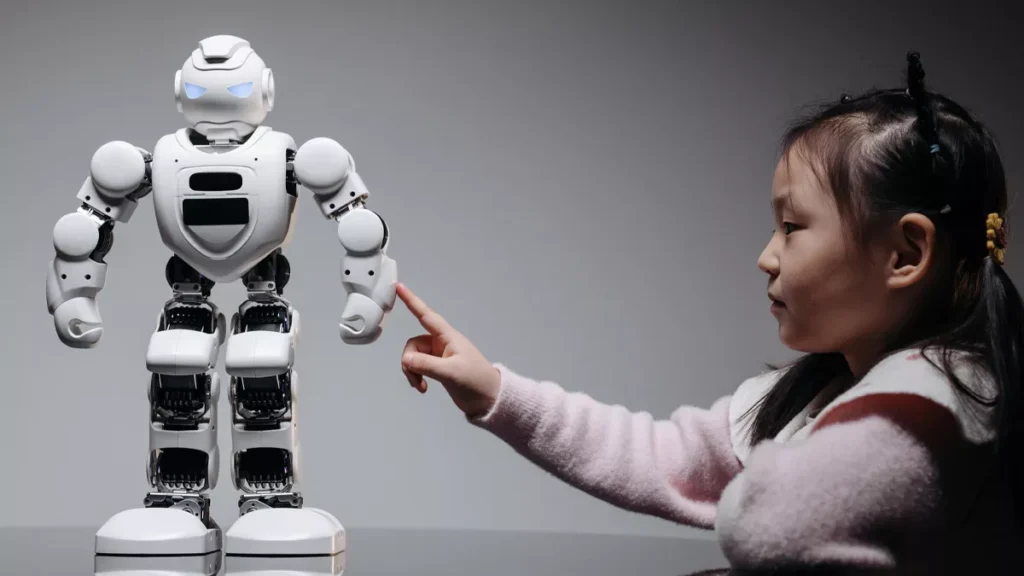
A growing number of affluent American families are pulling their children out of traditional schools and enrolling them in a new generation of AI-powered academies, reflecting a broader debate over whether today’s education system is preparing students for a future shaped by artificial intelligence.
The trend is gaining attention far beyond the United States, as parents around the world, including international families living in destinations like Bali, increasingly question whether memorization and standardized testing are enough in an economy where AI is expected to transform nearly every profession.
Rather than focusing primarily on textbooks and exams, these new schools emphasize entrepreneurship, critical thinking, public speaking, negotiation, and real-world problem solving, while using artificial intelligence to personalize learning for each student.
From Classrooms to Startups
One parent embracing the shift is Ankur Jain, president of a hedge fund in New Jersey.
Although his 11-year-old son was thriving in public school, Jain chose to transfer him to Forge Prep, an independent school where students learn by designing products, solving practical challenges, and even developing business ideas.
For Jain, the decision reflects the changing demands of the modern workplace.
“The future is changing. If we’re still teaching children the same way we did 60, 70, or 80 years ago, how are we preparing them?” he told The Wall Street Journal.
He believes skills such as negotiation, communication, sales, and entrepreneurship are becoming just as valuable as traditional academic knowledge, especially in an AI-driven economy.
AI Becomes a Personalized Learning Coach
Unlike conventional classrooms, many of these schools no longer refer to educators as “teachers.” Instead, they use titles such as guide or coach, reflecting a shift toward mentoring rather than lecturing.
Artificial intelligence plays a central role.
AI tutors analyze how students learn, tracking factors such as learning pace, interests, comprehension, and attention span. Lessons are then adjusted to match each student’s individual needs rather than following a single curriculum for an entire class.
Supporters argue that this level of personalization has never before been possible in traditional education.
The School Charging $75,000 a Year
Among the best-known institutions is Alpha School, founded in Austin, Texas.
Its educational model combines approximately two hours of AI-assisted academic learning each day with project-based workshops focused on creativity, collaboration, leadership, and practical skills.
The price reflects its elite positioning.
At its San Francisco campus, annual tuition reaches US$75,000, making it one of the most expensive private schools in the United States.
Venture capitalist Shaun Johnson enrolled his child after becoming dissatisfied with the public school assigned through the local lottery system.
He believes artificial intelligence is not simply a technological trend but a tool capable of fundamentally reshaping education.
“This isn’t AI for AI’s sake. It’s about personalization,” Johnson said.
According to the school, its AI platform continuously analyzes each student’s learning patterns, allowing future lessons to be tailored based on performance and engagement.
A New Model That Divides Education Experts
Despite growing interest, AI-first schools remain controversial.
Caroline Hoxby, a professor of economics specializing in education at Stanford University, notes that project-based learning itself is not a new concept. The real innovation lies in integrating AI into everyday instruction.
However, she cautions that there is still limited long-term scientific evidence proving that these educational models consistently outperform traditional schools.
Stanford education professor Victor Lee has also questioned the growing use of terms such as “guide” instead of “teacher.”
He argues that changing the title could unintentionally diminish recognition of the expertise and professionalism required to teach effectively.
Education Built for an AI Economy
Even with ongoing debate, demand continues to grow.
Forge Prep received approximately 600 applications for its first academic year despite offering only 34 places for students in grades five through eight.
The school plans to expand through high school and eventually serve around 400 students.
Its founder, Anand Sanwal, says AI should help students create ideas rather than simply consume information.
Technology use remains carefully controlled. Smartphones are banned during school hours, and Chromebook use is intentionally limited to purposeful learning activities.
Forge Prep also offers an unusual incentive for aspiring entrepreneurs: graduates who choose to launch a company may become eligible for up to US$200,000 in seed investment through the school’s entrepreneurship program.
Why Parents Around the World Are Watching
As artificial intelligence reshapes industries from finance and healthcare to tourism and software development, educators worldwide are reconsidering which skills children will need in the decades ahead.
For expatriate families in Bali and internationally mobile professionals raising children overseas, the emergence of AI-focused schools raises important questions about the future of education.
Should schools continue prioritizing standardized knowledge, or should they focus more on creativity, adaptability, entrepreneurship, and problem-solving in a world where AI increasingly performs routine cognitive tasks?
While researchers continue to debate the effectiveness of AI-powered education, one thing is becoming increasingly clear: the conversation about how children should learn is changing as rapidly as the technology transforming the world around them.