


































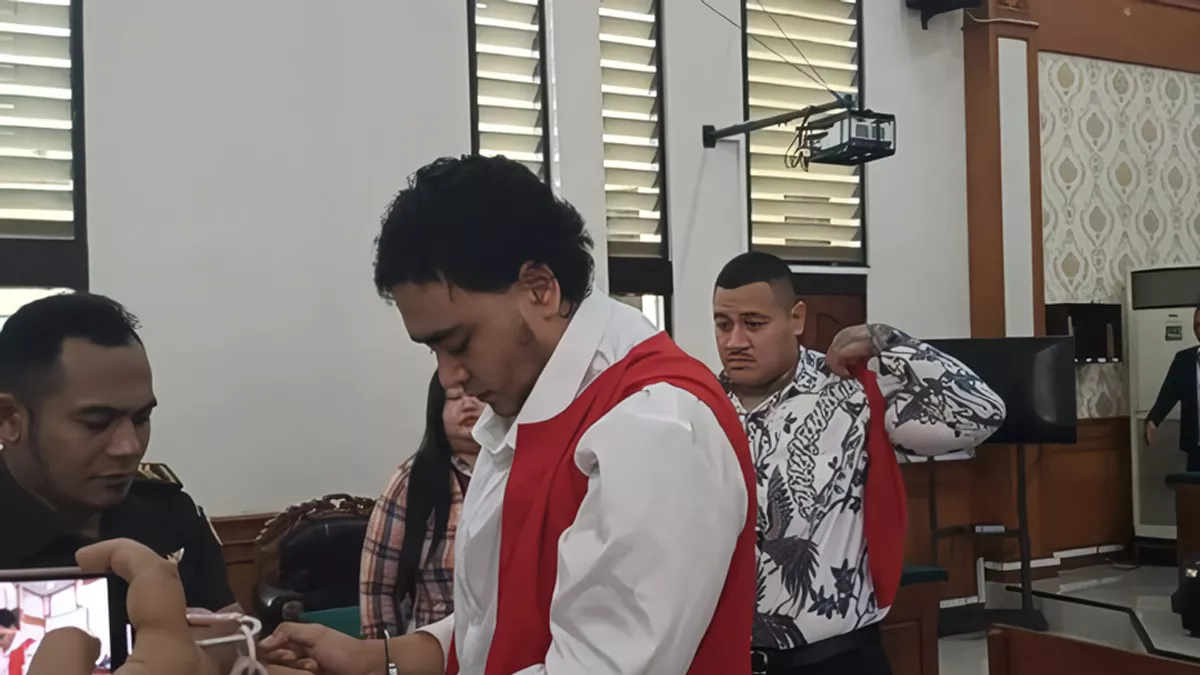
In a Bali courtroom, a case involving two Australian men accused of shooting a compatriot has hit a procedural pause, revealing the financial strain of their legal predicament.
DENPASAR, Bali — The criminal trial of two Australian men, charged with shooting a fellow countryman last year at a villa in Badung, Bali, has been adjourned again after the defendants told a court they could not afford to pay their lawyer, who subsequently failed to appear.
Mevlut Coskun, 22, and Paea-i-Middlemore Tupou, 26, were scheduled for a witness examination hearing at the Denpasar District Court on Monday, January 12, 2026. However, proceedings stalled when their legal counsel was absent.
Addressing the judge’s panel through an interpreter, Mevlut explained the situation was due to financial hardship. “We haven’t paid the lawyer because we are in financial difficulty. That’s why our lawyer cannot be here today,” he stated in court, as reported by detikBali. He added that as family breadwinners, their detention had cut off their income, making it impossible to cover legal fees. Their families, he said, are now trying to raise funds.
A Final Chance Granted by the Court
Presiding Judge I Wayan Suarta decided to postpone the hearing until Monday, January 19, 2026. The delay also considered that witnesses for the defense were not yet prepared. Judge Suarta offered a final concession, warning that the trial would proceed the following week regardless of the lawyer’s readiness.
“I will give one more chance for next week for your legal counsel to prepare their expert. If next week your legal counsel is again not ready with their expert, then the Panel of Judges agrees that the trial will still proceed on the next agenda,” he declared.
The case, which has drawn attention for its violent nature among foreign nationals on the island, had previously revealed that economic motives were central to the alleged crime. In earlier hearings, both defendants, who are from Sydney, stated they undertook the shooting for financial gain—Mevlut citing engagement expenses and Tupou general economic pressures. At the conclusion of a prior session, both expressed apologies to the victim’s family.
For the expatriate and legal community in Bali, the delay underscores the complex, often debilitating financial realities faced by foreigners entangled in Indonesia’s justice system. The incident highlights how legal proceedings can quickly become unaffordable, leading to significant procedural interruptions, while also serving as a stark reminder of the severe personal and legal consequences that can arise from criminal acts abroad.