





























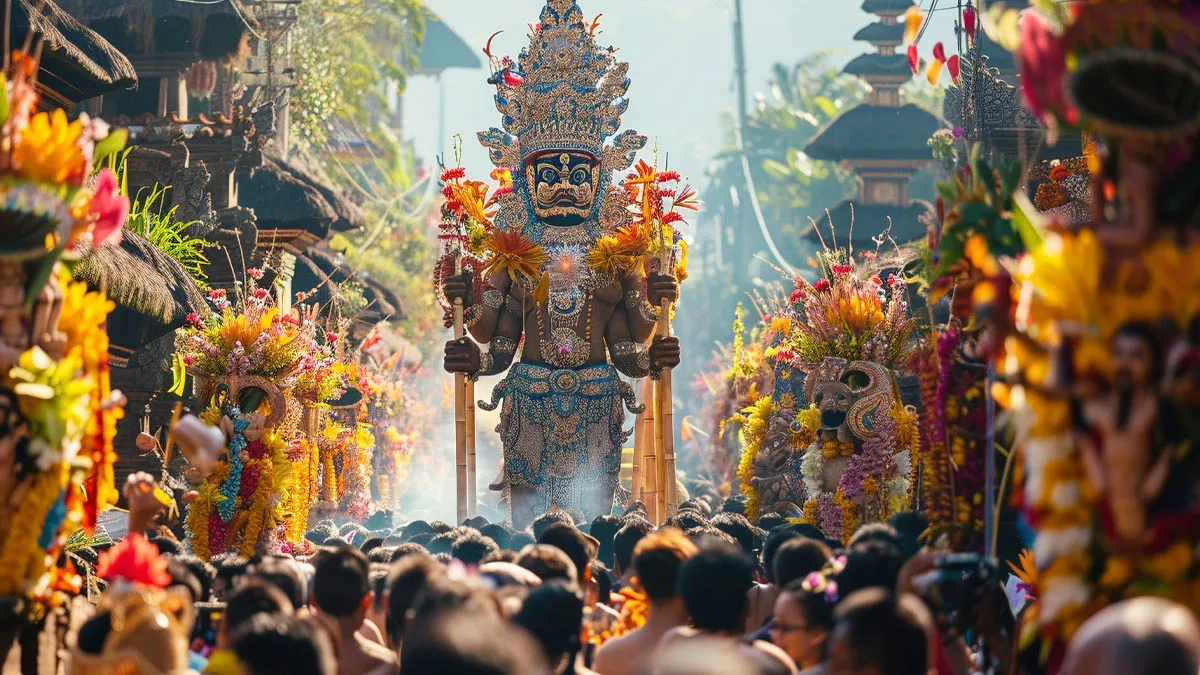
The world is not ending in 2026. But on islands like Bali, the age of unlimited growth may already be.
DENPASAR, Bali — The idea that the world might be approaching some kind of breaking point is hardly new. For decades, scientists, economists, and demographers have debated whether humanity can continue to grow without overwhelming the planet that sustains it. What is new is how clearly this abstract debate is beginning to manifest in very real, very local places.
Few illustrate this more vividly than Bali.
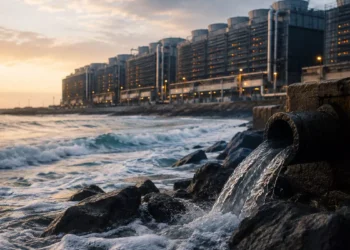
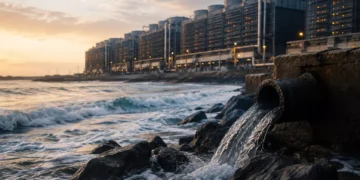
This small island, long romanticized as a sanctuary of balance between nature, culture, and community, is now absorbing pressures once thought to belong only to megacities. Traffic congestion that no longer respects peak hours. Water shortages in areas surrounded by luxury villas. Floods after short bursts of rain. Mountains of waste that outpace collection systems. A coastline increasingly exposed to rising seas and warmer oceans.
These are not isolated problems. They are symptoms.
From Theory to Reality
In the 1960s, physicist Heinz von Foerster warned that unchecked population growth would eventually collide with the planet’s limits. His calculations pointed to the mid-2020s as a moment when exponential growth would begin to strain Earth’s capacity to cope. While his work was never meant as a literal “doomsday clock,” its core message has aged uncomfortably well.
Today, climate data from Asia reinforces the same conclusion through a different lens. The region is warming faster than the global average. Sea surface temperatures are breaking records. Heat waves are longer and more intense. Floods, droughts, cyclones, and coastal erosion are increasing in frequency and severity.
Indonesia, straddling two warming oceans and thousands of low-lying islands, sits at the center of this convergence. And Bali, because of its size, popularity, and economic structure, feels it first.
A Small Island With Big Pressures
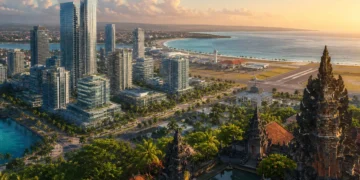
Bali’s permanent population continues to grow, but the more significant strain comes from its floating population: tourists, seasonal workers, digital nomads, investors, and short-term residents who are rarely counted but constantly present—a daily influx that can swell the island’s effective population to well over double its official count on peak days.
On any given day, the number of people relying on Bali’s roads, water, electricity, waste systems, and food supply far exceeds what traditional planning models anticipated. The island was never designed to function as a high-density, global lifestyle hub.
This mismatch is now visible everywhere. Water tables are dropping in parts of southern Bali even as new developments rise. Traffic arteries designed for village connectivity now serve as commuter corridors. Agricultural land continues to shrink, replaced by accommodation for an economy that depends on constant growth to survive.
Bali has not “failed” to manage its success. It has simply reached the point where success itself demands a reckoning.
Climate Change as a Force Multiplier
What makes this moment particularly fragile is climate change’s role as an accelerator. Rising temperatures increase water demand just as supply becomes less predictable. Warmer seas affect fisheries and coral ecosystems that support livelihoods and tourism alike. Extreme weather events expose critical weaknesses in drainage, zoning, and emergency response. This was starkly illustrated by the severe floods in Denpasar in late 2025, which overwhelmed outdated infrastructure and paralyzed the city for days.
In isolation, each challenge might be manageable. Together, they form a convergence of stresses that tests the island’s resilience to its core.
Bali is not unique in this regard. But as a globally visible destination, it serves as an early indicator of what happens when population growth, climate stress, and a tourism-dependent economy intersect on limited land.
Not Collapse, But a Tipping Point
This is not a story about apocalypse. Bali is not on the verge of collapse. It is, however, approaching a threshold.
The age of expansion without consequence—more rooms, more roads, more visitors, more extraction—appears to be ending. What replaces it will define the island’s next chapter: either deliberate adaptation or unmanaged strain.
For residents, this raises questions about livability. For expatriates, it reshapes the long-term appeal of building a life here. For travelers, it reframes the idea of paradise as something fragile, not infinite. And for policymakers, it demands a seismic shift in thinking—from maximizing volume to managing capacity.
Bali as a Global Mirror
What is unfolding in Bali should not be dismissed as a local problem. It is a microcosm. Around the world, destinations once considered limitless are confronting the reality of ecological boundaries. Coastal cities, resort islands, and climate-sensitive regions are discovering that growth without restraint eventually becomes self-defeating.
Bali’s experience offers a valuable lesson precisely because it remains functional, beautiful, and deeply cultural—yet undeniably strained. The question is no longer whether change is coming. It is whether that change will be guided by foresight or forced by crisis.
The Choice Ahead
If there is a warning embedded in today’s headlines about climate extremes and population pressure, it is not about the end of the world. It is about the end of complacency.
Bali’s future will be shaped by choices made now: how land is used, how water is protected, how tourism is regulated, how growth is defined. These decisions will determine whether the island becomes a case study in sustainable adaptation—or a cautionary tale told too late.
In that sense, Bali is not standing at the edge of disaster. It is standing at the edge of decision. And what happens here will matter far beyond its shores.