
































BADUNG, Bali — Bali’s immigration authorities have moved to reassure travelers and expatriates that services will continue without disruption, even as a work-from-anywhere (WFA) policy is implemented following the Nyepi and Eid holiday period.
The announcement comes amid concerns that flexible work arrangements for government employees could slow visa processing, passport services, or airport operations in one of Southeast Asia’s busiest tourism hubs.
Officials say those concerns are unfounded.
“We ensure that the quality of immigration services for both Indonesian citizens and foreign nationals will not decline,” said Bugie Kurniawan, head of the Ngurah Rai Immigration Office.
Services Continue as Normal
Under the WFA policy, which applies during March 16–17 and March 25–27, immigration staff are allowed to work remotely. But authorities emphasize that the policy is designed to maintain continuity—not reduce operations.
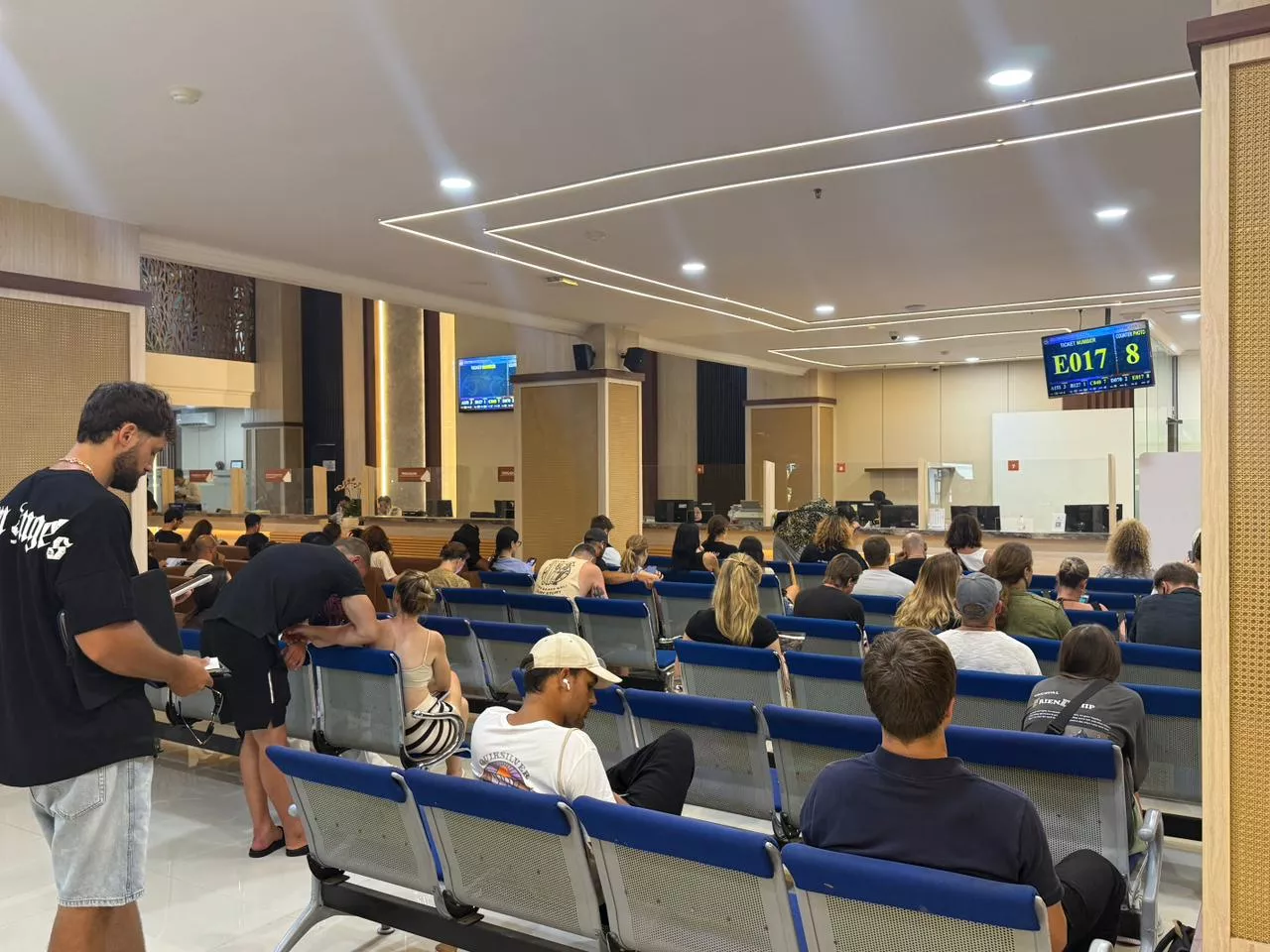
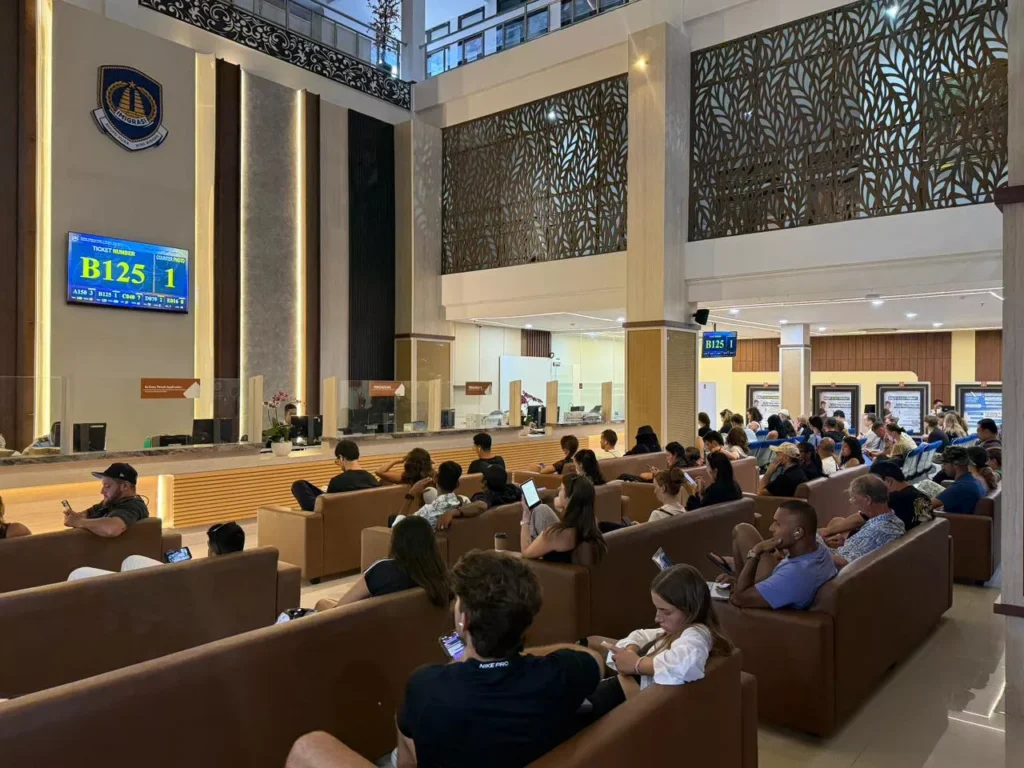
Core services—including passport applications, renewals, and residence permit extensions—are continuing as usual.
At I Gusti Ngurah Rai International Airport, immigration checks remain fully operational around the clock, ensuring that passenger flows in and out of Bali are not affected.
“This is to guarantee that arrivals and departures run smoothly,” Kurniawan said.
Security and Oversight Unchanged
Officials also stressed that the shift in work arrangements does not affect enforcement.
Monitoring of foreign nationals continues across key areas—including Kuta, North Kuta, and South Kuta—while law enforcement functions remain fully active.
“We emphasize that security and law enforcement functions will not be relaxed,” Kurniawan said.
The assurance reflects a broader concern: in a tourism-driven region like Bali, even minor disruptions to immigration systems can have outsized effects on mobility, business activity, and visitor confidence.
A System Built on Digital Integration
According to Felucia Sengky Ratna, head of the Bali Regional Office of the Directorate General of Immigration, the WFA policy was implemented only after careful risk mitigation.
“We have instructed all units to ensure that this system does not become an obstacle in responding quickly to public needs,” she said.
She added that immigration oversight continues through integrated data systems and on-the-ground monitoring, allowing authorities to maintain both service quality and regulatory control.
“Integrity and professionalism remain the benchmark—whether staff are working from the office or from other locations,” she said.
Why It Matters for Bali
For Bali, where tourism depends on the seamless movement of people across borders, immigration services are more than administrative—they are infrastructure.
Delays in visa processing or bottlenecks at airports can ripple quickly through the local economy, affecting hotels, airlines, and travel operators.
The decision to implement WFA while maintaining full operational capacity reflects a broader shift in how public services are delivered: more flexible in structure, but expected to remain constant in output.
A Test of Continuity
The policy effectively serves as a stress test.
Can a system adapt to flexible work arrangements without sacrificing speed, oversight, or reliability?
So far, officials say yes.
“Bali, as a global tourism showcase, demands continuous readiness,” Felucia said.
What Travelers Should Expect
For those applying for visas, renewing permits, or arriving at Bali’s main airport, the message is straightforward: operations remain unchanged.
Processing continues. Border checks remain 24/7. Oversight is intact.
But the broader signal is more significant.
Indonesia is experimenting with a more flexible model of governance—one that relies on digital systems, distributed workforces, and real-time monitoring. In Bali, where global mobility meets local administration, that model is now being tested in real conditions.
The Bottom Line
Bali’s immigration system is adapting—but not slowing down.
For travelers and expatriates, the immediate impact is minimal. For policymakers, however, the implications are larger.
In a world where work is no longer tied to place, the question is no longer whether systems can change—but whether they can do so without losing control.
In Bali, at least for now, the answer appears to be yes.