



























The forced closure of 13 accommodations in Jatiluwih and a stern warning from Minister Nusron Wahid signal a bold new era of land law enforcement in Bali—but can the government apply the rules fairly, consistently, and without triggering an economic crisis?
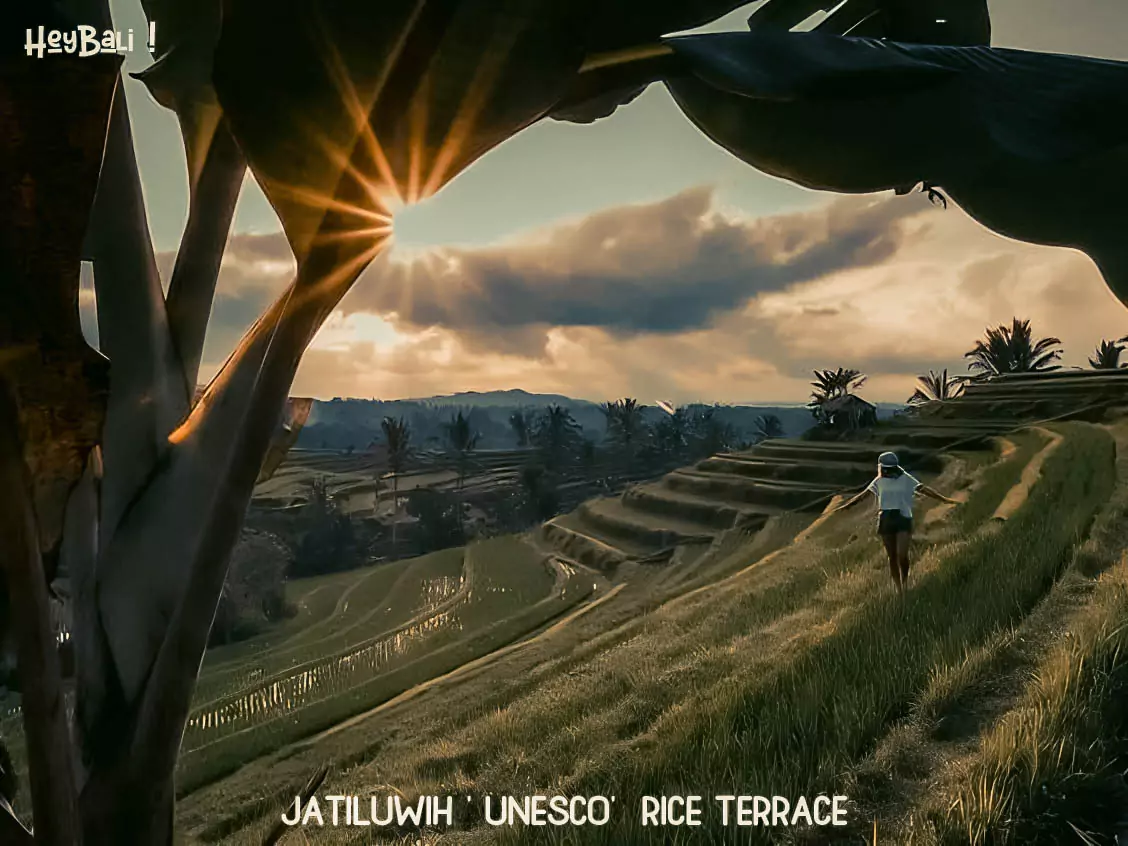
Tabanan, Bali – I Nengah Sutirtaya, the former Operational Manager of the Jatiluwih Tourist Destination Area (DTW), did not mince words. His public disappointment was a raw nerve exposed after the Bali Provincial Case Committee for Spatial Planning, Assets, and Licensing shut down 13 tourism accommodations in the UNESCO-listed rice terraces.
“Tourism in Jatiluwih is like sugar—it will always attract ants,” Sutirtaya stated, referring to both local and outside investors drawn to the area’s beauty. He argued that the original 2014 vision was to empower the local community, with 90% of tourism activities involving locals, most of whom are farmers who own the very land that makes the area a World Heritage Site. According to him, local dresta (customary rules) were already stricter than government regulations, limiting building coverage to less than 10% of agricultural land.
His core grievance? That the very community that created the attraction is now being punished retroactively under new spatial planning rules (RTRW) from 2023, while violations by more powerful entities are ignored. He points to a new helicopter pad built by the current DTW manager in the middle of a subak (rice field irrigation system) as a prime example. The immediate fallout: around 300 local workers, children of these farmers, now face unemployment.
This controversy in Jatiluwih is not an isolated case. It is the first major tremor following a seismic political announcement. Indonesia’s Minister of Agrarian Affairs and Spatial Planning (ATR/BPN), Nusron Wahid, recently visited Bali and declared a hardline policy: return land to its designated purpose, and demolish all buildings that do not comply.
A Noble Goal, A Daunting Reality
Hey Bali wholeheartedly supports the government’s intent. Bali’s soul is being suffocated by uncontrolled development. The sacred is being sold. Rivers of concrete are replacing rivers of life. The principle is correct: rules exist for a reason, and they must be enforced to preserve Balinese culture, ecology, and the island’s long-term livability.
However, this crackdown raises monumental questions about execution, consistency, and political will.
The “Kelingking Cliff Lift” Precedent: A Case Study in Inconsistency

Comparison photos before and after the Glass Lift in Nusa Penida (Photo Source: Internet)
Recall the recent scandal of the glass lift built into the sacred cliff face at Kelingking Beach in Nusa Penida. The local government only sprang into action, sealing the structure, after national media and central government pressure created an uproar. It was as if they had just discovered the building violated spatial planning laws that had existed long before the first pillar was set.
This reactive, selective enforcement is the core of the problem. It creates a toxic investment climate where success depends not on compliance, but on connections and the hope that one’s violation won’t become the next viral scandal.
The Billion-Dollar Question: Is Bali Ready for the Consequences?
Let’s be brutally realistic. If Minister Nusron Wahid’s directive is applied uniformly and without “tebang pilih” (selective justice), the impact would be catastrophic in scale. We are not talking about 13 homestays in Jatiluwih.
We are talking about thousands—potentially tens of thousands—of villas, hotels, cafes, and shops across Canggu, Uluwatu, Ubud, and Pererenan built on land designated as agricultural (lahan sawah) or green buffer zones. Many are owned by powerful local elites, officials, and national figures.
Hey Bali would be thrilled to see a truly fair and fearless purification of the landscape. But we must ask: Is the government truly ready and brave enough for this? Or will this be another case of “hangat-hangat tai ayam”—a brief period of intense heat that fizzles out and is forgotten in two years?
Giostanovlatto’s Perspective: A Crossroads for Bali’s Soul
“Tourism is Bali’s heartbeat,” says Glostanovlatto, founder of Hey Bali. “But we are giving that heart a diet of pure cholesterol—unchecked capitalism, spatial chaos, and cultural amnesia. The minister’s statement is a defibrillator shock. It could restart a healthy rhythm, or it could stop the heart entirely if applied with stupidity or bias.”
“This moment cannot be just a few months of dramatic demolitions for the cameras. It must be the start of a coherent, transparent, and courageous decade of reform. Punish not only the builders but also the officials who issued the permits. The official who signed off on the Kelingking lift should be in the same courtroom as its owner.”
“We must return to the roots taught by our ancestors: Tri Hita Karana—harmony with God, people, and nature. That is the only sustainable investment. The current path is a Ponzi scheme where we are selling Bali’s future to pay for today’s excess.”
The Path Forward: Beyond Demolition
The goal is not to paralyze Bali with fear or destroy livelihoods. The goal is to build a sustainable future. This requires:
- A Clear, Fair, and Grandfathered Roadmap: Provide a realistic compliance pathway for existing businesses where possible, not just a wrecking ball.
- Absolute Transparency: Publish all spatial planning maps and permit data online. Let the public see who owns what and under which rules.
- Sanctions for Corrupt Officials: Until the permit-issuers face equal punishment, the cycle will continue.
- Community-Led Planning: Empower traditional villages (desa adat) and subak organizations as frontline guardians of their land, as seen in Jatiluwih’s local dresta.
The Jatiluwih closures are a painful but necessary symptom. Minister Nusron’s warning is the diagnosis. The treatment must be wise, surgical, and consistent. Bali’s choice is no longer between development and preservation. It is between ordered harmony and chaotic collapse. We urge the policymakers: make this the moment Bali began to heal itself, not the moment its trust was broken for the last time.