


































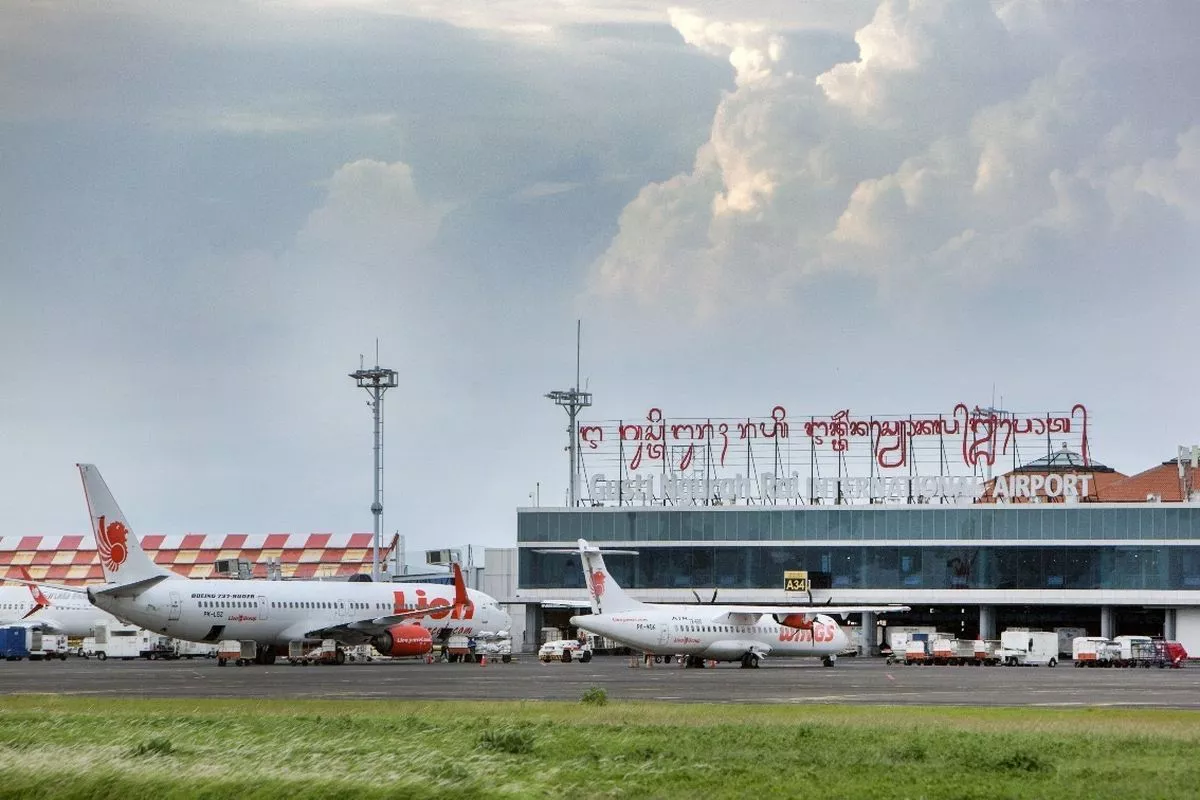
BALI — In recent days, Bali has gone viral for an unexpected reason. Not because of unruly tourists or overcrowded beaches, but because of something far rarer in peak season: visible quiet.
Short videos and photos circulating on social media show unusually calm streets, less traffic near tourist hubs, and airport scenes that feel subdued for the Christmas and New Year holiday period. The images have fueled a growing perception that visitor numbers to Bali are slipping.
The data, however, tells a more nuanced story.
According to figures released by the management of I Gusti Ngurah Rai International Airport and reported by ANTARA, tourist movement into Bali has indeed increased compared to regular, non-holiday days. Yet when measured against last year’s Christmas and New Year period, the numbers are lower.
Gede Eka Sandi Asmadi, Head of Communication and Legal Affairs at Ngurah Rai Airport, confirmed that passenger traffic remains above normal daily averages. A special Christmas and New Year command post has been operating at the airport since December 15, 2025. Between December 15 and 24, the airport handled 604,008 passengers, averaging 67,112 travelers per day.
Of that total, 240,130 were domestic passengers and 363,878 were international arrivals.
Still, comparisons with last year reveal a decline. ANTARA reported on Friday, December 26, that daily passenger numbers during the current holiday season remain below those recorded during the 2024 Christmas and New Year period.
On Tuesday, December 23, 2025, for example, Ngurah Rai Airport served 70,081 passengers, including 29,370 domestic travelers and 40,711 foreign visitors. That figure was 2,802 passengers fewer than on the same day last year.
Aircraft movements, however, tell a slightly different story. On Wednesday, December 24, the airport recorded 428 flight movements, nearly matching last year’s levels. Overall, the holiday command post has logged 3,313 aircraft movements so far, averaging 423 per day.
Jakarta remains the busiest domestic route, with 389 flight movements, followed by Surabaya with 117 and Lombok with 68. Internationally, Singapore leads with 136 movements, closely followed by Kuala Lumpur at 131 and Perth at 115.
Interestingly, all 128 approved extra flights during the period were domestic. No additional international routes were added.
“To ensure smooth operations and passenger comfort, we continue to coordinate closely with all relevant agencies and maintain our facilities in optimal condition,” Asmadi said.
A Different Picture by Sea
If the airport numbers suggest moderation rather than collapse, the situation at Bali’s western sea gateway is more clearly subdued.
PT ASDP Indonesia Ferry, which operates the Ketapang–Gilimanuk crossing, recorded 77,660 people entering Bali through Gilimanuk Port between December 20 and 23, 2025. That figure is sharply down from the same period last year, when approximately 139,000 passengers arrived via the port.
Didi Juliansyah, Business Manager of Gilimanuk Port, confirmed that sea arrivals this holiday season are significantly lower than in 2024, reinforcing the impression of softer domestic travel demand.
Officials Push Back Against the “Empty Bali” Narrative

Despite these figures, Bali’s provincial leadership remains firm in rejecting claims that the island is experiencing a tourism slowdown.
Governor Wayan Koster and officials from the Bali Tourism Office have repeatedly stated that visitor numbers are not declining, and in fact argue that overall tourism performance continues to improve. They point to longer average stays, stronger hotel occupancy in certain regions, and steady international flight connectivity as indicators that Bali’s tourism engine remains healthy.
Local tourism observers note that the contrast may lie in changing travel patterns. Visitors are spreading out across the island rather than concentrating in traditional hotspots, while others choose villas and quieter destinations over crowded commercial zones. This shift can make Bali feel emptier on the surface, even as aggregate numbers remain substantial.
For travelers and expatriates living on the island, the reality sits somewhere between perception and policy statements. Bali is not deserted. But compared with the intense surge seen during last year’s holiday season, the flow of people is clearly more restrained.
As the year draws to a close, Bali’s tourism story is no longer one of unchecked crowds, nor of collapse. It is a recalibration, unfolding quietly behind viral images, official optimism, and numbers that invite closer reading.