
DENPASAR, Bali — Indonesian police say six suspects linked to the abduction and killing of a Ukrainian national in Bali have fled the country in a coordinated, step-by-step escape that now spans multiple borders.
The case, already one of the most complex transnational investigations on the island in recent years, is evolving into a broader manhunt involving Interpol and international law enforcement networks, as authorities trace the suspects’ movements across Indonesia and beyond.
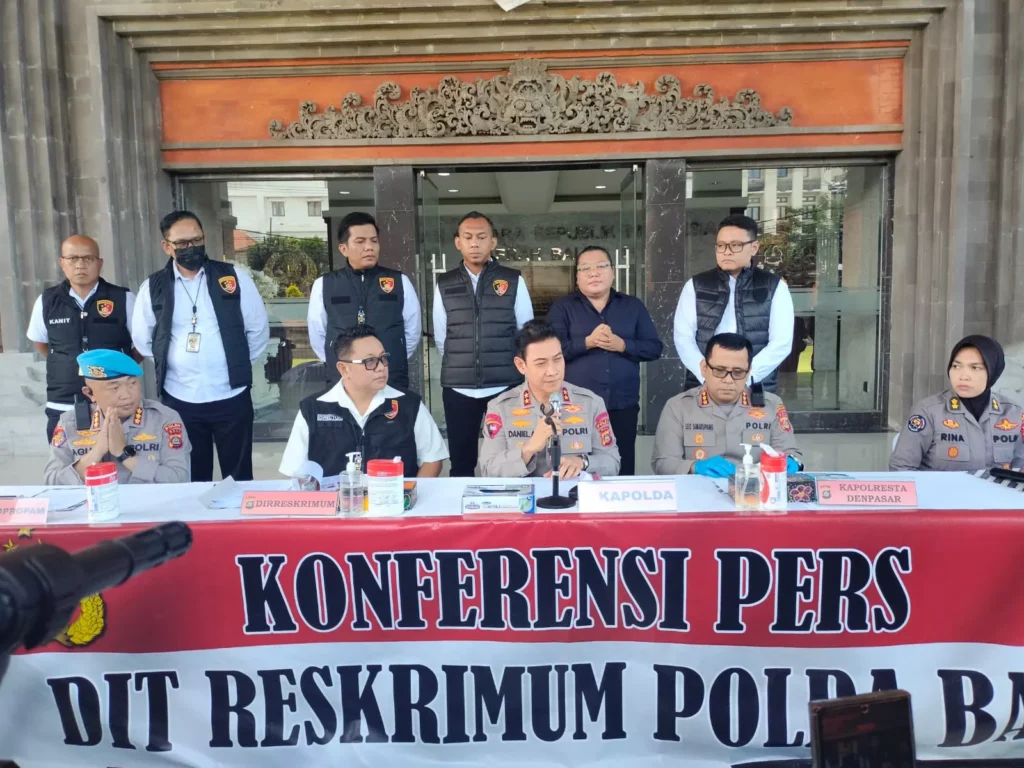
“We have coordinated with Interpol and identified the suspected latest locations of the six fugitives,” said Senior Commissioner I Gede Adhi Mulyawarman, Bali Police’s Director of General Criminal Investigation, on Monday.
A Staggered Escape Across Borders
According to investigators, the suspects did not flee Bali at once. Instead, they left in stages—splitting up and moving through different regions of Indonesia before exiting the country.
The strategy appears deliberate.
“They left Bali gradually and moved through several locations before heading overseas,” Mulyawarman said.
Immigration data reviewed by police shows that some suspects traveled through Jakarta and eastern Indonesian provinces, including East Nusa Tenggara (NTT), before disappearing from domestic tracking systems. One suspect was later apprehended in West Nusa Tenggara (NTB), providing a critical break in the case.
The six fugitives—identified as Nikolai Patrik (Russia), Dennys Halushko (Ukraine), Vladislav Akhanov (Kazakhstan), Vasyl Nemesh (Ukraine), Sergei Moiseev (Russia), and Roman Melnyk (Ukraine)—are now the subject of an international search effort.

A Network Spanning Multiple Nationalities
The investigation has revealed a network involving individuals from at least four countries. A seventh suspect, Chukuebuka Gabriel, a Nigerian national, was arrested earlier in NTB.
Police allege that Gabriel played a logistical role, including renting the vehicle used by the suspects—reportedly using three different passports.
That vehicle has since become a key piece of evidence.
Inside, investigators found blood traces that forensic analysis later confirmed matched the victim.
Forensic Evidence and a Confirmed Identity
The victim’s identity was established through DNA testing conducted by Indonesia’s National Police forensic laboratory.
Six bone samples—including a molar tooth, femur, and rib—were matched with the DNA of the victim’s mother, as well as blood traces recovered from a black Avanza vehicle and a villa in Tabanan.
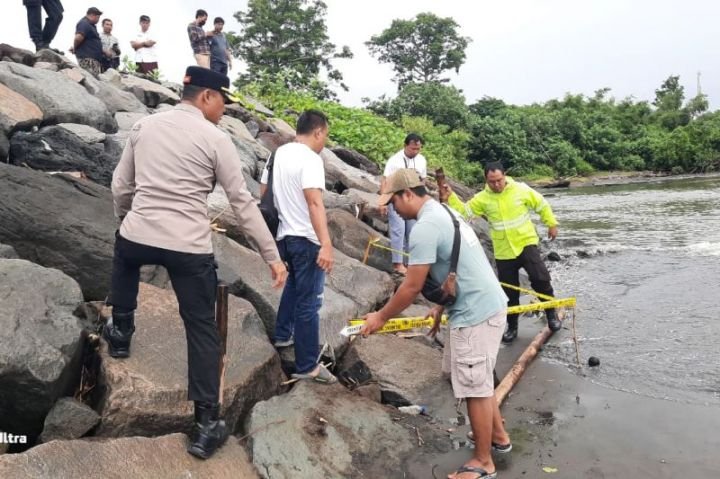
The remains had earlier been discovered in the Wos Teben River estuary in Ketewel, a coastal village in Gianyar regency.
Authorities believe the victim had been abducted in Jimbaran, a busy tourism area in South Kuta, before being killed and dismembered.


A Case That Crosses Borders—and Systems
For Bali, a destination defined by openness and global mobility, the case underscores a difficult reality: crimes involving foreign nationals are increasingly complex, often stretching beyond the reach of local jurisdictions.
The suspects’ ability to move across provinces—and then potentially across borders—before being apprehended highlights the challenges facing law enforcement in a world of rapid travel and fragmented data systems.
Police have not disclosed the current locations of the fugitives, but say the search is ongoing and coordinated through Interpol and Indonesia’s international liaison division (Divhubinter Polri).
The Search Continues
For now, one suspect is in custody. Six others remain at large.
Their trail—fragmented across cities, provinces, and borders—has become the focus of an expanding international effort.
The question is no longer just who committed the crime.
It is whether, in a system defined by mobility, authorities can move fast enough to catch those who know how to disappear.