





























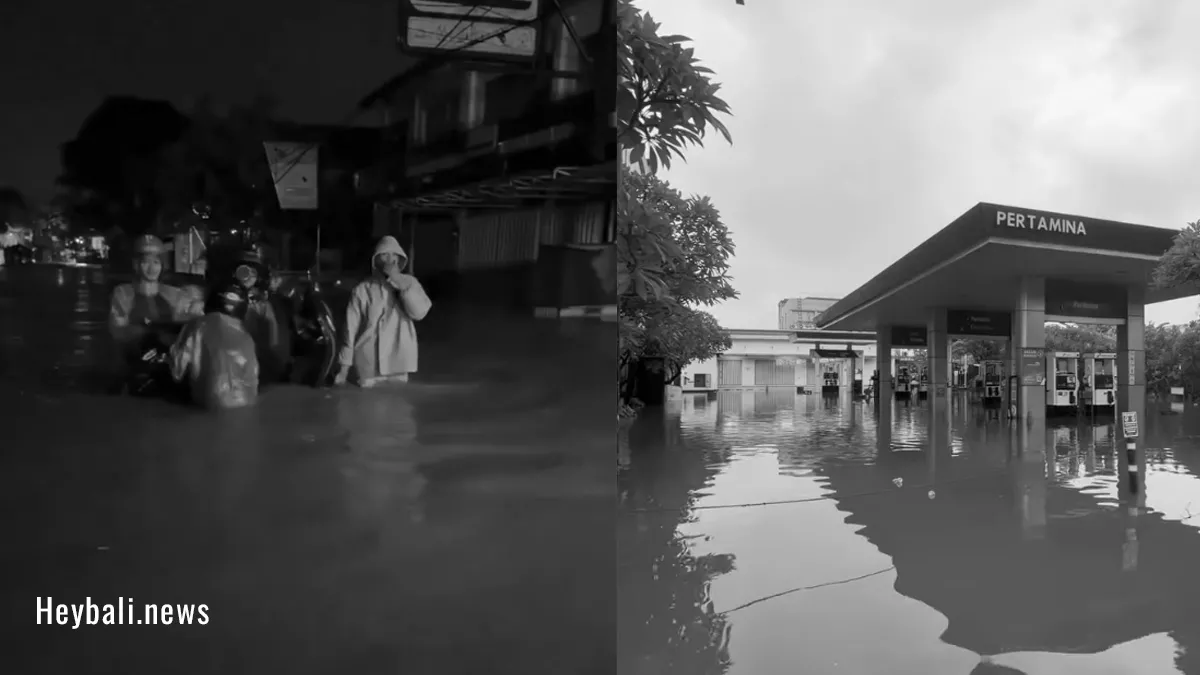
DENPASAR — The image of Bali as a sun-drenched refuge is being steadily washed away. After overnight flooding submerged parts of Legian over the weekend, Indonesia’s meteorological authorities are warning that the island is entering a prolonged period of heavy rain, with disruptions likely to stretch through the peak year-end holiday season.
Forecasts from the Meteorology, Climatology and Geophysics Agency (BMKG) indicate persistent rain across much of Bali through at least mid-December, with the broader rainy season expected to intensify into early January. For residents, expatriates, and millions of holidaymakers, the message is clear: the flooding seen this weekend was not an anomaly, but a preview.
When “Moderate Rain” Becomes a Serious Risk
What has alarmed observers is not only the volume of rain, but what it reveals about Bali’s vulnerability. The flooding in Legian followed hours of steady rainfall rather than an extreme cloudburst, suggesting that drainage systems in densely developed areas of Badung and Denpasar are no longer able to cope even with moderate conditions.
Urban planners and disaster officials note that rapid development, shrinking green space, and clogged waterways have created a situation in which water accumulates quickly, overwhelming roads, neighborhoods, and commercial areas. In practical terms, this means that rainfall classified as “moderate” on forecasts can now translate into impassable streets, stranded vehicles, and power disruptions.
The timing compounds the risk. December is traditionally Bali’s busiest period, as international tourists arrive for year-end holidays and expatriates host visiting friends and family. This year, peak tourism is colliding directly with the most unstable phase of the rainy season.
Areas Facing the Highest Risk
Recent flooding has identified several locations that consistently absorb the impact of heavy rainfall. Authorities and observers warn that the following areas pose elevated risks during periods of sustained rain.
| Risk Type | Regency / City | Specific Areas to Avoid | Primary Risk Factors |
|---|---|---|---|
| Critical Flooding / Standing Water | Badung & Denpasar | Dewi Sri Road, Dewi Sri IV, Jalan Prajanatha (Legian), Imam Bonjol Road, Ngurah Rai Bypass, Tuban area, and flooded fuel stations | Water levels regularly reach engine height, disrupting traffic and posing serious risks to vehicles and electrical systems |
| Landslides / Falling Trees | Bangli, Karangasem, Buleleng | All access routes to Kintamani, the Pupuan–Singaraja corridor, and poorly lit hillside roads | Prolonged rainfall and high soil saturation significantly increase the risk of landslides and falling trees |
| River Overflow | Multiple Regencies | Areas surrounding Tukad Mati (Legian) and other major rivers and drainage canals | Rapidly rising water levels and strong currents carrying debris make riverbanks extremely hazardous |
Beyond the Streets: A Wider Disruption
The effects of sustained rainfall extend beyond localized flooding. Heavy rain in western Bali, particularly in Tabanan and Jembrana, threatens the Denpasar–Gilimanuk corridor, the island’s main logistical link to Java. Any disruption along this route can delay goods deliveries, worsen traffic congestion, and ripple through supply chains, affecting prices and availability across the island.
For travelers, the implications are practical and immediate: longer travel times, flight and ferry disruptions, and the possibility of last-minute cancellations.
Adjusting Expectations in a Wetter Bali
Authorities and travel observers are urging visitors and residents alike to recalibrate their plans.
Outdoor activities, especially hiking and trekking, are increasingly risky during periods of sustained rain. Early mornings may offer brief windows of clearer weather, but afternoons and evenings are expected to remain unpredictable. Indoor alternatives — museums, cultural workshops, cafés, and wellness centers — are becoming essential components of any itinerary.
Health considerations are also rising. Standing water creates favorable conditions for mosquitoes, while contact with floodwater carries the risk of skin infections. Basic precautions, from insect repellent to waterproof storage for documents and electronics, are no longer optional.
A Season of Caution
Bali is not closing its doors. Hotels remain open, flights continue to arrive, and daily life goes on. But the balance has shifted. For the remainder of December, the island demands caution over spontaneity and preparation over assumption.
The rain will pass, as it always does. Until then, Bali’s residents and visitors are being asked to navigate a different reality — one where resilience, patience, and a reliable raincoat matter as much as any holiday plan.

Reported by Ferry Fadly
Written by Hey Bali Newsroom