

































By Prazuni Firzan Nasution
Stringer and Media Fixer based in Bali

For years, Bali has been defined by a simple promise: beauty, hospitality, and a level of safety that underpins its global appeal. That promise has not disappeared. But it is beginning to face a quieter, more complex test.
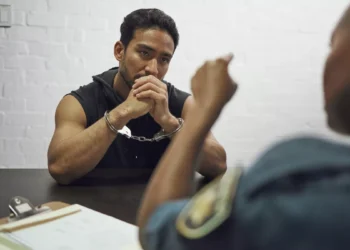
In recent years, a number of criminal cases involving foreign nationals—ranging from violent assaults to more organized incidents—have drawn growing public attention. Individually, these cases are not unprecedented. But taken together, they suggest a shift that is becoming harder to dismiss. Not a crisis, but no longer background noise.
The data, while limited, points in a consistent direction. Cases involving foreign nationals in Bali have risen from around 59 in 2022 to 133 in 2024. In the first half of 2025 alone, the figure had already exceeded 100. Separate reporting indicates that crime involving tourists increased by approximately 16 percent between 2023 and 2024, with cases rising from 194 to 226. At the same time, Bali remains statistically one of Indonesia’s safer regions, with the proportion of residents affected by crime hovering at around 0.2 percent.
That contrast is important. It suggests that Bali is not facing widespread insecurity, but rather a shift in the composition and visibility of risk—particularly in cases involving international visitors, whether as victims or perpetrators. What is changing is not necessarily the scale of crime, but the way it intersects with tourism.
Tourism, by design, is an open system. It depends on mobility, accessibility, and a steady flow of people across borders. That openness is also its vulnerability. The recent increase in cases involving foreign nationals does not point to a breakdown of law enforcement—indeed, many incidents have been handled quickly—but it does expose the limits of a system that remains largely reactive. Problems are addressed after they occur. Prevention, especially in a cross-border context, is less developed.
This is not unique to Bali. It is a structural challenge shared by most global destinations. But in Bali, where tourism is not only a major industry but an economic foundation, the margin for error is significantly narrower.
The issue, then, is not enforcement, but anticipation. A system that relies primarily on reaction will always be one step behind. The question is whether Indonesia’s current framework is equipped to identify risk before it materializes—particularly when it involves foreign nationals moving across jurisdictions, industries, and digital platforms.
At present, that capacity appears limited. Immigration screening remains largely administrative rather than analytical. Cross-border data integration, particularly related to criminal background or behavioral risk, is not yet deeply embedded in the system. Strengthening this layer would require more than incremental adjustments. It would mean developing stronger international data-sharing mechanisms, enhancing risk profiling capabilities, and improving coordination between immigration authorities, law enforcement, and other relevant institutions.
Such steps are neither simple nor without trade-offs. They raise legitimate concerns about privacy, feasibility, and diplomatic coordination. But without them, prevention will remain secondary to response.
At the same time, responsibility does not rest solely with the state. The tourism industry itself—hotels, villas, transport providers, nightlife operators—forms a critical layer of the safety ecosystem. Yet standards across these sectors remain uneven. Basic measures such as identity verification, staff oversight, internal monitoring, and coordination with authorities are not consistently applied.
This creates a fragmented environment in which levels of safety vary from one setting to another. For visitors, the distinction is often invisible. But it becomes significant in moments of vulnerability, particularly during late-night hours or in transitional spaces where oversight is limited.
There is also the question of perception. Tourism operates as much on perception as it does on reality. A destination does not need to become objectively unsafe to be perceived as less safe. A series of incidents, even if statistically limited, can shape narratives quickly—especially in a digital environment where information travels instantly and without context.
What Bali is experiencing is not the impact of a single defining event, but the accumulation of smaller, unrelated incidents that begin to form a pattern in the public imagination. Whether or not that pattern is formally established is, in some ways, secondary. Perception, once altered, is difficult to reverse.
The implications extend beyond Bali. As Indonesia continues to position itself as a major tourism destination, the ability to manage risk without undermining openness will become increasingly important. This is not a question of restriction, but of calibration. An effective system does not close itself off; it understands and manages the flows it depends on.
What is needed now is not alarm, but adjustment. The data does not suggest a crisis. But it does point to a trajectory that warrants attention. The appropriate response lies somewhere between complacency and overreaction: strengthening preventive capabilities, standardizing safety practices across the tourism sector, improving institutional coordination, and maintaining transparency to preserve trust.
Bali remains, by most measures, a safe destination. That is the baseline. But safety in a global tourism economy is not static. It is maintained, not assumed.
The recent rise in cases involving foreign nationals should be understood not as a defining shift, but as a signal—one that reflects the pressures of operating an open system in an increasingly complex world. Ignoring that signal would be a mistake. Overinterpreting it would be another.
The challenge, as always, lies in recognizing the difference.