
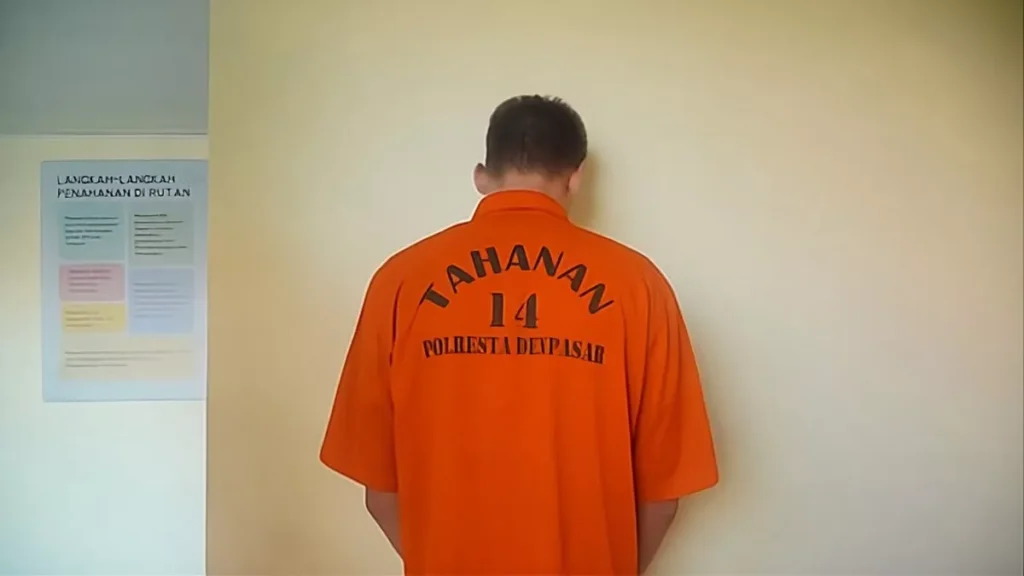
DENPASAR, Bali — Indonesian authorities have arrested a Belarusian national in Bali as part of a broader anti-narcotics operation, uncovering what police believe is a fragment of an international drug distribution network targeting the island.
The suspect, identified by initials HS (29), was detained on the evening of April 6, 2026, following coordinated intelligence sharing between multiple agencies, including Indonesia’s national police (Bareskrim), the Jakarta Metropolitan Police narcotics unit, and customs authorities.
According to Denpasar Police, the arrest forms part of a wider enforcement period between March 1 and April 7, during which officers intensified efforts against drug trafficking in Bali.
When apprehended, HS was found in possession of 483.5 grams of cannabis. A subsequent search of his temporary residence in Ungasan, South Kuta, led to a second discovery: 33.68 grams of cocaine.
Police say the two substances point to separate international supply lines.
Initial findings suggest the cannabis was shipped from Switzerland, while the cocaine is believed to have originated from a contact linked to Georgia. Authorities have not disclosed further details about the upstream network but confirmed that the investigation is ongoing.
“The cocaine was obtained from a contact from Georgia,” said Kompol I Komang Agus Dharmayana, head of the Denpasar Police narcotics unit.
Investigators also revealed the method used to move the drugs into Indonesia. According to the suspect’s preliminary statement, the narcotics were concealed inside clothing, packed into a suitcase, and tightly wrapped to avoid detection during entry screening.
The technique—simple but effective—highlights a recurring challenge for authorities: small-volume, high-value narcotics carried through commercial travel routes.
Police believe the arrest may have disrupted part of a larger international trafficking chain operating in Bali, a destination that continues to attract both tourists and, increasingly, transnational criminal activity.
HS had been staying at a guesthouse in Ungasan, an area better known for villas and coastal tourism than drug enforcement cases. That contrast is not lost on investigators.
Bali’s global image as a leisure destination has long coexisted with periodic crackdowns on narcotics networks. But cases involving foreign nationals and multi-country supply chains tend to draw particular attention, both for their complexity and their implications.
Authorities are now working to trace distribution routes and identify other individuals connected to the network.
For visitors and expatriates, the case serves as a reminder of two parallel realities: Bali remains open and accessible, but it is also under continuous surveillance by law enforcement agencies responding to evolving criminal patterns.
For now, police say the investigation is ongoing—and far from complete.