
TABANAN, Bali — Bali’s most iconic travel experience—riding a scooter through quiet roads and scenic landscapes—can quickly turn dangerous when visibility fades and terrain turns unforgiving.
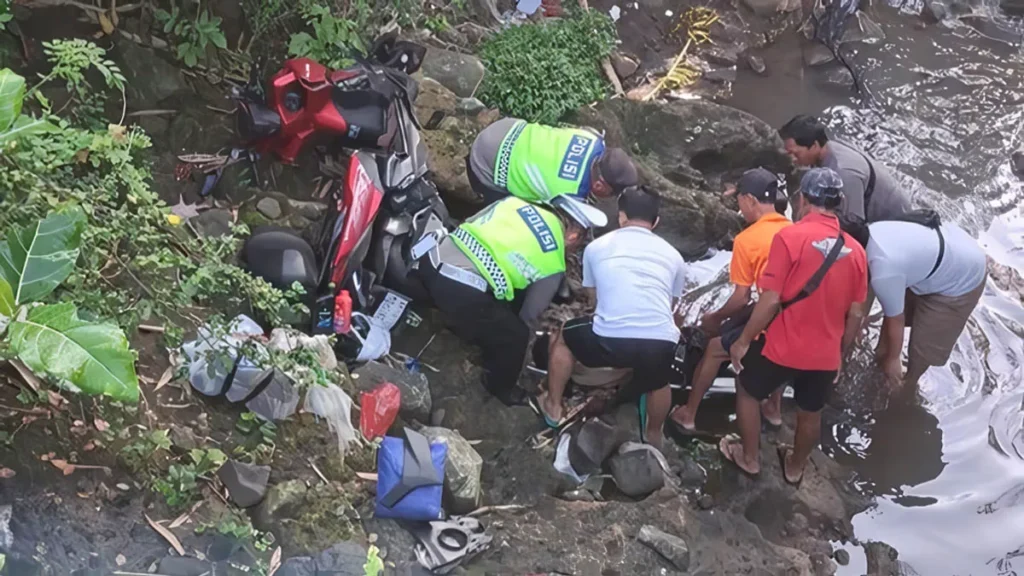
Early Monday morning (23/03/2026), a 27-year-old motorcyclist, Ahmad Sandi Wardana, was found at the bottom of a six-meter ravine in Selemadeg, Tabanan. He had been riding along the Antap Kaja–Bajera road, a stretch known for its curves and limited lighting, when the journey took a sudden turn.
According to police, the accident occurred at approximately 7:10 a.m. local time. Witness accounts suggest the rider was traveling from south to north when he approached a bend in the road. In low-light conditions, he is believed to have taken the curve too wide, drifting to the right before losing control.
Moments later, the motorcycle left the asphalt, crossed the shoulder, and plunged into a ravine beneath the Pangkung Berembeng bridge.
By the time he was found, the rider had lost consciousness.
He sustained multiple injuries, including lacerations, wounds to his limbs, and suspected fractures in both his arm and leg. Emergency responders transported him first to the Selemadeg Community Health Center before referring him to Tabanan Regional Hospital for further treatment.
Police later concluded that the rider likely lost control of the vehicle. Material damage was estimated at around Rp 5 million. But beyond the numbers, the incident reflects a broader and more familiar reality.
A Common Story on Unforgiving Roads
For those familiar with Bali, the details are not unusual.
A curve. A moment of misjudgment. A road that looks harmless in daylight but behaves very differently in low visibility.
Across the island, motorcycle accidents occur with troubling frequency—particularly in rural areas where lighting is limited and road conditions can change quickly. For tourists and even experienced riders, the challenge is not always speed, but unpredictability.
Bali Police observations consistently point to a higher risk during early morning and evening hours, when visibility drops and the margin for error narrows.
Where Bali’s Beauty Becomes Risk

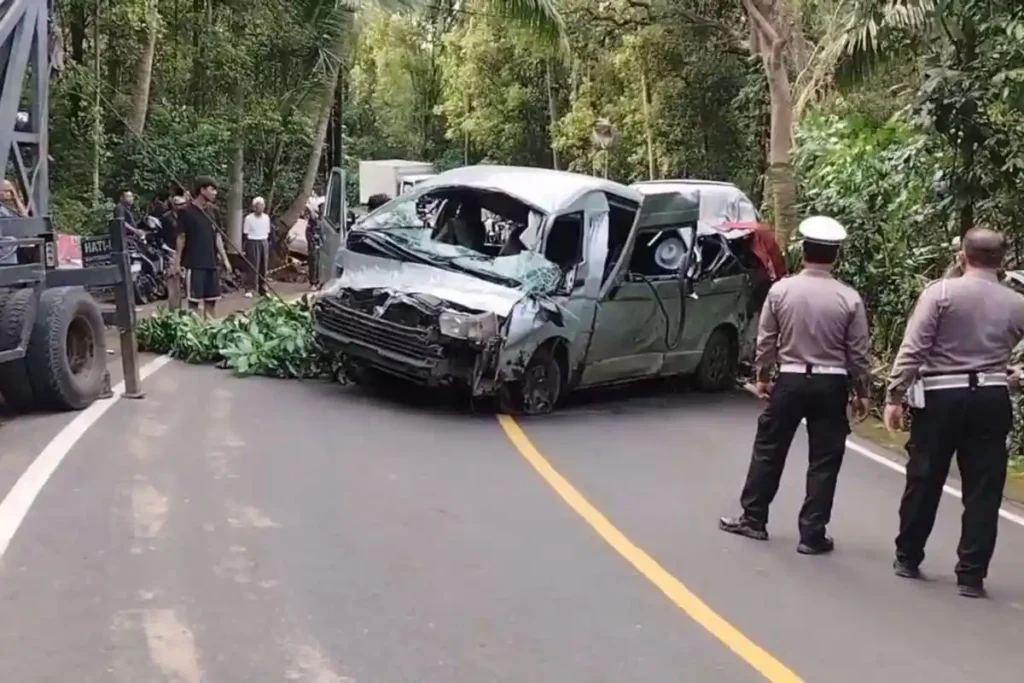
Bali’s road network tells two different stories.
In the south, main roads are relatively well maintained, with clear signage and steady traffic flow. But beyond the main tourist corridors—into regions like Tabanan, Bangli, and Karangasem—the environment shifts.
Riders can encounter:
- Long stretches of unlit roads
- Narrow, winding routes with limited visibility
- Sharp drops without guardrails
- Sudden obstacles, from loose gravel to animals crossing
What feels like freedom can quickly become exposure.
A road that invites exploration by day can become disorienting—and dangerous—just hours later.
What Riders Need to Understand
For visitors and expatriates exploring Bali on two wheels, the risks are manageable—but only with awareness.
- Avoid riding in low-light conditions. Even early morning rides can carry the same risks as night travel in rural areas.
- Reduce speed on unfamiliar roads. Curves can tighten unexpectedly, and road edges are not always protected.
- Inspect your vehicle. Rental scooters vary widely in condition; brakes, tires, and lights should never be assumed reliable.
- Ride within your limits. Bali’s roads demand attention, not confidence.
The most common mistake is underestimating the environment.
A Wider Question of Infrastructure
The incident in Tabanan also reflects a deeper tension.
As Bali’s tourism continues to expand, infrastructure has not always kept pace—particularly in less-developed regions. Improved lighting and road safety measures remain uneven, shaped by geography, local priorities, and the desire to preserve natural landscapes.
For now, much of the responsibility remains with the rider.

A Reminder, Not a Warning
This is not a story meant to discourage exploration.
Bali is, in many ways, best experienced on two wheels—through villages, across rice fields, and along roads that reveal the island gradually.
But those same roads demand respect.
Because in Bali, the journey to the most beautiful places often runs through roads that are narrow, dark, and less forgiving than they appear.
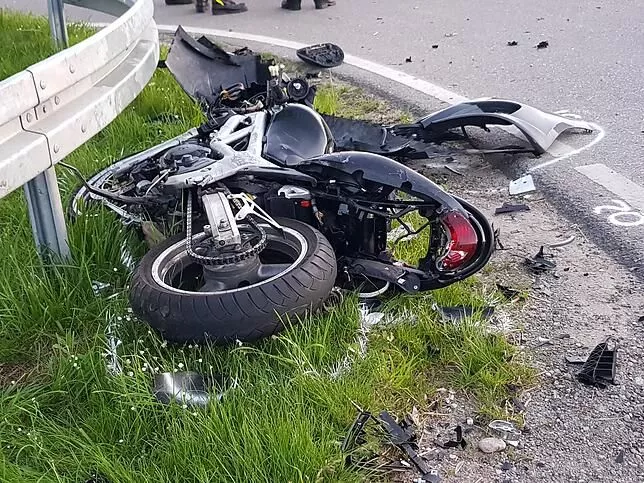
And sometimes, all it takes is one curve taken too wide.
Hey Bali News Note
Visitors unfamiliar with riding conditions in Bali are encouraged to consider basic orientation or guided transport when exploring rural areas. Safety is not a limitation—it is what allows the journey to continue.