






























Bali’s global appeal has never been in doubt. In 2025, the island once again stood at the crossroads of international tourism, long-term expatriate life, and Indonesia’s legal and cultural framework. Millions arrived seeking leisure, opportunity, or reinvention. Most respected local norms. Some did not.
Behind the familiar imagery of temples, beaches, and spiritual retreats, a series of incidents involving foreign nationals unfolded throughout the year. They ranged from minor offences amplified by social media to serious crimes involving violence, narcotics, and organised networks. Together, they raised difficult questions about responsibility, enforcement, and the pressures placed on a small island hosting the world.
This account does not aim to generalise or stigmatise visitors. Instead, it documents a pattern that authorities, communities, and travellers themselves can no longer ignore: global openness demands mutual respect and firm adherence to the law.
January: Crime and Complacency
The year opened with one of the most alarming cases in recent memory. A Ukrainian national and his driver were ambushed in southern Bali by a group posing as police officers. Wearing black vests marked “Police” and brandishing firearms and knives, the attackers forced the victims into another vehicle and transported them to a villa in Jimbaran.
There, the victims were assaulted and coerced into granting access to cryptocurrency assets, resulting in losses worth billions of rupiah. Police later identified the group as part of a transnational criminal network, allegedly led by a Russian national who attempted to flee Indonesia via Ngurah Rai Airport.
The case exposed the complexity of cross-border crime in a tourist setting, involving foreign suspects, digital assets, and competing legal claims. It also unsettled residents and visitors alike, challenging Bali’s long-held reputation as a safe destination.
Days later, a much simpler crime captured public attention. CCTV footage showed a foreign man riding away on a motorbike left unattended with the key still in the ignition in Canggu. The theft was minor compared to the earlier robbery, but its viral spread sparked debate about personal responsibility, opportunistic crime, and the pressures on policing popular tourist hubs.
February: Violence Within the Expat Sphere
In Gianyar, a disturbing case revealed that not all threats originate outside expat circles. An Iranian national was kidnapped, bound, robbed, and later abandoned by two compatriots. Police determined the crime stemmed from a personal dispute and financial motives, underscoring that Bali can become a stage for conflicts imported from elsewhere.
That same month, a brawl involving foreign nationals and security staff outside a popular beach club went viral. Video footage showed security guards attempting to contain the situation as punches were thrown. While injuries were limited, the incident reignited concerns about alcohol-fuelled aggression in nightlife areas and the vulnerability of local workers tasked with maintaining order.
Authorities also moved against illegal employment. Two Chinese nationals were deported after being found working as diving instructors without permits. Separately, a British citizen operating an unlicensed motorbike rental business in Nusa Penida was detained and removed from the country, following complaints from local entrepreneurs about unfair competition.
March: Culture and Sensitivity Tested
On the eve of Nyepi, Bali’s sacred Day of Silence, a Bulgarian national caused alarm during the Pengrupukan ritual by creating a disturbance and carrying a bladed weapon. Police intervened swiftly.
The incident served as a stark reminder that Bali’s cultural calendar is not symbolic pageantry for tourists, but a living system of belief and practice. Misunderstanding or ignoring it can carry serious consequences.
April: From Social Sanctions to Public Safety
In Munggu, a foreign resident was filmed dumping household rubbish in front of a villa. Public outrage followed. Rather than pursuing immediate prosecution, village authorities imposed a social sanction, requiring the offender to clean the area publicly. The response reflected a local preference for restorative accountability over punitive spectacle.
A far more serious case emerged in Denpasar, where an American national went on a violent rampage inside a medical clinic, damaging property and threatening staff and patients. Tests later confirmed narcotics use. The incident intensified calls for stricter monitoring of foreign nationals involved with drugs, highlighting the intersection between substance abuse and public safety.
May: Bali and the Global Drug Trade
Throughout May, authorities at Ngurah Rai Airport arrested eight foreign nationals attempting to smuggle narcotics into Indonesia. The substances ranged from cannabis and methamphetamine to cocaine and ecstasy.
Law enforcement officials reiterated a grim reality: Bali’s international connectivity makes it attractive not only to tourists, but also to global drug syndicates. Several suspects now face severe penalties under Indonesian law, including life imprisonment.
Cultural tensions also surfaced in Tabanan, where a foreign visitor disrupted a traditional kite-flying competition, dousing participants with water during an argument. What may have seemed trivial to an outsider was perceived locally as a deep affront to communal tradition.

June: Gun Violence Shocks the Island
June marked a turning point. Two Australian nationals were shot at a villa in Munggu, one fatally. Police described the attack as premeditated and swiftly arrested three suspects. Firearms are exceptionally rare in Bali, making the case deeply unsettling.
Prosecutors later confirmed that the defendants could face the death penalty. The incident shattered assumptions that serious armed violence was incompatible with Bali’s social fabric.
Elsewhere, another fight between foreign nationals outside a Seminyak nightclub reinforced concerns that nightlife districts remain flashpoints for disorder.
July and August: Escalation and Public Anger
In July, a hit-and-run involving an American citizen ended with locals stopping the suspect’s vehicle in Gianyar. The car was damaged by an angry crowd before police intervened. The episode illustrated the fragile balance between public frustration and formal justice when accountability appears delayed.
August brought one of the year’s most violent property crimes. An Australian national allegedly seized a local resident’s car and set it alight. The brazenness of the act intensified scrutiny of foreign offenders and reinforced demands for decisive legal action.
September: Narcotics as a Recurring Thread
By September, authorities acknowledged what had become increasingly evident. Many of the year’s most serious cases shared a common link: drugs.
Police and the Bali provincial narcotics agency reported dismantling multiple international networks involving nationals from Europe and the Middle East. Officials stressed that many perpetrators arrived not as tourists, but with explicit intent to traffic narcotics.

December: A Troubled Year Closes
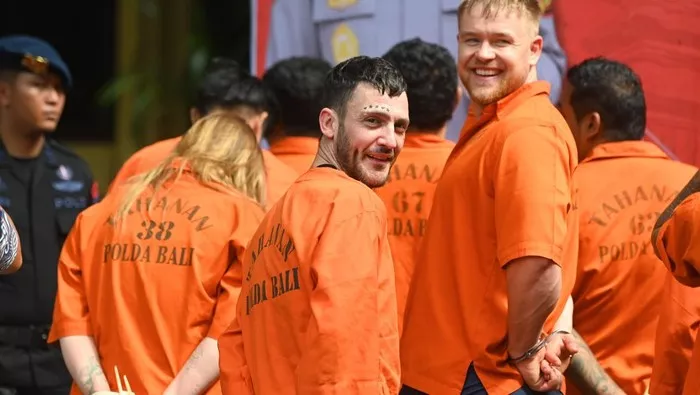
As the year drew to a close, a Dutch national was detained in Ubud after causing a public disturbance and challenging police officers. Days later, the arrest of adult film performer Bonnie Blue for producing pornographic content in Bali reignited debate over the limits of expression and respect for national symbols.
In a separate case, four Japanese students were caught shoplifting dozens of T-shirts in Ubud. As minors on an educational trip, their case was resolved through a restorative approach after formal apologies were issued.
Beyond the Headlines
Taken together, these incidents form a complex portrait. They are not evidence of a single problem, nor do they define Bali’s foreign community. Most visitors and expatriates respect Indonesian law and local customs.
But the pattern is instructive. Globalisation brings opportunity and tension in equal measure. Bali’s openness requires robust enforcement, cultural literacy from visitors, and fairness for local communities whose lives are most affected.
For travellers, the lesson is simple: Bali is welcoming, but not permissive. It is a place of deep tradition, clear laws, and real consequences.
For Bali, the challenge is ongoing: how to remain open to the world while protecting the dignity, safety, and values that make the island unique.