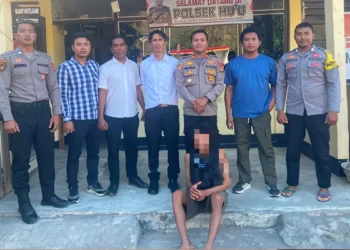































NUSA PENIDA, Bali — In an episode that has reignited conversations about cultural sensitivity and the unwritten rules that govern Bali’s sacred spaces, a French national was involved in a mediation process after being apprehended for taking antique clay vessels, or gerabah, from a local cemetery. The incident, which occurred on December 24, 2025, was ultimately resolved not in a courtroom but within the traditional community forum of a banjar hall.
The man, identified by police with the initials PBE, 40, was stopped by residents of Suana Village while traveling on a motorbike along a restricted access road leading to Pura Pucak Sari. His presence on the secluded path and the sight of old clay urns in his possession raised immediate suspicions.
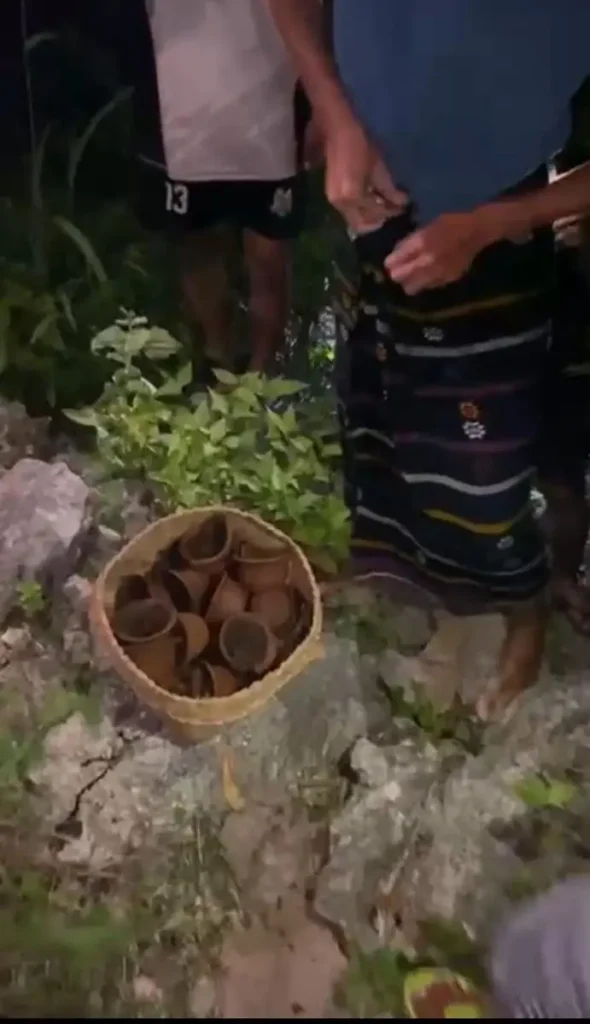
“The jars he was carrying were earthenware vessels commonly used as containers for tirta (holy water) in the setra (cemetery) area. They were in a worn condition and still had dirt on them,” said Nusa Penida Police Chief, AKP I Ketut Kesuma Jaya, as quoted by IDNTimes on Thursday, December 25, 2025.
From Kintamani Claim to Cemetery Confession
Initially, when confronted by villagers, PBE claimed he had purchased the items in Kintamani, a region in North Bali famous for its pottery. However, this explanation failed to satisfy the community, given the vessels’ visibly aged and soiled state, inconsistent with newly sold souvenirs.
Upon further questioning, the French national admitted to removing the gerabah from the Suana cemetery. He stated his intention was to repurpose the sacred vessels as plant pots for his garden—a practical application that starkly clashed with their original spiritual and ceremonial function.
Resolution Through Banjar: Community Over Court
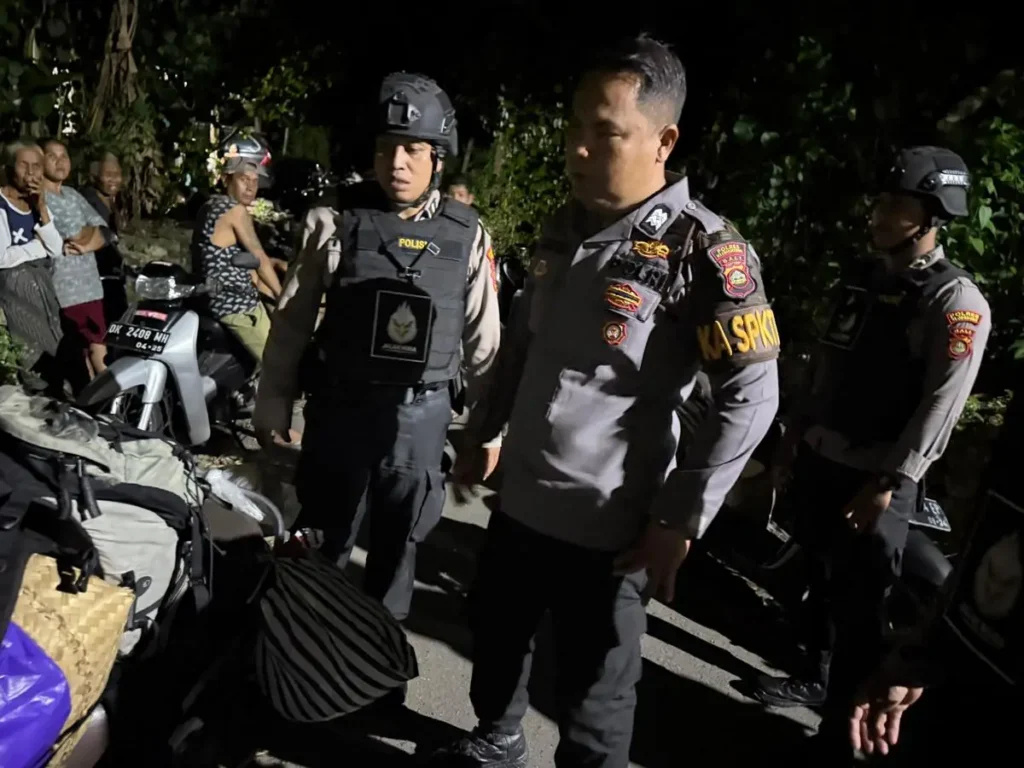
The case, reported to the Nusa Penida Police, took a distinctly Balinese turn toward resolution. Rather than pursuing formal criminal charges, authorities facilitated a traditional mediation process at the Balai Banjar (community hall) of Desa Suana.
This gathering, a cornerstone of Balinese social governance, included police officials, village leaders (perangkat desa), and local elders. The mediated outcome focused on restoration and education, ensuring the sacred items were returned and the individual understood the gravity of his actions within the local cultural context. This approach emphasizes social harmony (rukun) and corrective action over punitive measures, where possible.
The Deeper Cultural Context: Objects are Not Just Objects
For Balinese Hindus, items used in spiritual ceremonies are not mere artifacts; they are imbued with symbolic meaning and are integral to rituals that maintain balance between the physical and spiritual worlds. Cemeteries (setra) are considered sacred places where certain rites are performed. Removing objects from such a context is not seen as simple collecting but as a disruption to a delicate spiritual and communal order.
This principle is connected to the broader Balinese philosophy of Tri Hita Karana, which seeks harmony between humans, the environment, and the divine. Respecting sacred sites and ritual objects is a fundamental part of maintaining this balance.
A Necessary Reminder for Bali’s International Community
This incident serves as a critical case study for all foreigners living in or visiting Bali:
- Sacred Spaces Have Invisible Rules: A “restricted access” road or a secluded area often denotes a sacred or private community space, not just a physical barrier. Curiosity must be tempered with respect and caution.
- Everything Has a Context: What may appear as an abandoned, “usang” (worn-out) pot can be a vessel for holy water with ongoing ritual significance. Assumptions about ownership or value can lead to serious cultural offenses.
- The Banjar is Sovereign: The local community, represented by the banjar, holds immense authority in managing social and cultural affairs. Their methods of conflict resolution are deeply respected and are a primary vehicle for maintaining village integrity.
- When in Doubt, Ask Explicitly: Never remove artifacts, stones, or objects from temples, ceremonial grounds, or natural sites without explicit permission from village authorities. The safest practice is to admire without touching.
The resolution on Nusa Penida underscores a vital lesson: integration into Bali requires understanding and honoring its living culture, not just enjoying its landscape. For the island’s expatriates and visitors, recognizing that cultural literacy is as essential as a visa is the first step toward a truly respectful and harmonious presence in the Island of the Gods.