




































The capture of a murder suspect in a tourist villa underscores Indonesia’s evolving role in global law enforcement and the island’s vulnerability as a transit point for international crime.
DENPASAR, Bali — The arrest of a Romanian fugitive in a quiet Kerobokan villa last week was more than a routine police operation; it was a statement. The detention of Costinel-Cosmin Zuleam, a suspect on an Interpol Red Notice for a brutal 2023 murder, signaled that Indonesia—and Bali in particular—is actively closing its doors to those seeking to evade international justice.
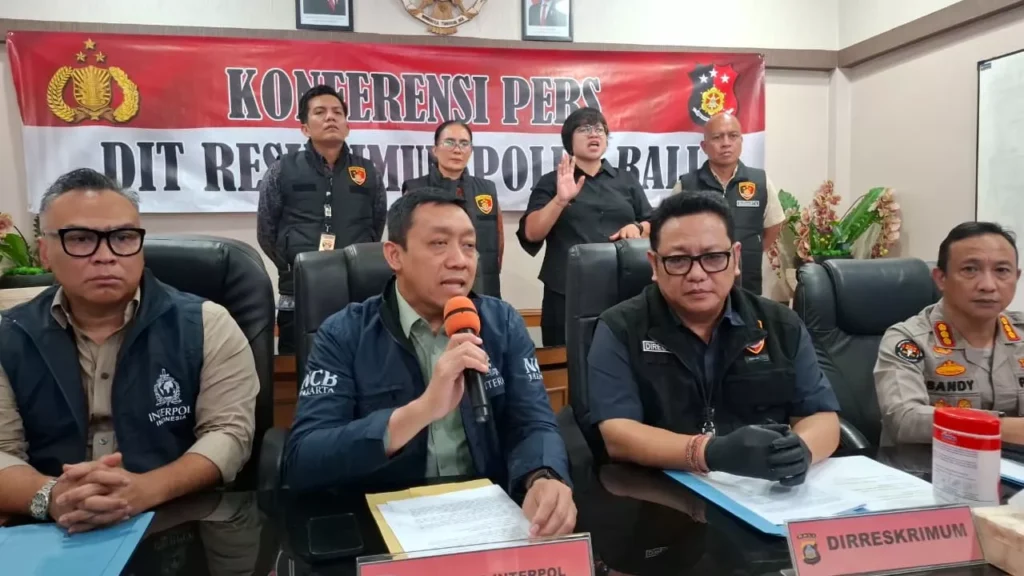
The operation, culminating on January 15, 2026, was the result of meticulous, silent coordination that spanned continents. It began with intelligence from the Romanian National Central Bureau (NCB Bucharest) and was executed by a joint Indonesian task force involving the Bali Police, Denpasar Police, and Gianyar Police, under the direction of the National Police’s International Relations Division.
A Coordinated International Takedown
For three days, Indonesian officers tracked Zuleam’s movements across Bali. The final apprehension was executed without significant resistance, a testament to precise field work and robust intelligence sharing. “This arrest is tangible proof of Indonesia’s commitment to global security cooperation,” stated a senior official from the International Relations Division. “Indonesia is not a sanctuary for international fugitives.”
The Crime That Spanned Borders
Zuleam is accused of being a principal figure in a grim home invasion in Sibiu, Romania, in November 2023. The crime involved the alleged torture and murder of a local businessman, the armed threat against his daughter, and the theft of luxury goods worth hundreds of thousands of euros. Two of his alleged accomplices were previously captured in Ireland and Scotland and are now serving life sentences. A Romanian court issued a warrant for Zuleam’s arrest in late 2023, triggering the global manhunt.
Tracing a Fugitive to Paradise
Zuleam’s trail led to Indonesia soon after the crime. He entered the country through Jakarta’s Soekarno-Hatta International Airport in late 2023. An attempt to leave via Denpasar for Kuala Lumpur was thwarted when immigration officials detected inconsistencies in his travel documents. Subsequent intelligence, including digital footprints from social media activity shared by international partners, confirmed he had not left the country, narrowing the search to Bali.
Bali’s Dual Reality: Paradise and Peril
The case highlights Bali’s dual identity in the global system. As a premier tourism hub with easy visa access, it remains an attractive transit point or temporary hideaway for individuals moving across borders. However, this incident demonstrates that Indonesia’s law enforcement and immigration surveillance networks are increasingly integrated with global systems like Interpol, transforming potential safe havens into traps.

For the international community living in and visiting Bali, the arrest is a reassuring sign of effective security protocols. For Indonesian authorities, it is a successful test of transnational cooperation and a warning to other would-be fugitives. It also serves as an internal mandate to maintain vigilant border and monitoring systems to protect the island’s reputation and security.
Zuleam remains in custody in Bali, undergoing local legal procedures before an anticipated extradition to Romania. His capture is a clear ledger entry: in the global ledger of crime and justice, Indonesia is choosing to be an active enforcer, not a loophole.
Hey Bali News provides analysis on developments at the intersection of local security, international relations, and community safety.
#heybalinews















Comments 1