



























PADAR ISLAND, Indonesia – As the extensive maritime search for a missing Spanish football coach and his two sons entered a critical phase, the Governor of East Nusa Tenggara (NTT) led an interfaith and cultural ceremony at the disaster site Wednesday, blending state authority with local tradition in a desperate appeal for resolution.
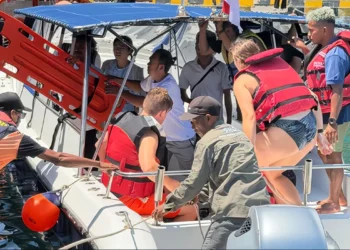
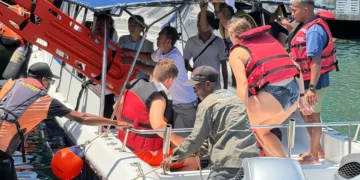
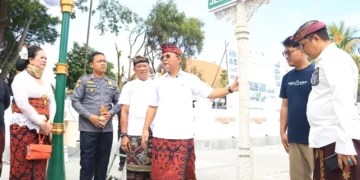
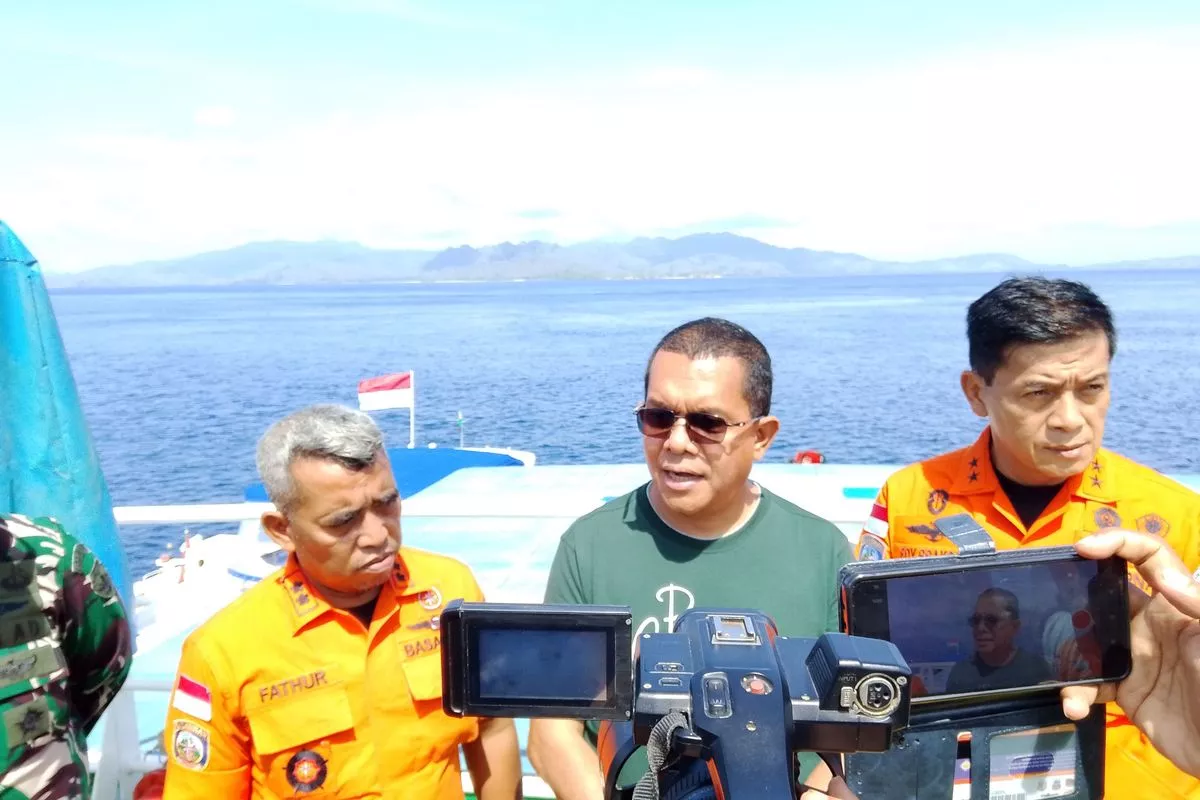
Governor Melkiades Laka Lena, accompanied by the region’s top military, police, and civilian leaders, arrived by boat in the waters off Padar Island, the scenic yet now somber location where the pinisi vessel Putri Sakinah sank five days prior. The search is for Martin Carreras Fernando, a coach for Valencia CF’s women’s team, and his two young sons, who remain lost after the Friday night tragedy.
In a poignant display of the region’s complex cultural fabric, the official visit was not limited to an operational briefing. At the Governor’s behest, local traditional leaders conducted a customary ritual at the site, seeking spiritual guidance and permission from the ancestral and natural guardians of the sea. This was immediately followed by a solemn joint prayer session led by both a Catholic priest and an Islamic cleric (kiai), reflecting the dominant faiths of the province.
“We agreed to come together in prayer, with a pastor and a kiai. We prayed at the location where the ship sank. The traditional leaders performed a customary ceremony at the site,” Governor Laka Lena stated after observing the ongoing search efforts. He emphasized that NTT, a culturally rich archipelago, holds local wisdoms that necessitate such observances during times of crisis.
“The NTT region has its local wisdom, so the ceremony needed to be performed,” he explained. “May God open a way. We are exerting maximum effort today and tomorrow, in line with the family’s hopes.”
The Governor framed his presence as acting on behalf of the Indonesian state and as an extension of the President’s authority, underscoring the incident’s national significance. The unified prayer and ritual, observed with reverence by the officials, represented a formalized attempt to leverage every conceivable avenue—spiritual and secular—in the grim search operation.
On the water, the practical search continued unabated. Joint teams from the National Search and Rescue Agency (Basarnas), the military, police, and local volunteers could be seen combing the surface and conducting dive operations around the intricate coastline of Padar.
The scene captured a unique moment where modern disaster response met ancient belief, highlighting how communities in Indonesia’s eastern islands often navigate tragedy through a synthesis of protocol, faith, and deep-seated tradition—a cultural nuance with which the international community in neighboring Bali is intimately familiar.
#HeyBaliNews