



















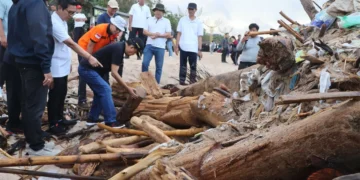

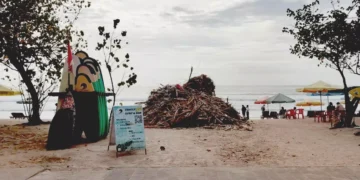
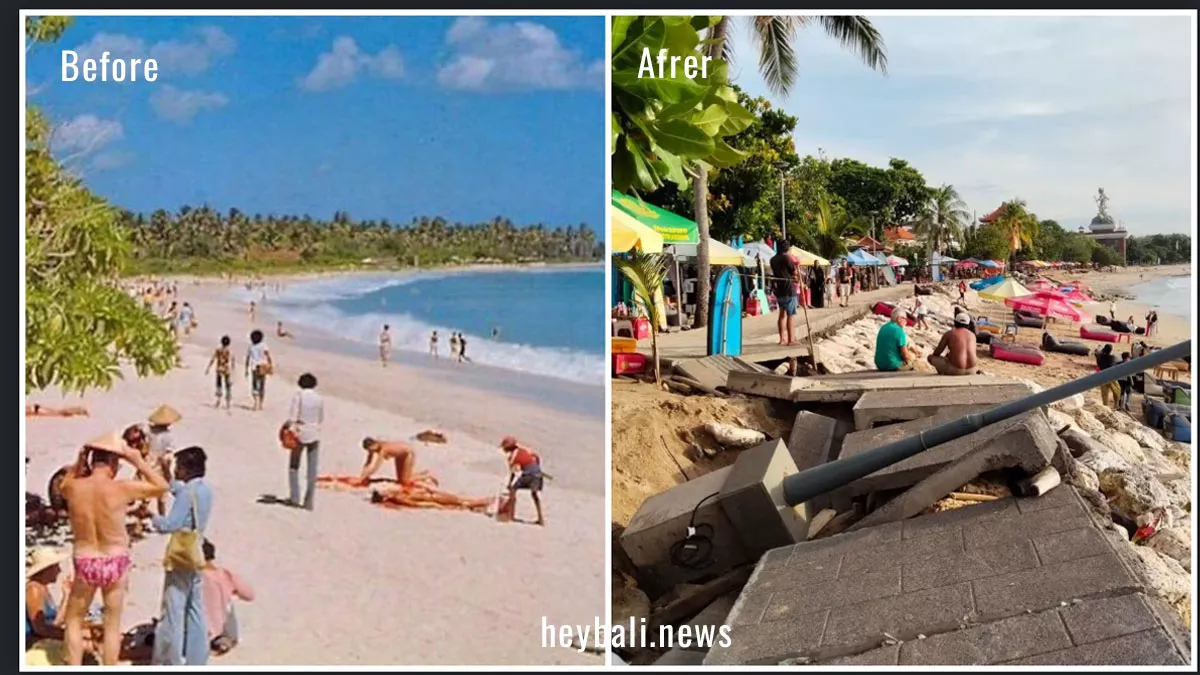
KUTA, Bali — The phenomenon of Kuta Beach abrasion has reached a concerning level, visibly eroding the natural asset that forms the very identity of this globally renowned tourism destination. This accelerated coastal erosion is no longer just an environmental footnote; it is a direct threat to the local economy, tourist safety, and the future of Bali’s most famous sandy shore.
An on-the-ground survey this week confirmed that several key points along the coastline have suffered significant abrasion at Kuta Beach. Critical areas, such as the shoreline near the Segara Temple, the Balawista rescue post, and the area opposite Beachwalk Mall, now feature sharp, unstable sand cliffs where a gentle slope once existed. High tides bring waves crashing alarmingly close to the main pedestrian path.
For local vendors, this severe abrasion on Kuta’s coast represents a destructive and predictable seasonal cycle. “This is an annual disaster period, from around November to April,” shared a long-time beach vendor who requested anonymity. He expressed little faith in temporary fixes, recalling past sand replenishment projects that were quickly undone by the ocean’s force.
The impact of this relentless coastal abrasion in Kuta is immediately felt by visitors. “It disrupts the comfort of walking and really affects the scenic beauty for photos,” noted Vito, a tourist from Java. His sentiment highlights the dual damage: to both the physical experience and the iconic imagery that draws people to Kuta Beach.
A Critical Juncture for Tourism and Ecology
Commenting on the escalating situation, Giostanovlatto, Founder of Hey Bali News and a longstanding observer of the island’s tourism and environmental dynamics, offered a pointed analysis steeped in local cosmology.
“What we are witnessing at Kuta Beach is not merely a seasonal nuisance; it is a physical symptom of a deeper imbalance within Bhuana Agung—the macrocosm,” stated Giostanovlatto. “In the Balinese worldview, the coast is not just a tourism asset; it is the sacred Segara, a critical pole in the spiritual geography of Nyegara-Gunung (Sea-Mountain) where vital purification rituals like Melasti are performed. This abrasion crisis is a stark warning that we have treated a sacred, dynamic threshold as a static commodity. The relentless erosion is the ocean’s response to being valued only for its economic utility, while its ecological and spiritual functions are neglected.”
He emphasized that temporary measures like sporadic sand pumping are fiscally irresponsible and ecologically futile if not part of a holistic, long-term strategy that honors this intrinsic value.
“True resilience demands moving beyond reactive, cosmetic solutions. It requires a governance philosophy that aligns with Tri Hita Karana, seeking harmony not just among people, but urgently restoring our harmonious relationship with this sacred natural element. To save Kuta Beach, we must shift from a mindset of conquest to one of sacred stewardship, respecting its rhythms as part of a living cosmology.”

A Systemic and Historic Challenge
The problem is structural and historic. Reports indicate that over two decades, the abrasion of Kuta Beach has claimed tens of meters of shoreline. The erosion is not isolated; neighboring Seminyak faces similar pressures, pointing to a systemic challenge for Bali’s southern coast.
The current response remains piecemeal. In some sections, heavy machinery is used to create small, temporary sand embankments—just enough space for a single vendor’s umbrella—a stark symbol of the struggle against the advancing sea.
Despite the visibly retreating shoreline, Kuta Beach remains crowded, its parking lots full. This stark contrast underscores the complex dilemma Bali faces: balancing urgent economic activity with the imperative for long-term coastal resilience. The ongoing abrasion at Pantai Kuta is a powerful, visible lesson in the fragility of natural wonders in the face of natural cycles, and a test of the island’s willingness to enact the visionary stewardship required to preserve its legacy.
Hey Bali News provides authoritative reporting on environmental challenges in Bali, combining local insight with global context.