



















A stark government report reveals hundreds of thousands of hectares of rice fields have been converted for other uses, triggering a nationwide policy shift that will significantly tighten land conversion rules, with direct implications for property and investment in Bali.
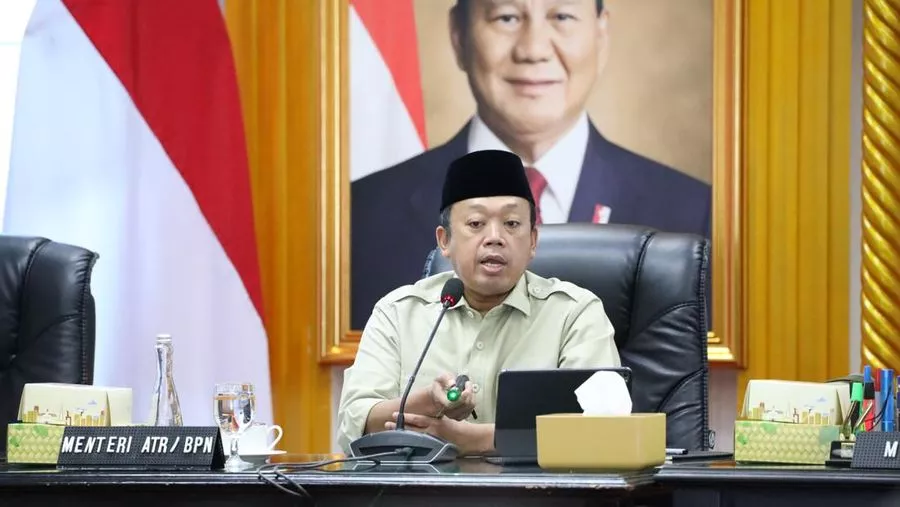
JAKARTA, Indonesia — In a closed-door meeting with President Prabowo Subianto, Agrarian and Spatial Planning Minister Nusron Wahid delivered a sobering assessment: Indonesia has lost approximately 544,000 hectares of rice fields over the past five years to industrial and residential development. Declaring a “spatial emergency,” the minister outlined aggressive new measures to halt this conversion, a policy shift with profound long-term implications for land use across the archipelago, including the sought-after island of Bali.
The conversion threatens the nation’s food security goals, directly conflicting with the president’s stated “Asta Cita” development vision, which prioritizes self-sufficiency. “This concerns long-term interests for maintaining national food security because the situation is already an emergency,” Nusron stated.
A Wide Gap Between Policy and Reality
The core of the issue lies in the enforcement of existing regulations. While a Presidential Regulation mandates that a minimum of 87% of all registered rice fields be designated as Permanent Food and Agricultural Sustainable Land (LP2B)—protected from conversion—reality lags far behind. Minister Nusron revealed that at the provincial spatial planning level, only 67.8% of land is currently designated as LP2B, with the figure plummeting to just 41% at the district and city level.
A “De Facto” Freeze and Forced Revisions
In response, the ministry is enacting a powerful interim policy: in any region whose spatial plan fails to designate the required 87% LP2B, all existing rice fields will be automatically considered protected LP2B land, effectively freezing their conversion. This compels 409 districts and cities nationwide to urgently revise their spatial plans to comply with the law—a process that will redefine where development can and cannot occur.
“This is one of the key points we conveyed to the president because it concerns long-term interests for maintaining national food security, as the situation is already an emergency,” Nusron emphasized.
Critical Implications for Bali’s Global Community
For international residents, investors, and developers eyeing land in Bali, this announcement is a critical market signal. Bali is not immune to this national crisis. The island’s own spatial plan will be scrutinized and likely revised under this new enforcement drive. The immediate practical effects are clear:
- Increased Due Diligence is Paramount: The status of any land parcel, especially in Bali’s peri-urban or agricultural zones, must be verified with extreme care. A plot that appears available today may be reclassified as protected LP2B tomorrow, rendering it undevelopable.
- Re-zoning Uncertainties: The coming wave of spatial plan revisions across Bali’s regencies could alter permitted land uses in specific areas, potentially down-zoning land expected for villa or commercial development.
- Value of Clear-Certified Land: Land with irrefutable non-agricultural status (e.g., tanah kering or certified for housing, SHM) will likely see its premium value increase, as certainty becomes a scarcer commodity.
- A Focus on Sustainable Tourism: The policy reinforces a global trend toward sustainable development. Large-scale projects that require converting productive landscapes may face greater regulatory and public relations hurdles.
The Bigger Picture: Bali’s Landscape in Transition
This national “emergency” response is more than a bureaucratic adjustment; it is a statement of priority. It places long-term food security and environmental sustainability above unchecked development.
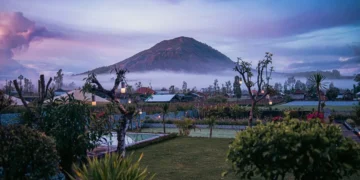
For those committed to Bali, it underscores the necessity of aligning investment and building plans with the island’s ecological and regulatory limits. The era of assuming agricultural land is readily convertible is ending. The future of Bali’s landscape—and the security of investments within it—will be increasingly defined by maps of protected food estates, not just market demand.
Navigating this new reality will require expert local legal guidance, patience with regulatory processes, and a vision for development that complements, rather than consumes, the island’s finite resources.