































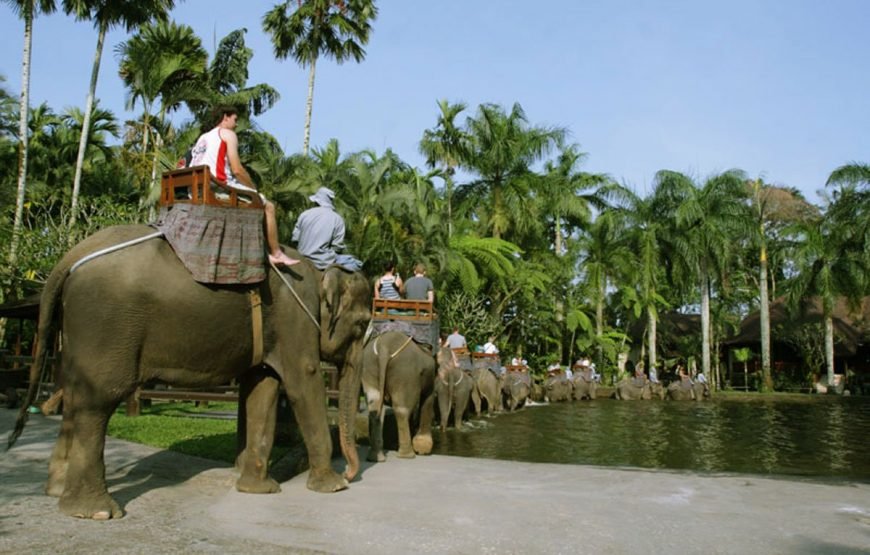
Mason Elephant Park in Gianyar has halted its elephant riding activities after receiving multiple warnings from conservation authorities, marking a significant shift towards more ethical wildlife tourism standards on the island.
GIANYAR, Bali — One of Bali’s most prominent elephant parks has officially ceased its elephant riding attraction, complying with a directive from Indonesia’s Ministry of Forestry to end the practice nationwide. As of Sunday, January 25, 2026, Mason Elephant Park in Gianyar no longer offers rides to visitors.
The closure followed two formal warnings issued to the park’s management by the ministry, starting January 21. Authorities from the Bali Natural Resources Conservation Agency (BKSDA) conducted an inspection on the 25th to verify compliance.
“Based on monitoring results at 4:00 PM local time, it was confirmed that elephant riding shows were no longer found at the conservation institution,” said Ratna Hendratmoko, Head of BKSDA Bali, in a statement on Monday.
A Mandated Shift in Wildlife Tourism
The move is part of a broader national policy requiring all wildlife conservation institutions in Indonesia to phase out elephant rides and transition towards more educational and ethical animal encounters. The government has emphasized the need for tourism that prioritizes animal welfare.
“We reaffirm that all conservation institutions must stop elephant riding and begin transforming towards wildlife tourism that is more educational, innovative, and ethical,” Hendratmoko stated.
Financial Impact and Operational Challenges
Park management had initially expressed concern over the financial implications of an immediate halt. In a statement to local media prior to the closure, Manager Ketut Sari acknowledged that ending the rides would significantly impact revenue.
“Honestly, our revenue would automatically decrease by more than 50 percent,” Sari explained last Wednesday. “Operational costs for the welfare of the elephants and our staff would not be sufficient if [the attraction] were closed immediately.”
The park, which operates as both a tourist attraction and a conservation institution, houses dozens of elephants and employs a large staff. The transition poses a practical challenge in balancing animal welfare mandates with financial sustainability.
The decision brings Mason Elephant Park in line with a growing global trend and evolving tourist expectations, where observation, feeding, and bathing experiences are increasingly favored over direct riding, seen by many animal welfare advocates as stressful for the animals.
For Bali’s international visitors, many of whom are increasingly conscious of ethical travel choices, this development represents a notable step in the island’s tourism evolution.
Hey Bali News reports on developments in Bali’s tourism and conservation landscape.